Issued on: 28/07/2026 - 07:47 Modified: 29/07/2026 - 04:24
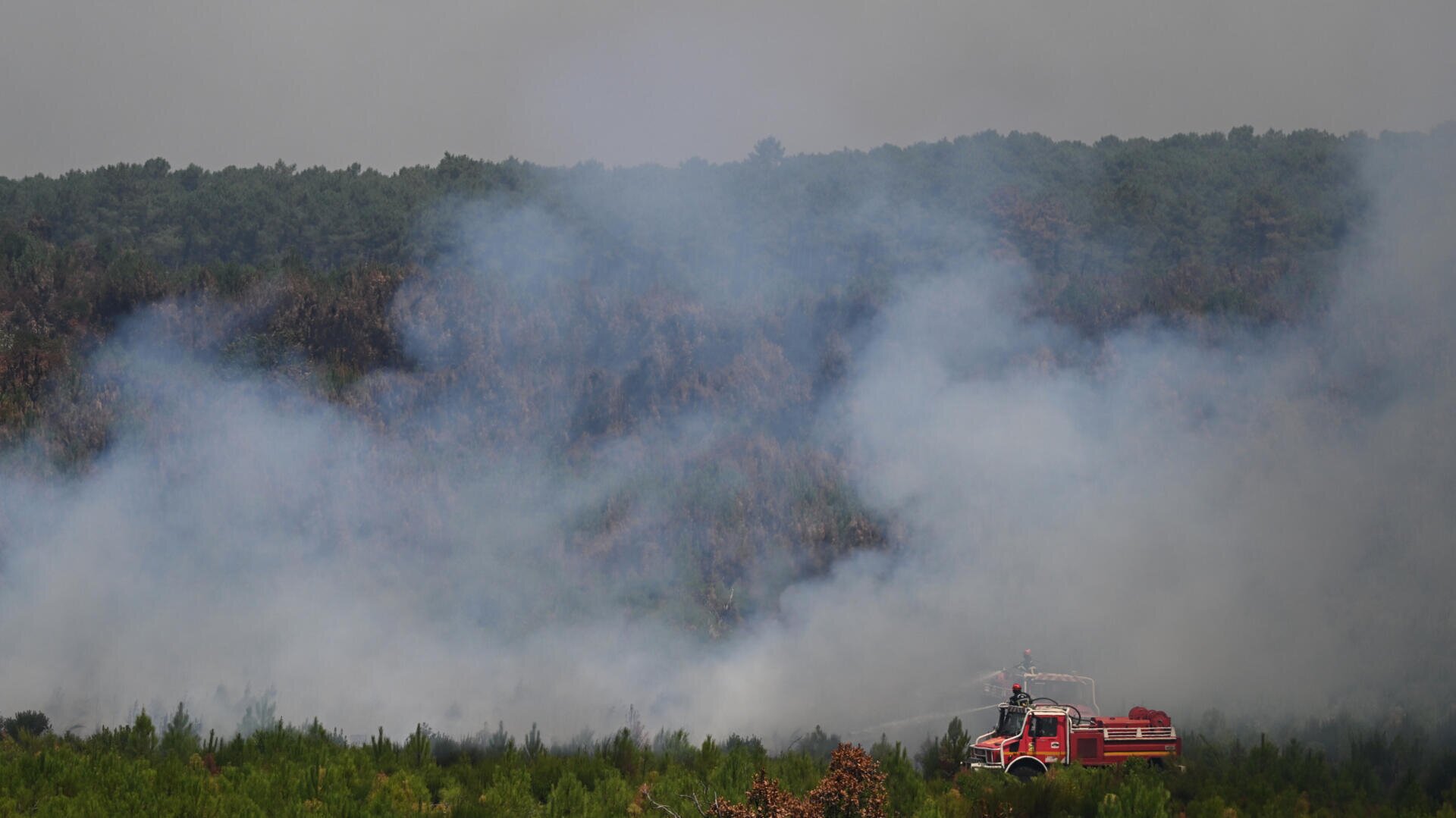
By: Nicole TRIAN Wildfires in southwestern France flared up again on Tuesday ahead of a fourth heatwave of the summer, due to bring scorching temperatures to the region once more. The news came as French authorities ordered nearly 4,000 more people to evacuate tourist sites on the Atlantic coast on Tuesday as the resurgent heat threatened firefighters’ fragile hold on a vast wildfire west of Bordeaux. Read our liveblog to see how the day's events unfolded.
“Following the fire in Biscarrosse in the Landes region, which was contained [Monday] – an incident that mobilised 550 firefighters, 450 gendarmes, and numerous volunteers from accredited civil protection organizations – the fire in Pontevès in the Var region has now also been brought under control. First reported on July 21, this fire burned nearly 4,800 hectares in the Pontevès area and surrounding municipalities,” the French Interior Minister wrote on X, formerly known as Twitter.
“A suspected arsonist has been arrested by the gendarmerie and placed in pretrial detention. Vigilance remains at its highest level: surveillance operations, treatment of the 160 kilometres of firebreaks, and security measures are continuing to prevent any resurgence of the fire,” Nuñez said.
“We have 2,750 firefighters battling the fire tree by tree, and we have 23 aircraft taking turns dropping water and fire retardant,” said Sophie Brocas, the prefect of Gironde.
The effort by emergency services to combat the region's wildfire -- the largest in France since 1949 -- has left 110 firefighters injured.
Welcome to the France 24 liveblog covering wildfires in Europe. You can catch up on yesterday's developments here .
Among the measures used by firefighters to battle the flames in the wildfires in southern France is a chemical retardant that is dropped on forests by planes. It is not without its harms to nature and to humans, but firefighters say it is a vital tool in combatting the spread of deadly fires.
As firefighters work round the clock battling blazes in southwestern France, those affected by the disaster need shelter and essentiels. Volunteers are at the forefront of relief efforts, stepping up to provide support as fires continue to burn.
As French firefighters struggle to contain the worst wildfires in living memory with just 12 aerial water bombers, production of the iconic aircraft creaks along half a world away in a Canadian factory.
Canadairs are a prime weapon in fighting blazes in rugged, often remote landscapes. But building the specialized aircraft is a time-consuming process, made harder by a nine-year production gap that left the complex supply chain in tatters.
Although manufacturer De Havilland restarted production in 2024, the first delivery -- of just two aircraft -- to France won't happen until at least 2028.
The major wildfire in the Var department, which burned across approximately 4,500 hectares over eight days and threatened several villages, was declared contained on Tuesday evening, and a man suspected of starting about ten fires in the area has been jailed, authorities announced.
“The fire has been contained, but work continues and vigilance remains essential,” the Var prefecture stated in a press release, noting that nearly 5,000 people had been evacuated from several towns in the central part of the department since the fire broke out last Tuesday.
The fire, which broke out around midday on Tuesday, July 21, in a field in the town of Pontevès, consumed a slope of the Gros Bessillon mountain range and surrounded several iconic villages of the “Green Provence”—between the Mediterranean Sea and the Verdon Gorges—including Cotignac, Correns, and Barjols.
“Certain neighborhoods in Correns and Barjols remain subject to evacuation orders because they are located near or within the fire’s perimeter,” the prefecture stated.
The fire, which has mobilized more than a thousand firefighters daily along with significant aerial resources—assisted by numerous volunteers—had not been spreading for several days but had flared up repeatedly.
The French energy group Engie will contribute 25 million euros to help with “the reconstruction and sustainable regeneration of destroyed forests,” it announced Tuesday, highlighting the “human, environmental, and economic impact” of the fires, particularly in Gironde and Fontainebleau.
“This contribution will help support efforts to restore destroyed forest areas and initiatives aimed at strengthening the resilience of natural ecosystems in the face of the effects of climate change,” the company wrote in a press release.
“This involves, in particular, considering the most suitable tree species, preserving biodiversity, restoring wetlands, ensuring access for emergency services, and protecting and reintroducing wildlife,” Engie added, emphasising that these fires had affected “a part of France’s natural heritage.”
A photo created on July 27, 2026 combining data from the European Forest Fire Information System (Effis) and NASA's Visible Infrared Imaging Radiometer Suite (VIIRS) shows a map depicting active wildfires, the progression of burned areas since July 22, 2026, and the distance of the active fires from the city of Bordeaux, southwestern France.
A massive wildfire in France's Gironde department, home to Bordeaux, remained "broadly stable overnight," the local authority said on July 27, 2026.
Photo by Nalini LEPETIT-CHELLA and Sherine ELSAYARY / AFP
France's scorching summer has worsened drought conditions, strained water supplies and left vegetation tinder-dry, fuelling wildfires and threatening crops across the country.
In the vineyards of Margaux, one of Bordeaux's most prestigious appellations, the vines remain intact and wine quality is not expected to suffer from the fires, said Thomas Duroux, director general of Chateau Palmer. But, he said, the warning signs are everywhere.
Young vines, whose roots are no...