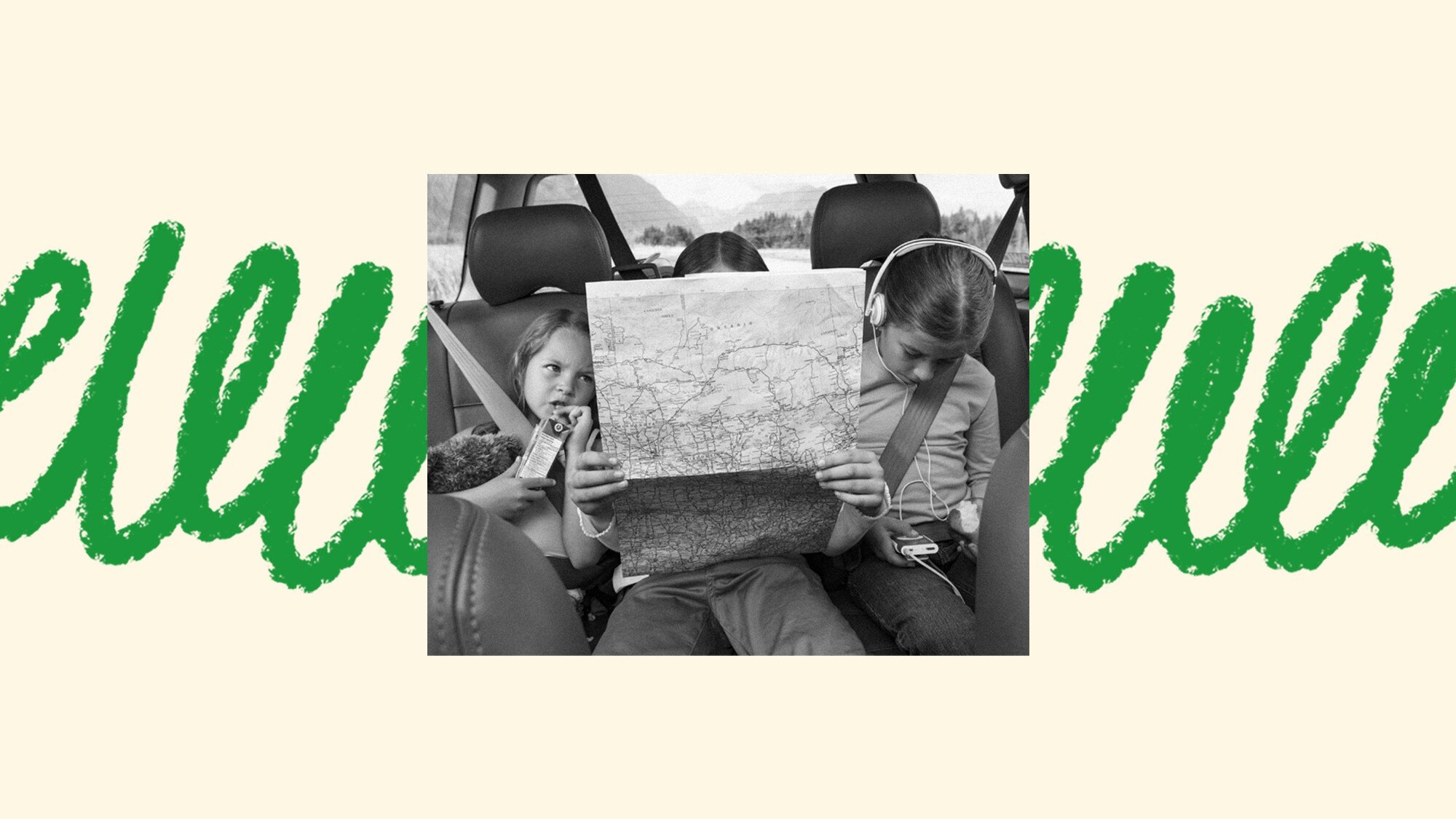
Back in the ’90s, before everyone had smartphones, were things just … better? Tech-focused nostalgia has become a potent cultural force in recent years, driving sales of “dumbphones,” iPods, CDs, and other retro technology. According to a 2023 survey , 67 percent of Americans wish they could go back to a time “before everyone was ‘plugged in.’” The psychologist behind that survey, Clay Routledge, has found that this sort of nostalgia is more than just a yearning to go backwards. “We can often feel overwhelmed in the moment and in the challenges we face today. It's hard to see past them. Nostalgia can help us step outside of that moment,” Routledge explains. Nostalgia can actually teach us how we want to live now, and in the future.
The following is a transcript of the episode:
[ Music ]
Julie Beck: If you had one word—it can be a noun, it can be an adjective, it can be any part of speech that you want—to describe your overall relationship to technology at this moment in time.
Voice memo: Antagonistic?
Voice memo: Complicated.
Voice memo: Fraught.
Voice memo: Connection.
Voice memo: I think of it as an addiction. Similar to how I relate to, like, sugar or anything else that I sort of compulsively overindulge in.
Beck: What’s your word?
Voice memo: Indentured.
Voice memo: I was gonna say reluctant, but maybe that’s not right.
Voice memo: Very frequent user.
Beck: Okay, that’s a lot of words, but we’ll take it.
Beck: I’m Julie Beck, a staff writer at The Atlanti c.
Natalie Brennan: And I’m Natalie Brennan, a producer at The Atlantic .
Beck: This is How to Touch Grass .
Amy Poehler : Have you heard the young people say “touch grass”?
Tiktok user : I switched to a dumb phone. This is the Nokia 2780.
Amy Poehler : It’s like a term, basically, which is like, Get off your phones .
Subway Takes : Smartphones are evil, they’re ruining society, and we need to just stop. 100% disagree.
Amy Poehler : Get off the internet, and go outside and touch grass.
Tiktok user 2 : I nominate everyone for the Touch Grass Challenge. Go outside and touch some grass like I’m doing right now. Go, go, go!
[ Birds chirping ]
Beck: In this season, we’ll be exploring the often-fraught, always-changing relationship people have with technology. And the ways that, in this moment, the terms of the relationship are being renegotiated.
Brennan: Julie, the way that I would like to renegotiate my relationship to technology is that I would like to throw my phone in the East River.
Beck: Natalie, you could throw your phone in the East River. Why don’t you?
Brennan: It’s not really just about my phone. I wanna throw your phone in there too, Julie. But I can’t take everyone’s phone.
Beck: Mmm.
Brennan: So I think what I mean to say is that I yearn for a pre-phone era.
Beck: I think we’re not the only ones who have this fantasy. It’s all over TikTok.
TikTok user : What’s the biggest trend of 2026 gonna be? Analog. This past year, we’ve seen the rise of nostalgia; the switch from iPhone cameras to digital cameras…
TikTok user 2 : Here’s how to actually be more analog in 2026. First, I wanna…
TikTok user 3 : The analog era is here. And while audiences say they want to go offline, with Gen Z and millennials openly expressing their desires to break from an online world and find deeper…
TikTok user 4 : I stopped using an iPhone three weeks ago and the effects have genuinely been profound.
Beck: In the past few years, there’s been no shortage of people advocating for reducing screen time. But another force that has been inspiring people to rethink how they use their devices lately is: nostalgia.
[ Music ]
Clay Routledge: We can often feel overwhelmed in the moment and in the challenges we face today. It’s hard to see past them. Nostalgia can help us step outside of that moment.
Beck: Clay Routledge and his colleagues have been studying what’s behind this widespread yearning for a time before smartphones and before social media. Clay is a psychologist who specializes in nostalgia, and he’s also the author of Past Forward: How Nostalgia Can Help You Live a More Meaningful Life .
Beck: Clay, hello, welcome!
Routledge : Hi, Julie.
Beck: I see you’ve got an Atari poster behind you. There’s some kind of video game that is too small for me to see what it is. What is it?
Routledge: On the shelf, I’ve got an old Nintendo, the original NES. Then I’ve got the Robotron arcade game, which is an arcade from the ’80s, and the Atari poster. So yeah, lots of video-game nostalgia from different brands and decades.
Beck: Oh, man. Perfect. Okay. It’s a nostalgia museum at your house.
Routledge: It is indeed.
Beck: Clay, just to get started, what is the point of being nostalgic about anything?
Routledge: So nostalgia is, in psychological terms, what we call a self-regulatory resource. It helps us navigate life in important ways. We don’t know the future; it’s uncertain. And so it can also be a great source of anxiety. Nostalgia can help us step outside of that moment and say, You know, there’s a bigger picture. Right now, maybe I’m experiencing stress or loneliness, or I just went through some difficult challenge, but my life is full of other types of experiences, and if I had these more fulfilling experiences in the past, then I should be able to have them in the future.
Beck: Yeah, I asked you about the past, and you immediately started talking about the future. Do people tend to misunderstand nostalgia by assuming, as I did, that it’s about the past?
Routledge: So nostalgia, the dictionary definition is something like: a sentimental longing for the past . When you present it like that, then it makes sense that people would assume, well, nostalgia might even be people getting stuck in the past.
Beck: Mm-hmm.
Routledge: Or looking to the past too warmly and not, you know, dealing with their present realities head-on. Turns out that when people engage in this kind of nostalgic reflection, in a lot of ways...