This is one outlet's own report from Gizmodo — the article as it was filed. Other outlets are covering the same event; open the full story to compare every source side by side.
CMF Clip Pro Review: An Affordable Challenger in the Clip-Style Earbuds Craze
It's all about clips these days, and not just the kind you can't escape on TikTok . Clip-style wireless earbuds are arguably just as trendy as bullsh*t social media marketing, and we've gotten a lot of big-name entrants to prove it. There's Sony LinkBuds Clip , Bose Ultra Open Earbuds , JBL Soundgear Clips, Shokz OpenDots 2 , and potentially one from Samsung in the works.
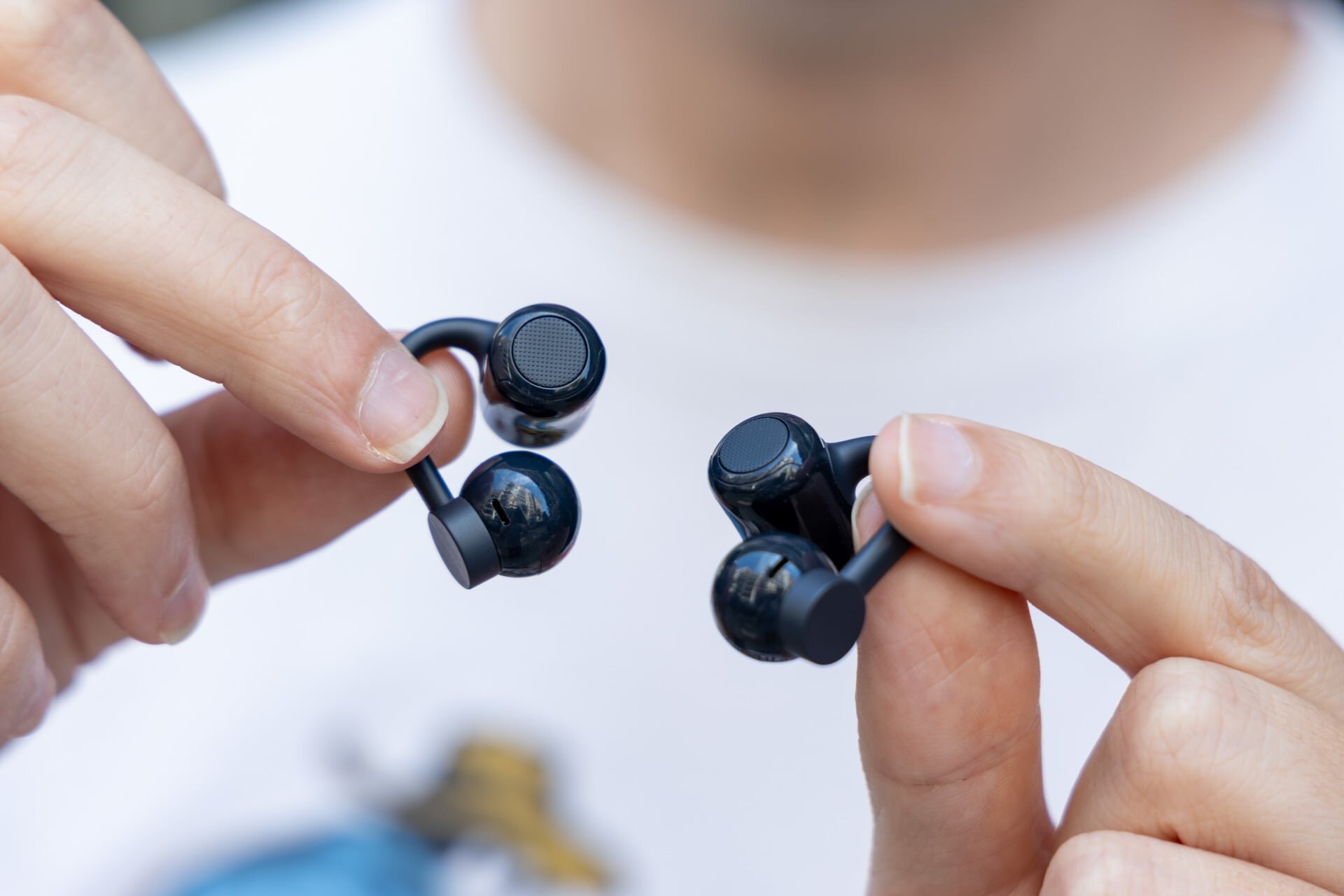
Though U.K.-based audio/mobile company Nothing doesn't have a clip quite yet, CMF, its budget-conscious subsidiary, just launched its first in the category—the $99 CMF Clip Pro . In a lot of ways, it's business as usual in the clip-style wireless earbuds playbook, but there are a few twists here that make it feel like a worthy addition to the open wireless earbuds universe.
The CMF Clip Pro are clip-style wireless earbuds with a competitive price and decent audio quality
Nothing may have its Ear Open wireless earbuds , which wrap around the backside of your ears as opposed to around the front like a clip, but this is CMF's first open-ear product, and it's a fairly strong start.
I listened to the usual suspects for testing, like "Any Major Dude Will Tell You," by Steely Dan, and I liked the balance of the Clip Pro. Vocals were upfront while listening in the out-of-box EQ, but I was still able to pick out different guitar tracks, keys, and even a decent amount of bass. That last category, bass, is notable since clip-style wireless earbuds often lack in low end, but the Clip Pro come with a feature called "Bass Enhancement" to offset that.
Admittedly, I was a little worried when I saw it listed among the features of the Clip Pro—I hate over-amplified, synthetic-sounding bass boost—but once I tested Bass Enhancement out, I couldn't listen any other way. I think CMF strikes a good balance between beefing up the low end without overpowering. That balance was so good that I kept the feature at its maximum level (level 2) out of personal preference.
That solid low-end balance translated well to other, non-rock genres, too. Daft Punk's "Da Funk" had a good mix of low end, though the thumping bass of that song did encroach a bit on midrange frequencies. Generally speaking, I liked the Clip Pro more in rock genres than electronic ones.
Luckily, there are preset and custom EQ options in the Nothing X app, and switching to the electronic EQ does help (generally) if you're listening in that genre. Not every EQ preset is worth using, though. The "rock" preset, for example, sounds—how should I say this—like hot garbage. It drowns out vocals and flattens the mix that I can only describe as borderline unlistenable. The "enhance vocals" EQ, however, is handy and helped make podcasts easier to hear on the subway. These wireless earbuds (like most open wireless earbuds) lack any personalized EQ that tailors tuning to your hearing.
Speaking of changing up the sound, there's spatial audio in the Nothing X that you can toggle to "fixed." I didn't notice a huge difference with spatial audio toggled on, but I'm still not a huge fan of CMF's spatial audio—I think it makes everything sound just a little darker and unbalanced. The good news is you can just as easily ignore it.
If there's one area that I wish CMF went a little further on, it's volume. While every pair of open wireless earbuds I've ever tested struggles to compete in loud noise scenarios, I found that the CMF Clip Pro struggled just a bit more than higher-end pairs from Shokz and Bose. On the subway, the Clip Pro are easily drowned out, and sometimes they were a bit hard to hear even when I was running on the treadmill and walking on the sidewalk.
Calling was also so-so. CMF does a decent job of mitigating background noise on calls, but that can make your voice sound distant. In a test call, I spoke with simulated street noise on and off, and the person I called told me the ambient noise wasn't overwhelmingly audible, but my voice clarity diminished a bit while it was on. They rated my call a 6.5 out of 10—not great, but not awful.
Still, I think the CMF Clip Pro punch above their weight class in terms of audio quality, and for the $99 price tag, I don't have too many complaints. If you really care about audio quality, though, it might be worth spending the extra money for pairs like the OpenDots 2 , which provide a louder and more nuanced audio quality experience.
If there's one area where CMF manages to separate itself from the pack, it's hardware. In the traditional Nothing style, CMF takes some liberties with design, and with the Clip Pro, that means including a Smart Dial on the wireless earbuds' charging case.
A Smart Dial is pretty much exactly what it sounds like—a dial that you can twist and push to control different things. The actions are programmable in the Nothing X app, but I have mine set to control volume with a twist, and skip tracks back and forth with double or triple presses. A single press pauses or plays audio. It's not revolutionary to be able to do that, but I do enjoy it even if it's not super practical. Spinning the dial gives a satisfying click as you go, and pressing the button is also nice as well.
There is a slight delay when you're controlling volume (or at least there was on my iPhone 17 ), which isn't the most annoying thing in the world, but it does add a little bit of friction to the process. It's not enough for me to deduct points from the Smart Dial, but you should know that the experience isn't totally seamless.
The good news is, if you don't want to use the Smart Dial, you absolutely do not have to. There's a physical button on both earbuds, which I much prefer over touch controls, and it works just fine and can be programmed to do the same stuff in the Nothing X app. Buttons work fine! No notes.
Like most clip-style open earbuds, the Clip Pro are built with comfort in mind, and comfort they do achieve. I wore the Clip Pro for a few hours cumulatively (as long as two hours at a time), and didn't ever feel like I wanted to rip ...
AIPROPX is an independent multi-source news index — we track, compare, and connect coverage from across the web into one place you won't find anywhere else.