There's always a foggy town that instills a certain fear, cryptic puzzles within that tense atmosphere, and an underlying trauma to ground the chilling horror. I had an inkling that Silent Hill: Townfall could nail the series' particular style of horror, and after getting three hours of hands-on time with it, I'm thrilled to say my intuition was spot on. This being in first-person definitely sparked the thought of what P.T. could have been, because my time with Townfall showed that the more intimate interaction with the environment can bring you closer to both the story it's trying to tell and the gameplay elements that give rise to such dread. I came in thinking Townfall would be just another direction the series could explore, and came away eager for whatever comes after the end of my preview demo.
Silent Hill: Townfall is developed by Screen Burn, which was previously known as NoCode, the crew that made the space-thriller Observation and has a direct lineage with Alien Isolation. Director Jon McKellan worked on it (and directed its DLC) and it's a pretty clear inspiration for Townfall in terms of it being first-person and the way it builds tension through feeling vulnerable as the player, having to rely on stealth before using combat as a last ditch effort. This is also a Silent Hill that's representative of the studio itself.
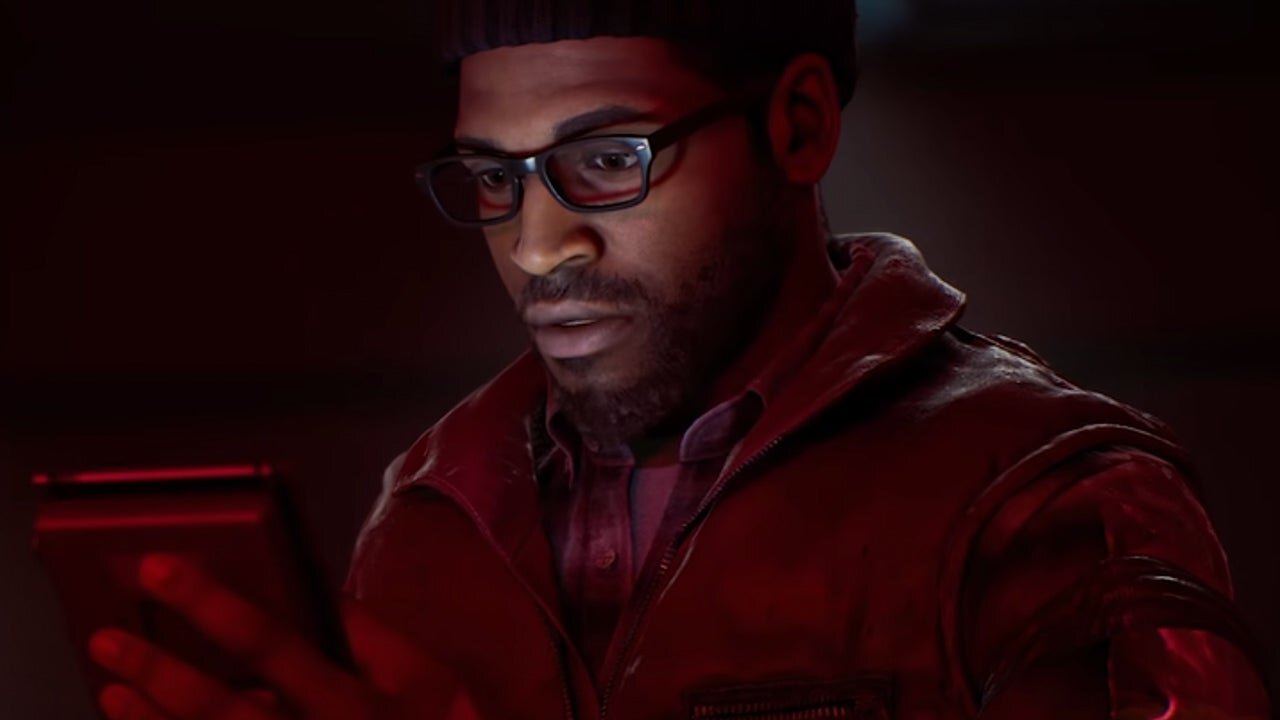
Townfall takes place in the 1990s in a fictional setting called St. Amelia, and closely reflects seaside towns of Scotland, where the team is from. While these ports tend to be quite foggy to begin with, its density is intensified as you uncover how a close-knit community fell apart from what seems to be a disease and mutation that ravaged its people and turned them into monstrous mutants. Playing as Simon Ordell, you're a fish-out-of-water as an American mysteriously washed ashore in a Scottish town. He's got an IV hooked up to his hand, and he's searching for a nurse named Zoe Ellis who lives in St. Amelia. She reaches out to him through a radio device he relies on called the CRTV, guiding him through vague, desperate voicelines – and when you get to her house, you see a portrait of Simon in her upstairs hallway; something weird is going on here.
Alien: Isolation is a pretty clear inspiration for Townfall. When I asked McKellan about this dynamic of having an American lead character, he said there's a good reason for it. While he couldn't give more away because of spoilers, he said it'll help players connect to him, being an outsider exploring the town to unravel a mystery that Simon is just as much in the dark about.
Analog Boy in a Digital World
The CRTV is the main crux of Townfall's gameplay – every Silent Hill uses a radio as a key item, and Townfall follows suit, but there are key differences here that bring you closer to the world itself. First, it's your visual guide for where to go. You can pull it up at any time and after tuning it for your next objective, the CRTV screen shows short disconnected clips of the buildings or alleyways you should see on your path to progress. This pushed me to really pay attention to the environment in a way having objective markers or a minimap could never really do. Simon has a physical map of the town you can pull out as well, which he'll automatically mark up based on story progress and clues you uncover in lieu of having a traditional quest log. I already felt like I had a deeper connection with the cobblestone streets and narrow alleys of St. Amelia just from the demo.
My favorite thing about the CRTV, however, is the way it's used to solve puzzles. I remember the pharmacy section so distinctly because it felt like a riddle and scavenger hunt that you're eager to solve because you think you already know how to get to the solution. I had to devise the four-number combination to open a lock for a key item; seems like pretty standard stuff, right? After having to color-tune the CRTV, it kept showing a series of seemingly unrelated closeups of objects within the pharmacy. Each clip and object represented a number on the lock, and upon closer inspection without explanation or hand-holding, I was able to determine what these clues were communicating. It's that level of trust Townfall has that you can figure out what it's trying to tell you.
There's one in an earlier section that's like an escape room that tees up this idea, where you have to look at photos on the wall, journal entries, and markings on a calendar to unlock the door and get out. This particular style of puzzle design lends itself extremely well to the first-person perspective because it's able to let the subtleties in the environment be part of the solution. Something McKellan also emphasized in our conversation is that the puzzles themselves are designed to be part of the story, too, where the clues and solutions tell you about the characters or what happened in the town to help develop your understanding without having to say things out loud.
Now, Townfall wouldn't be much of a horror game if the lingering dread wasn't backed by a creeping threat. In this early chapter, I only had 2x4 planks and a super-loud revolver with limited ammo to defend myself from the mutated monsters sprinkled throughout the streets. So, stealth is the main weapon, really. And that's where the CRTV comes in again. Enemies show up as radio signals and you have to manually tune it to mark them on the CRTV, which lets you see them on the screen and through walls when pointing it in their direction. Once they're marked, you can cycle through them quickly without having to manually tune it again, but keeping track of which enemy was which on the frequency bar became a bit of a pain when four or five of them were within range. However, I found this to be a sensible way to even the playing field with stealth, letting me monitor patrol patterns from safety before making a ...