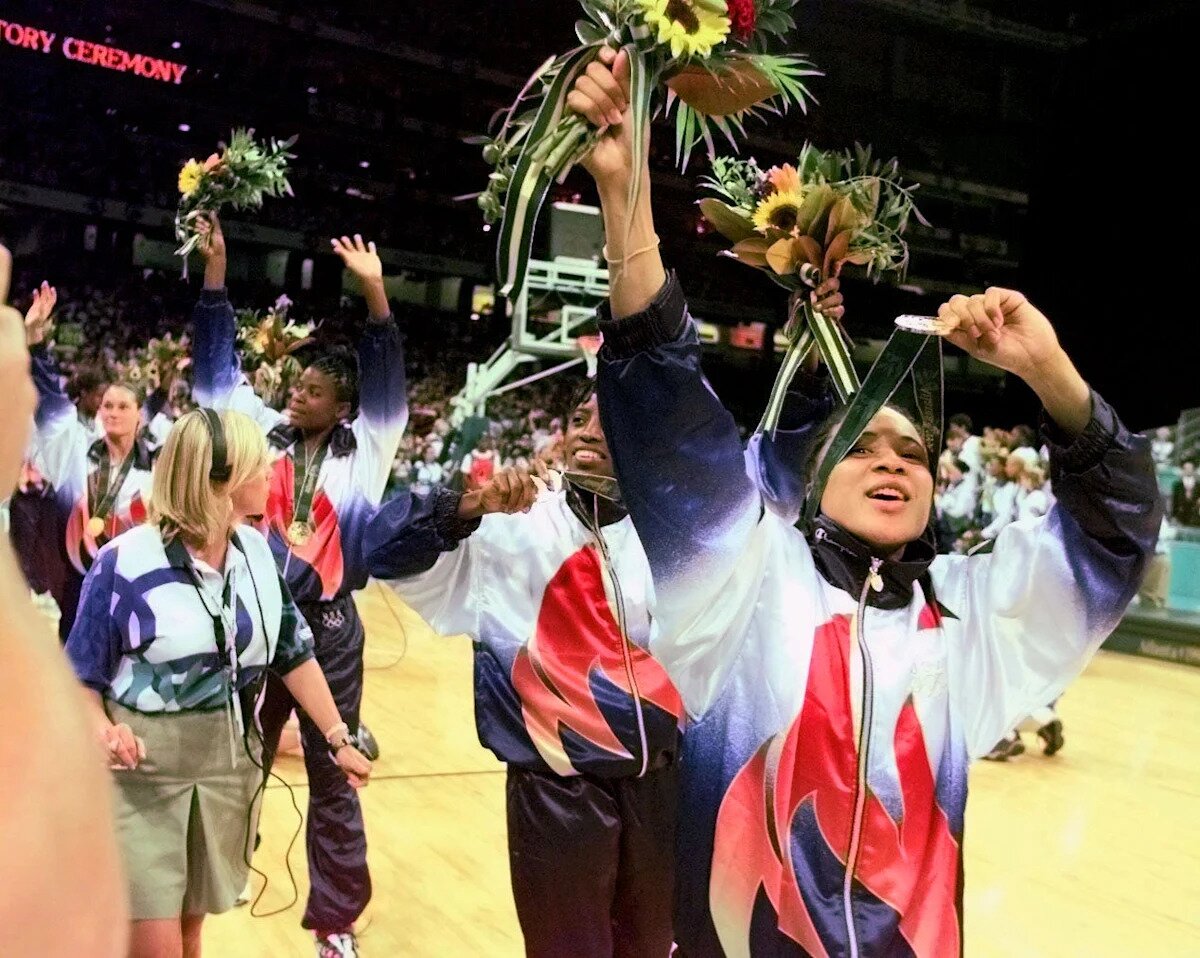
UNCASVILLE, CT – The WNBA as we know it wouldn't exist without the efforts – and wins – of the 1996 U.S. Olympic team , which at long last find its place in the Naismith Basketball Hall of Fame.
The 1996 team won the first Olympic gold medal of the streak still alive today, and the eighth consecutive gold medal won by the U.S. women's basketball team in 2024 set the record for the longest streak by any team sport.
But that team also carried the weight of proving women's professional basketball could thrive in the U.S., a test they passed with flying colors. The WNBA played its first season the next summer in 1997, and the league is thriving in its 30th season now.
"It's long overdue. I think sometimes in our history, you know, we don't really reach back," South Carolina coach Dawn Staley said a day before the Naismith Basketball Hall of Fame enshrinement for the 2026 class on Aug. 15 (7 p.m. ET, NBA TV) at Symphony Hall in Springfield, Massachusetts. "But how it turned out and who I'm going in with means the world to me. All of them, we are sisters that are joined by hard work and success, and sometimes that's not often rewarded. But this is great that we're being rewarded in this way."
The team inspired the greats who came after them, like Tennessee legends Chamique Holdsclaw and Candace Parker, who are also part of the 2026 class. Holdsclaw had posters of that team on her wall growing up, and she said they made her believe women's professional basketball would become a reality.
Parker called the 1996 team a "catalyst" for why all women's professional sports exist today.
"I think of them as opportunity," Parker said Aug. 14. "It's surreal I'm going into the hall of fame class with them."
Staley played alongside legends like Lisa Leslie, Sheryl Swoopes and Cynthia Cooper on that team. But she also played with former Lady Vols Carla McGhee and the late Nikki McCray-Penson, who Staley later hired as assistant coaches at South Carolina.
Staley recounted the stakes at the time, the players like Lynette Woodard and Nancy Lieberman who paved the way for them; the people behind the scenes like former NBA commissioner David Stern and the WNBA's first president Val Ackerman.
All those people made it possible to "strike when the iron was hot" and start the WNBA on the heels of the 1996 team's dominance and popularity.
The 12-player team spent the year leading up to the 1996 Olympics in Atlanta playing on a 52-game tour around the world, all while being reminded they weren't on the Olympic team yet, just the U.S. national team, Staley said.
They understood what was expected of them – not just to win gold, but to prove they deserved a professional league.
What former Stanford coach Tara VanDerveer, who coached the 1996 team, put them through physically gave them the mental strength to be unafraid to fail in that mission, Staley said.
"When the two leagues, the ABL and the WNBA, were announced during that year, although we felt the pressure, we knew we couldn't fail," Staley said. "We knew we couldn't fail because of the preparation and the mental strength that we carried. It was very indicative of what women's sports have had to go through in order for us to be a sport."
Cora Hall is the University of Tennessee women’s athletics reporter for Knox News. Email: [email protected]; X: @corahalll ; Bluesky: @corahall.bsky.social .
This article originally appeared on Greenville News: Dawn Staley says 1996 Olympic team entering Naismith Hall of Fame 'long overdue'