We can't ask Homer what he thinks of Christopher Nolan's The Odyssey , but we can ask someone who knows it better than most.
Emily Wilson, the British-American classicist whose 2017 translation of the epic poem was one of the director's inspirations , has been asked for her opinion on The Odyssey film a few times since the film's release on July 17. And the reactions have gone from light criticism to scathing response.
SEE ALSO:
'The Odyssey' hints at 3 myths without detailing them. Here are the untold stories.
Nolan has cited Wilson's work as among his influences for the film, notably Homer's opening line, "Tell me about a complicated man."
When asked for her response to The Odyssey by the Associated Press on July 20, Wilson said, "I want to celebrate the fact that so many more people are aware of The Odyssey and were brought back to the poem. But at the same time, I had the sense that Christopher Nolan was trying to pack everything in while missing themes that were essential to the poem."
However, in a rather brutal 4,000-word review for the London Review of Books , published July 24 in print and now online, the professor of classical studies at the University of Pennsylvania went to town on Nolan's adaptation.
"Nolan’s Odyssey lacks many of the elements that make the poem great," she writes. "It has nothing convincing to say about time, memory, history, war, or about the relationship between one warrior’s glorious return and the lives of his family, adversaries, comrades, friends and neighbours. It lacks psychological, emotional, political and ethical depth. Its narrative structure is gimmicky. The writing is abysmal. None of the characters has convincing motivation for their actions or words. There are no sex scenes, and all the food looks horrible."
Girl, tell us what you really think!
"It lacks psychological, emotional, political and ethical depth. Its narrative structure is gimmicky. The writing is abysmal. None of the characters has convincing motivation for their actions or words. There are no sex scenes, and all the food looks horrible."
- Emily Wilson
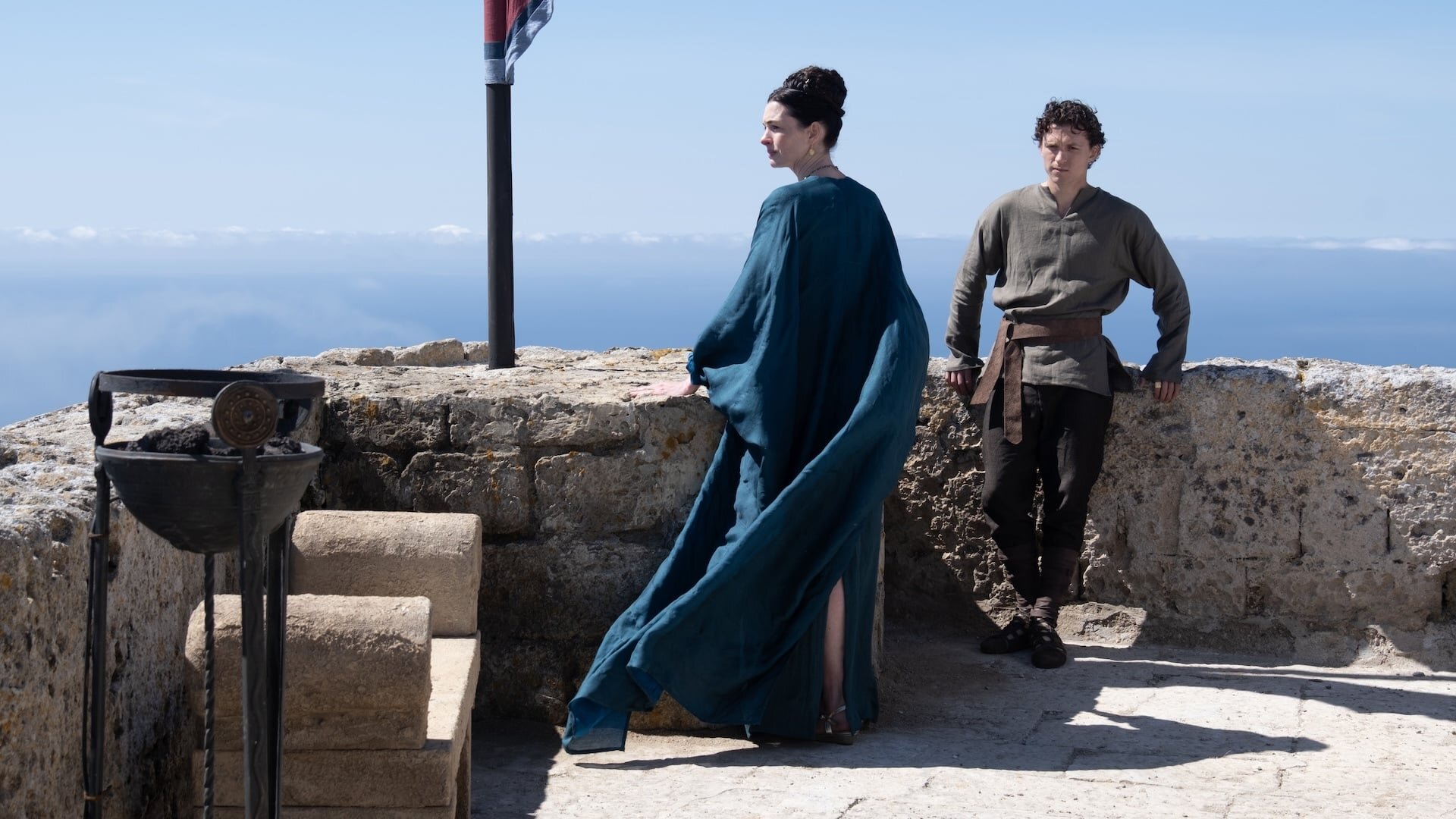
Wilson's translation famously reexamined the role of women in The Odyssey , like the characters of Penelope and Circe (played onscreen by Anne Hathaway and Samantha Morton, respectively). And Nolan's film does give women more agency than they've had in his previous work, as Mashable's Belen Edwards writes in her review , "Nolan makes sure to emphasize the women of The Odyssey 's complexities, as opposed to letting them linger on the sidelines or in dead wife montages . Most importantly, he lets them be angry."
What did Wilson think? "There are more female characters than in most Nolan movies, thanks to the source material. But none of them has much to say, in contrast to the characterisations in the poem," she writes, particularly scrutinising an under-written Calypso (Charlize Theron) as "an unpaid therapist, soothing the soul of the bedraggled, PTSD-ridden Odysseus with drugs, and graciously listening to his disjointed tale of woe."
Featured Video For You
What It Was Like Shooting One of Oppenheimer’s Most Remarkable Moments
Granted, it's nothing short of a herculean task to try and fit every last element of Homer's 12,000-line poem into a film that runs just under three hours, despite that IMAX screen size . Nolan does hit the major plot points of The Odyssey 's 20-year chronology — the Trojan Horse, Penelope's sleazy suitors, Odysseus (Matt Damon) and his men running into the cyclops Polythemus (Bill Irwin) , the sirens, the Scylla monster, and the nymph Calypso along the way — he leaves many myths deliberately untold.
Wilson does eventually return to a shadow of her original response, seeing Nolan's film as "still an event to celebrate," with the film "bringing audiences back to cinemas." However, the review is still pretty withering, especially a section which reads, "My eyes stayed dry, even for Argos the dog," and one in which Wilson yearns for "a tub of wax for my ears" to survive the film's booming soundscape.
"I had hoped that Nolan’s affinity with these Homeric themes might push him to new creative heights, and enable him to conjure more believable characters," Wilson writes. "But The Odyssey features his usual combination of grandiosity and superficiality."
I'm going to leave the hand-wringing to the internet on this one (and it's happening), but it's interesting to hear scholars like Wilson's responses to The Odyssey , a text that has been reinterpreted for thousands of years through literature, art, film, video games, and myriad creative avenues.
As to what Homer would think? No one can ever know that, stop speaking for an ancient Greek poet on X.
The Odyssey is now in cinemas.
UPDATE: Jul. 29, 2026, 12:01 p.m. GMT This story was originally published on July 20, 2026, then updated and republished on July 29 after Emily Wilson's essay appeared in the London Review of Books.