This is one outlet's own report from BBC Sport — the article as it was filed. Other outlets are covering the same event; open the full story to compare every source side by side.
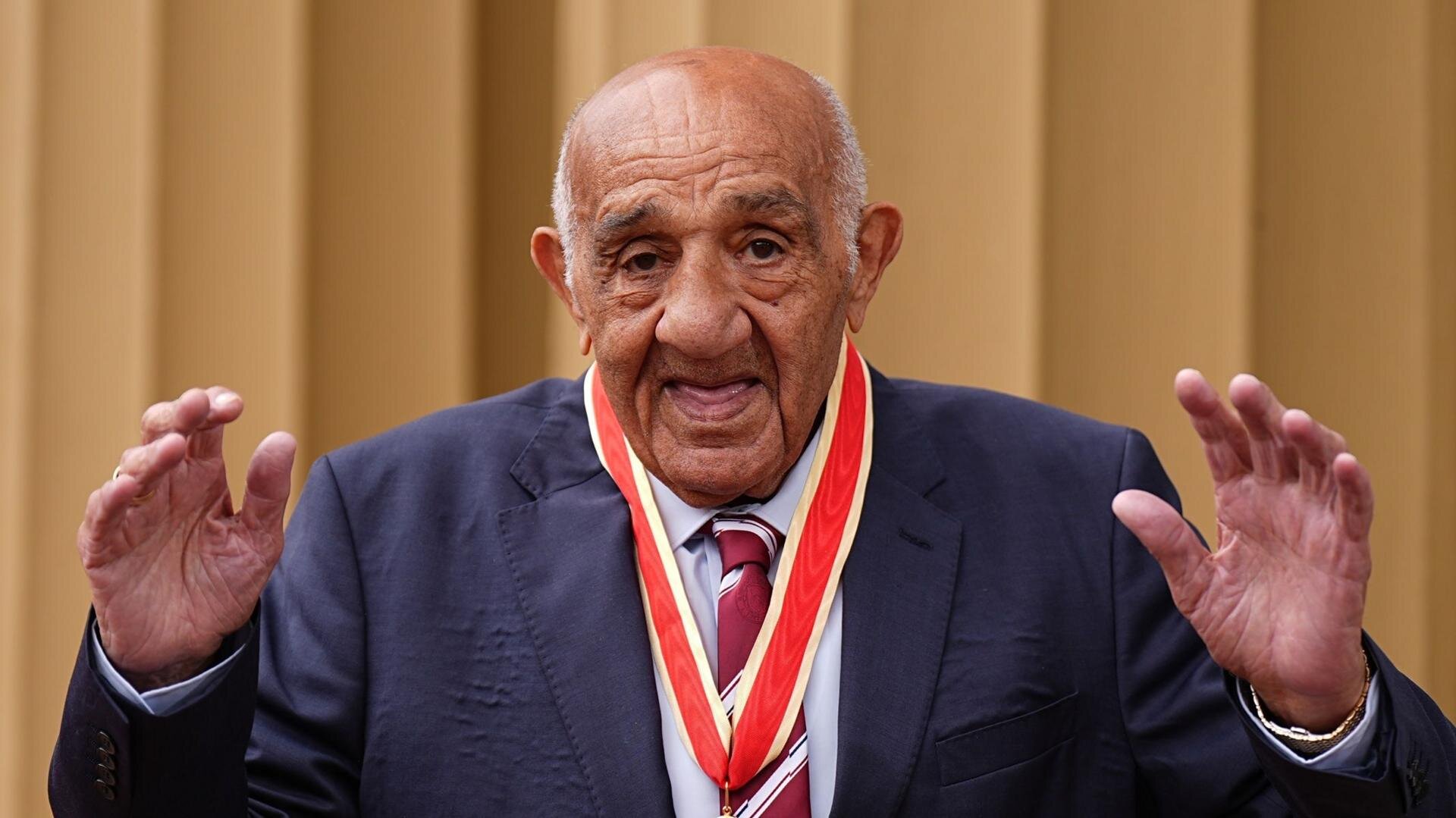
Last year, he became the first player in rugby league's 130-year history to receive a knighthood.
Born in Cardiff in 1934, Boston grew up playing union but - overlooked by his home club - came to the attention of rugby league scouts while on national service in the north of England, signing for Wigan in 1953 as a 19-year-old.
Despite having played just a handful of games in league, the young winger's talent was quickly evident and Boston was picked for the 1954 Great Britain side that went to Australia and New Zealand - becoming the first black British player to tour down under.
He reached the 100-try milestone in just 68 matches after his switch from union.
Boston's scoring ratio is extraordinary, claiming 478 tries in 488 games for Wigan and helping them win three Challenge Cups and the Championship.
Boston: The winger who rewrote rugby league's record books
Boston finished his playing career as a second row with Blackpool Borough.
In all, Boston scored 571 tries in his career - a total surpassed only by Australian legend Brian Bevan in top-class rugby league - and is one of the truly great British rugby league players.
After his retirement from the game, Boston ran the Griffin Hotel close to Wigan's Central Park Ground where one of the stands was named after the Welshman.
Boston was among the first players inducted into the Rugby League Hall of Fame in 1988 and is one of five rugby league players to be included in a statue at Wembley Stadium.
He is immortalised in two more statues, in Wigan where he is an adopted son and in his home city of Cardiff.
Boston was appointed an MBE in 1986, and was among the first to be inducted into the Welsh Sports Hall of Fame , external when it was launched in 1990.
In 2025, and having being diagnosed with dementia, he was awarded the highest honour, a knighthood by King Charles.
His death comes just weeks after the passing of his wife, Lady Joan.
Tributes have been led by Wigan owner Mike Danson, who said: "Billy Boston was everybody's hero, including my Mum's.
"His achievements in rugby league were extraordinary, and his knighthood was a fitting recognition of a career that brought great credit to Wigan and to the game.
"But Billy's legacy was not simply what he achieved. It was the humility with which he carried it. Despite everything he accomplished, he remained a quiet, dignified and deeply respected man.
"He leaves behind an example that will endure for generations. Our thoughts are with his family and those closest to him.
"A great man, and a true Wigan legend. He will be remembered with pride and affection."
In a released statement, Wales Rugby League said: "Today, rugby league has lost one of its greatest-ever players, Wales has lost one of its finest sporting sons, and our sport has lost a truly special gentleman."
The WRU also paid tribute, calling Boston "One of the best loved and most iconic figures in the history of Welsh sport."
Matt Newsum, BBC rugby league commentator
It is testament to the star power of Sir Billy Boston that even 56 years after he last graced a rugby pitch, young fans are fully aware of the legend that is the Welshman from Cardiff's Tiger Bay.
He had a uniquely unifying effect on a normally partisan and tribal rugby league community. Revered naturally in Wigan, his adopted home, but you won't hear a boo or jeer at mention of Boston anywhere - not even at sworn rivals St Helens where they appreciate a good footballer when they see one.
The sepia footage and slow shutter-speeds of the cameras that captured the magic of his playing days simply cannot dull his brilliance; whether it's bustling over for another try in cherry and white hoops at Wembley or crushing the Aussies at the Sydney Cricket Ground, Boston is a blur of speed, footwork and power.
Wing or centre, a wonderful finisher and a player whose innate talents were honed on those tough streets of his district - one that also produced fellow pioneers Roy Francis and Colin Dixon.
Many a fan will have drunk at the pub which provided some of his post-playing focus, the Griffin Hotel, close to the Central Park ground he scored so many of his 571 tries on - the best strike rate of any British player.
Still a regular visitor to Wigan games right up to his death, it was always a beautiful moment when the cameras found him, the crowd spotting him on the screen bursting into cheer, and the realisation creeping over his face in the shape of a smile.
It will take some getting used to, the empty seat at the Brick. He will be missed but certainly not forgotten.
Town honours 'rugby league legend' Sir Billy Boston
AIPROPX is an independent multi-source news index — we track, compare, and connect coverage from across the web into one place you won't find anywhere else.