This is one outlet's own report from Forbes — the article as it was filed.
AIPROPX ReportForbes · 2h ago
The Agricultural And Environmental Toll Of Russia’s War In Ukraine
Aerospace & Defense The Agricultural And Environmental Toll Of Russia’s War In Ukraine By Mark Temnycky ,
Forbes contributors publish independent expert analyses and insights. Mark Temnycky is a freelance writer focused on defense and energy Follow Author Aug 08, 2026, 06:00am EDT --:-- / --:-- This voice experience is generated by AI. Learn more . This voice experience is generated by AI. Learn more . Summary Russia's full-scale invasion of Ukraine has taken a severe toll on the country's agricultural sector and environment since February 2022. Ukraine was once one of the world's leading agricultural producers and exporters, prized for its fertile chernozem soil. The war has since scarred Ukraine's land, damaged water and sewage infrastructure, flooded farmland after the Nova Kakhovka Dam was destroyed, and disrupted grain exports through theft and a Black Sea blockade. Ukraine's nuclear power plants have also come under repeated attack. Given this destruction, Ukraine is pursuing accountability, having ratified a Convention establishing an International Claims Commission and preparing a $57 billion claim against Russia for wartime environmental and climate damage.
On August 5, CNN reported that Russia had launched a new missile strike on Kyiv and other surrounding cities and towns in Ukraine. At least 17 people were killed in the attacks, and major retailers, warehouses, and logistics centers were destroyed. Meanwhile, in the town of Brovary, a railway platform was hit by the Russian missile strike. Eight civilians were killed in the attack.
The United Nations has announced that Russian attacks have intensified in Ukraine, stating that July was the “deadliest month for Ukrainian civilians since April 2022.” The UN in its report also found that many of these Russian missile strikes and drone attacks have destroyed “homes, schools, public transportation infrastructure, water systems, and humanitarian warehouses.”
Since the start of Russia’s full-scale invasion of Ukraine in February 2022, the Office of the United Nations High Commissioner for Human Rights has verified over 65,000 Ukrainian civilian casualties. Additionally, the UN Educational, Scientific, and Cultural Organization reported that, as of July 29, over 500 cultural sites in Ukraine have been damaged . Additionally, a New York Times article stated that over 210,000 residential and public structures have been damaged in Ukraine. Furthermore, Ukraine’s Ministry of Foreign Affairs stated that, as of 2024, at least nine Ukrainian cities have been destroyed during the war. Finally, a joint Rapid Damage and Needs Assessment released in February by the Government of Ukraine, the World Bank Group, the European Commission, and the UN estimated that the total cost of reconstruction and recovery in Ukraine is almost $588 billion.
Besides these socio-economic consequences, Russia’s ongoing full-scale invasion has impacted Ukraine’s agricultural sector and environment as well. The ecological effects from the war have also had global implications.
Prior to the start of Russia’s full-scale invasion in February 2022, Ukraine was “ one of the world’s top agricultural producers and exporters .” According to 2021 data reported by the U.S. Department of Agriculture, Ukraine ranked seventh among global producers for wheat production, sixth for corn production, fourth for barley production, and second for sunflower oil. Ukraine was also ranked first among global exporters in sunflower oil, third among global barley exporters, fourth among global corn exporters, and fifth among global wheat exporters. Additionally, the U.S. Department of Agriculture report stated that “more than 55 percent of Ukraine’s land area is arable land.”
Ukraine’s black earth or black soil, known as chernozem , is rich in elements and nutrients, thus making the country very favorable for agricultural production. As a result, Ukraine has tens of millions of acres of cultivated land . (The Food and Agriculture Organization of the United Nations reports that Ukraine has over 60 million hectares of land, 42.5 million of which are used for agriculture .)
The war, however, significantly affected Ukraine’s agricultural production and the environment. For example, Radio France Internationale reported that in 2025 alone, nearly one million hectares of land were scarred by Russia’s full-scale invasion. RFI added that satellite data it acquired had shown that fires consumed nearly one million hectares in Ukraine, roughly a third of which was farmland.
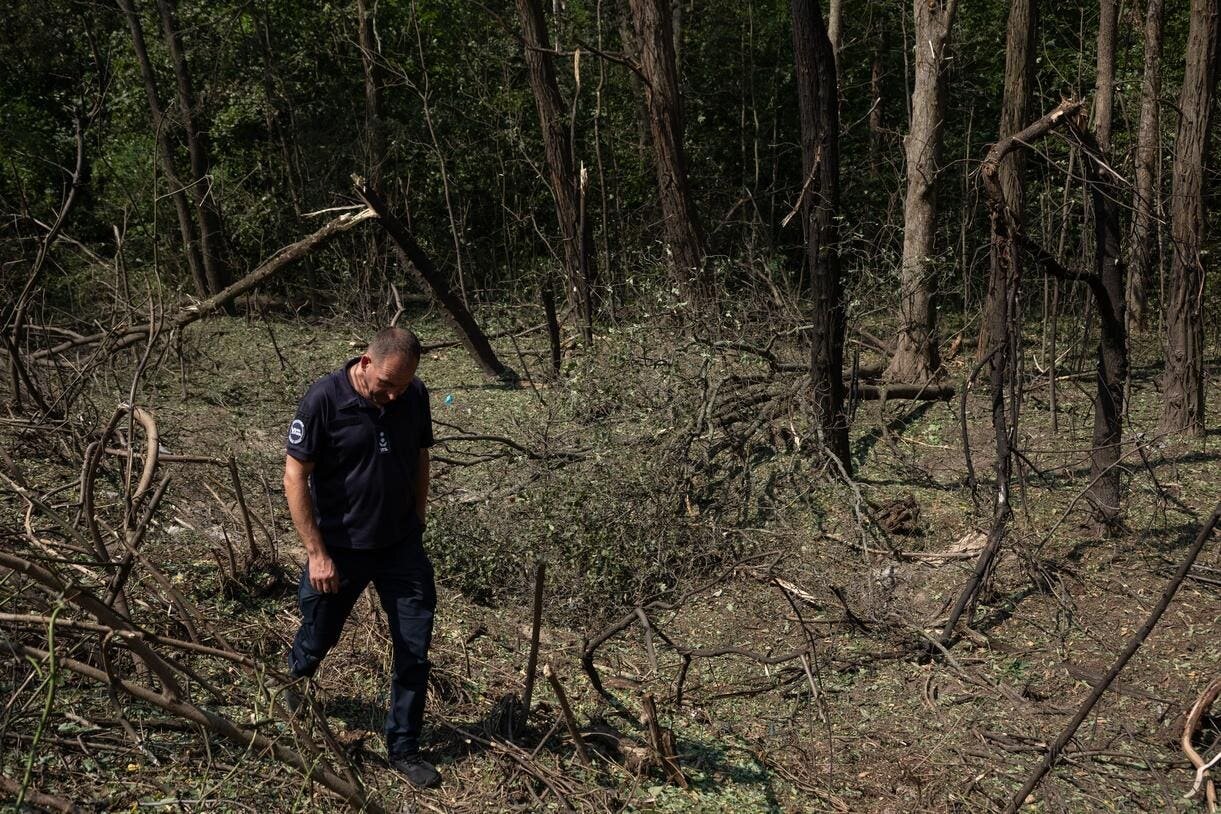
Other problems exist with Ukraine’s arable land. Pollution from vehicles and weapons fired during the war has spewed chemicals into Ukraine’s air, water, and soil, contaminating them. Additionally, 30% of Ukrainian land had “ landmines and unexploded ordnance ,” making these areas unsuitable for farming. Deforestation and wildfires have contributed to this loss of arable land as well. Greenhouse gas emissions in Ukraine have also increased , thus polluting Ukraine’s air quality.
Damage to Ukrainian facilities and buildings has added to the negative consequences for Ukraine’s agricultural sector and the environment. The Russian shelling of Ukrainian factories has resulted in the damaging of sewage pipes, which have leaked wastewater into Ukraine’s water supply. Sewage pumping stations and sewage treatment plants have also been destroyed throughout the country.
Meanwhile, some Ukrainian farmland has been consumed by flooding. In June 2023, the Nova Kakhovka Dam, which contains a vast reservoir of water used to supply the Crimean peninsula as well as the Zaporizhzhia Nuclear Power Plant, was destroyed . Reuters reported that the flooding covered “tens of thousands of hectares of agricultural land in southern Ukraine,” making the land unusable for farming. Additionally, following the dam’s destruction, oil and various chemicals spilled into the reservoir, and hundreds of animals died in the flooding .
AIPROPX is an independent multi-source news index — we track, compare, and connect coverage from across the web into one place you won't find anywhere else.