This is one outlet's own report from Forbes — the article as it was filed.
AIPROPX ReportForbes · 2h ago
Ukraine Carries Out Aerial Assaults Dropping Robots From Drones
Aerospace & Defense Ukraine Carries Out Aerial Assaults Dropping Robots From Drones By David Hambling ,
Forbes contributors publish independent expert analyses and insights. I'm a South London-based technology journalist, consultant and author Follow Author Aug 03, 2026, 08:38am EDT Aug 03, 2026, 08:57am EDT Summary Ukraine has ushered in a new era of warfare, executing the first known drone-carrying-robot attack using "marsupial" tactics. A heavy-lift drone deployed an ARK-1 UGV with an anti-tank mine behind enemy lines, showcasing long-range, low-risk deployment by teaming uncrewed systems. This innovation overcomes mobility limitations and reduces human risk, a concept the U.S. previously explored but failed to implement. Such robotic heliborne assaults suggest a future where autonomous forces lead maneuver warfare, with human troops consolidating later. Ukraine aims to replace 30% of frontline troops with UGVs, highlighting the rapid integration of advanced robotics into modern combat.
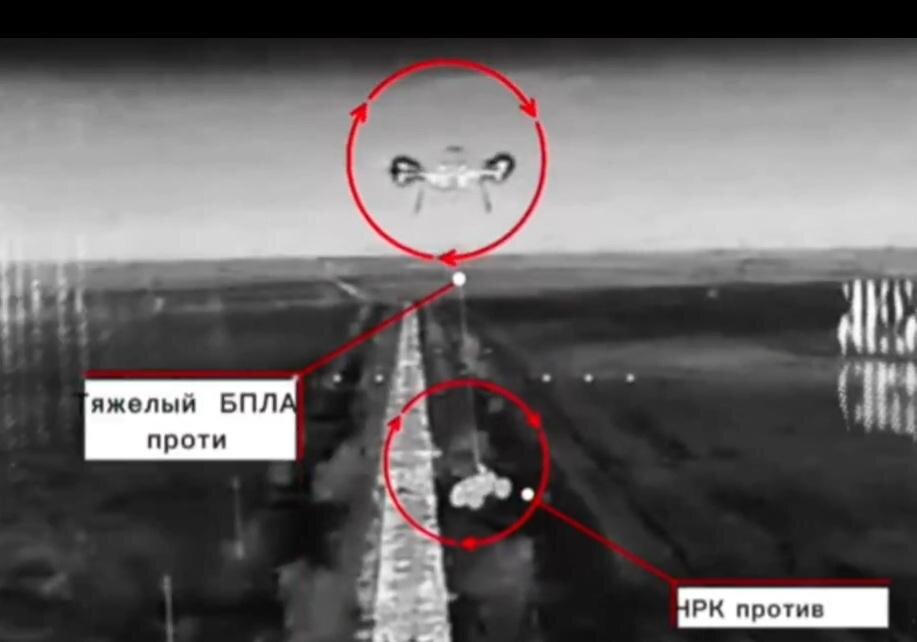
The next stage of warfare has arrived: aerial assault by robots transported by drones. Ukraine recently carried out the first known attack of this type , opening up a range of new possibilities in which uncrewed systems team up to carry out tasks which were previously impossible.
Drones carrying other drones, known as marsupials, existed only a concept before this war. The U.S. military has experimented with the idea many times over three decades, but never progressed beyond demonstrations. Now Ukraine is using the technique in action and the only limit may be the imagination of the operators.
The marsupial approach is usually adopted as a way of overcoming the mobility limitations of a small drone. In Ukraine this applies especially to FPVs, and as a result we have seen several types of drone mothership – big drones carrying smaller drones a long distance and releasing them close to the target area. In addition there are ground robots transporting and launching FPVs, and robot boats acting as uncrewed aircraft carriers launching FPVs both for strikes and to intercept large drones.
Another example appeared recently when a robot boat transported a tracked Uncrewed Ground Vehicle or UGV in the first ever uncrewed amphibious assault on Kinburn Spit. The robot, armed with a remotely-operated machine gun turret, rolled up the beach and moved inland. This was most likely a reconnaissance mission to flush out any remaining Russian troops in the area. Similar UGVs are used in both defensive and offensive operations, usually working with infantry but sometimes in completely uncrewed missions.
A heavy-lift multicopter transporting a ground drone was therefore not much of a surprise. The UGV appears to be an ARK-1 , a small vehicle with all-terrain wheels claimed to be capable of 25 mph, capable of traveling 9 miles with a 33-pound payload. With a Starlink satellite receiver, it can be controlled at any distance – “ we can drive it around here from Kyiv” , a company representative told Janes.
ARK-1s transport supplies, gather intelligence and carry weapons. Some have been fitted with machine guns; this example carried a TM-62 anti-tank mine. In previous attacks UGVs with mines have demolished Russian-occupied buildings and fortifications.
The heavy-lift drone could simply have dropped the mine itself. But this technique means the drone stays well outside the range of defensive fire and jamming. The UGV can travel several miles, though a route would need to be thoroughly surveyed to ensure that the vehicle could traverse it without getting stuck.
The UGV could also be used for ambush. Once delivered, UGVs can wait until Russian forces are spotted nearby and maneuver into position to attack. FPVs often lurk in ambush in the same way, but the UGV carries far more powerful warhead and the quiet UGV moving at ground level is less likely to be spotted and harder to stop with a shotgun.
Perhaps the only surprise is that it took so long. Heavy lift transport drones and UGVs are both well proven technologies, and combining them is not rocket science. What may be most frustrating to U.S. observers is that the Pentagon has developed this same technology many times and abandoned it.
Back in 2003, the Unmanned Aerial Vehicle Battlelab, and co-sponsored by the AFRL, carried out Project STORK in which small UGVs were parachutes down from a drone flying at 400 feet top carry out an urban reconnaissance mission. This was the first known deployment of UGVs by drone.
In 2009, the Army Expeditionary Warrior Experiment included a demonstration of a Fire Scout uncrewed helicopter landing a Dragon Runner UGV , a tracked 13-pound reconnaissance vehicle.
Again, in 2014, the Army Robotics Technology Consortium sponsored a test called “ Extend the Reach of the Warfighter through Robotics ” in which a large K-MAX uncrewed helicopter successfully delivered a Squad Mission Support System (SMSS) vehicle. The SMSS is a supply carrier weighing almost two tons. This time the goal was to show how a robotic resupply mission would work, with the SMSS traversing the dangerous “last mile” covered by enemy fire which might have been too hazardous for an air vehicle.
Little seems to have come from these or many other projects. As one disappointed researcher put in after demonstrating a project to remotely deliver robots able to crawl through rubble: “It worked fine but it wasn’t particularly interesting to anyone.”
The U.S. military has the plenty of money and plenty of high-tech gear waiting on the shelf, both resources in short supply in Ukraine. But without the interest and the motivation to develop, produce and deploy robotics systems, the U.S, has spent decades going nowhere. And—as with so many other drone developments – Ukraine has put together a working system on a shoestring budget and used it in action.
There are serious questions over whether traditional style heliborne assault can still work on the modern battlefield. The ...
AIPROPX is an independent multi-source news index — we track, compare, and connect coverage from across the web into one place you won't find anywhere else.