This is one outlet's own report from The Atlantic — the article as it was filed. Other outlets are covering the same event; open the full story to compare every source side by side.
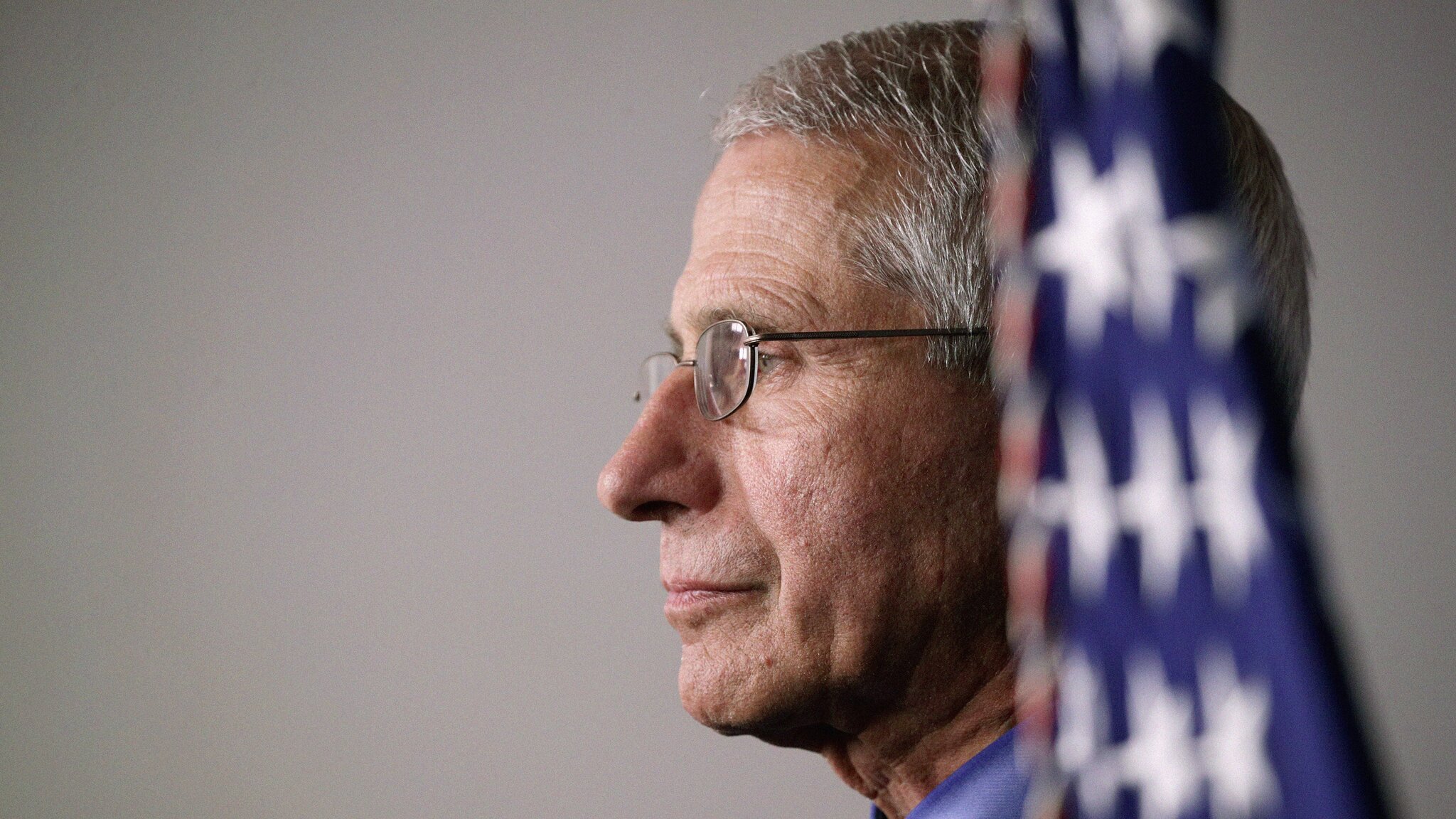
W hen Anthony Fauci arrives on Capitol Hill tomorrow to testify before Congress, he will be trailed by a security detail he’s paying for himself. Fauci has been testifying before the nation’s elected officials for roughly four decades now, since his days at the forefront of early AIDS research. In years past, he would have prepped by consulting colleagues and poring over data—he would have been there, as he might say, to speak for science. Now he’s under a subpoena from the Senate Homeland Security and Governmental Affairs Committee, and has been conferring with his lawyers on how best to navigate a grilling about his own actions—and what seems to be an effort to catch him in a lie, one that isn’t covered by the blanket presidential pardon he received from Joe Biden. Once famed for being America’s consummate nonpartisan scientist, Fauci is now a far more polarizing kind of public figure: beloved and reviled for what he’s said to represent; targeted by threats to end his life. The more he talks, the more he stands to lose.
This is not the professional coda that Fauci’s half century in government once seemed to be heading toward. For decades, he has been one of the nation’s best-known and most-respected scientists. In the late 1960s, Fauci helped lead a team at the National Institutes of Health that repurposed cancer therapies as cures for several once-fatal rheumatological conditions. His later partnerships with AIDS activists and his push to accelerate experimental-drug trials for HIV helped transform the infection into a survivable condition. He went on to serve as a chief architect of PEPFAR, a global HIV-prevention-and-care program that has prevented an estimated 25 million deaths since 2003. And over the course of his nearly 40 years as the head of the National Institute of Allergy and Infectious Diseases, he turned one of the NIH’s quietest branches into a $6 billion research juggernaut. Fauci has “saved more lives, created more amazing infrastructures for developing research opportunities, cured more people, provided health care to more people both in the United States and abroad, probably, than any single scientist in his lifetime,” Larry Corey, an infectious-disease expert at the Fred Hutchinson Cancer Center, told me.
His achievements speak to his scientific credentials, but also to his ambition and savvy. Fauci was a master of the system: He knew how to acquire and maintain scientific power; he had the ear of both academics and politicians. He eagerly courted attention, while maintaining that he was “completely nonpolitical,” to the point that even his close colleagues at NIAID had no idea how he voted in elections. “Congress really saw him as a straight shooter,” Judith Feinberg, an infectious-disease researcher who worked at NIAID early in her career, told me, without “a particular political axe to grind.” Fauci was that rare bureaucrat who could be given a Presidential Medal of Freedom by George W. Bush and then be praised as a “once-in-a-century public health leader” by Barack Obama.
But ever since President Trump retook office in 2025, his administration has engaged in a systematic effort to obliterate Fauci’s legacy. One of Trump’s first actions in office—just days after Biden issued his pardon—was to strip away Fauci’s government-funded security detail. Fauci’s image was cut out from a mural on the NIH campus around the same time. By the end of spring, the administration had rerouted government webpages once dedicated to information on COVID resources to a new site, alleging that Fauci had tried to hide the “true origins” of COVID. Trump officials went on to largely dismantle PEPFAR, imperiling many of the 20 million people the program has supplied with lifesaving therapies. They ousted most of NIAID’s long-standing leadership, including several officials who served under Fauci for years, as well as Jeanne Marrazzo, the director who succeeded him; they forced out Fauci’s wife, Christine Grady, once a bioethicist at the NIH, and arrested David Morens, one of Fauci’s longtime advisers. (Morens has pleaded not guilty to charges of conspiring to hide and destroy government records.) “Anything that he had his name on, or that was under his accomplishments, is being destroyed,” Judith Currier, an infectious-disease expert at UCLA, told me. (The White House and the Department of Health and Human Services did not respond to requests for comment.)
The attacks haven’t let up. In recent days, Rand Paul, now the chair of the Senate Homeland Security and Governmental Affairs Committee, has released troves of documents related to Fauci; among them are more than 1,500 pages from Fauci’s private diary. In one set of entries, which runs from the end of 2019 through his retirement from government at the end of 2022, Fauci meticulously chronicled his growing fame. “Truly unbelievable,” he wrote in May of 2020. “People naming their dogs after me. Sally Quinn saying that I was the erotic lead male in a book she wrote in 1994.”
Fauci has observed this campaign of vengeance and humiliation mostly without public comment—marking one of the quietest stretches of his career to date. (He declined to be interviewed for this article.) Tomorrow, though, Paul is forcing him to talk. At the age of 85, Fauci will be dragged onto the Senate floor to defend his reputation—but something bigger will be contested, too: not what Fauci did during his years in government, but how he did it—the way he wielded his nonpartisanship to gain resources for his institute and stay in the good graces of powerful people. That approach was once routine, and Fauci perhaps its most skilled practitioner. Now its future is in doubt.
F or all of Fauci’s fame and clout , he was not necessarily the most obvious choice, in early 2020, to be the public face of the United States’ response to COVID. In title alone, the CDC director, then Robert Redfield, would have been a far more obvious choice, Georges Benjamin, the executi...
Anthony FauciCapitol HillCongressFauciAIDSNowSenate Homeland SecurityGovernmental Affairs CommitteeJoe BidenOnceAmerica’sFauci’s
AIPROPX is an independent multi-source news index — we track, compare, and connect coverage from across the web into one place you won't find anywhere else.