At the end of last month, id Software lead services programmer Chris Hayes offered a blunt appraisal of Xbox's management during an interview with YouTube channel Auf ein Bier, saying Microsoft's repeated mass layoffs have proved that its leadership "fundamentally don't understand art."
Elsewhere in the interview, Hayes expanded the scope of his criticism beyond the immediate damage wrought by the latest round of Xbox cuts . Looking at the industry more broadly, Hayes, who's still a Microsoft employee, says mass layoffs and nearsighted cost cutting are producing worse games, because they're denying game developers the opportunity—and motivation—to improve their craft.
While major companies like Microsoft might brag about the "great IPs and studios" that they own, Hayes said they seem incapable of understanding that they regularly harm their own capability to produce anything of value with those brands and developers.
"It is our experience together, our working together, and our past experiences that make the studio good. Yeah, you could just throw away half [of your developers] and bring in more later if you happen to need more number of hours to fill out the check boxes that you want," Hayes said. "But then you're just going to end up with a mediocre game, and people aren't going to be happy, and everyone will know it. And that's the long-term thinking that doesn't seem to be present."
According to Hayes, the biggest publishers and companies in the games industry have lost their understanding of "the actual reality of what makes a good game": Quality, he says, comes from the way a studio's developers have learned to work together—and, as is often the case in creative work, from being able to learn from failures.
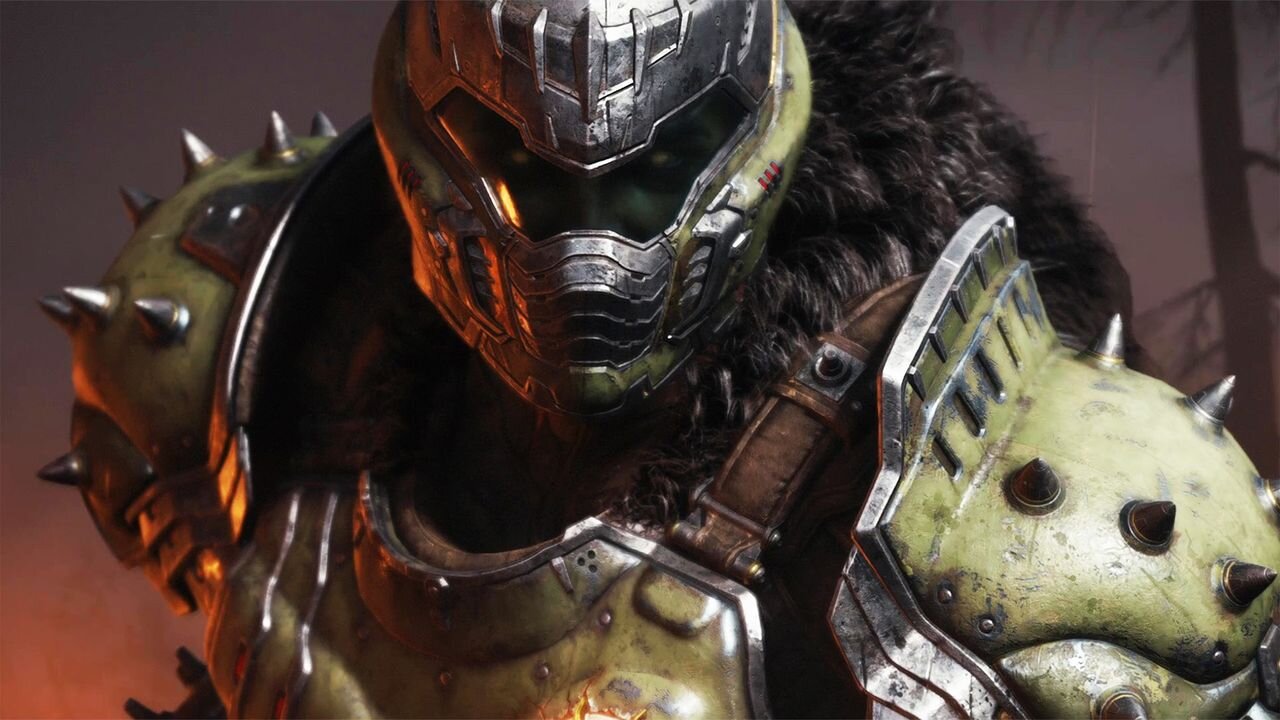
(Image credit: id Software)
"Failures are important, too. Early on when id got bought by ZeniMax and ZeniMax got bought by Microsoft, one of the big selling points was you can have failures and it doesn't mean the end of the business," Hayes said. "In a bigger umbrella, you can be riskier."
The assumption had been that, because Xbox comprised so many studios, those studios were insulated from some of the fallout when any individual creative risk didn't pay off, provided the developers were still hitting more than missing.
Instead, Microsoft—and the industry at large—has lost whatever tolerance it had for anything it might consider a misstep, and games as a medium are suffering for it.
(Image credit: id Software)
"If you make a mistake, that's the last mistake you make as a team. That team is done. So no one's growing, no one's learning, and as a result, individuals don't have the incentive to care anymore," Hayes said.
As we saw with Tango Gameworks , successful launches like Hi-Fi Rush won't spare studios from bloodletting when companies like Microsoft are holding the knife. As developers increasingly assume—with plenty of evidence —that they're going to be cut as soon as their game launches, Hayes says those that don't flee the industry are internalizing that whatever effort they spend on their work will either be wasted or go unrewarded.
"If they do stay, they don't feel like they need to care about the future of the game they're on. When I first started, it was pretty common for everyone to be fully invested in whatever game they're working on," Hayes said. "As companies move in this direction, that's less and less common."
As that investment gets squeezed out of the industry, he says the damage is getting progressively harder to ignore. (That's a conclusion a lot of us are arriving at lately.)
"A lot of gamers, even if they don't know it, they can feel it's not right. There's something wrong. The industry is not healthy," Hayes said. "There's a lot of things—macroeconomics, the competition for attention—a lot of actual struggles to work through. But at the core, we don't have people at the helm who are looking at the long term to make the decisions to keep a healthy industry."
2026 games : All the upcoming games Best PC games : Our all-time favorites Free PC games : Freebie fest Best FPS games : Finest gunplay Best RPGs : Grand adventures Best co-op games : Better together