Insta360 founder and CEO Liu Jingkang, aka 'JK', recently shared a potentially controversial post on Chinese social media platform Weibo, which translated reads:
“Our product vision is to build a ‘Cameraman’ — an intelligent photography robot capable of automatically composing shots and capturing moments like a professional photographer, allowing users to remain fully immersed in the present.
"Today, AI is rapidly evolving, we believe the Cameraman’s 'brain' is becoming increasingly capable, unlocking new possibilities for creative imaging.
"In the long term, the ideal end state for cameras is to progressively become imperceptible, even to ‘disappear,’ until recording no longer consumes effort and becomes a natural part of life.”
As a concerned photographer (and as a concerned human being) I wrote a response to that post , and asked Insta360 for comment.
JK provided me with a statement addressing my concerns and elaborating on his vision, and he and Insta360 also answered a number of specific questions I put to them about the company's potentially game-changing plans for its future cameras.
Below you'll find JK's response, followed by my interview with JK and an Insta360 spokesperson.
Insta360 makes the best tiny videos cameras ideal for POV footage, and new accessories make such inconspicuous cameras easier to operate hands-free. (Image credit: Basil Kronfli)
JK's response: I’ve always believed imaging serves three fundamental human needs: to record, to share, and to create.
AI will undoubtedly reshape parts of this industry, especially in sharing and commercial creation. But when it comes to recording our lives, I believe there is a line AI cannot cross. Technology can make tools easier to use, but it cannot replace the human qualities behind truly meaningful work — judgment, emotion, taste, and the creative energy that come from lived experience.
For me, a photo I take of my daughter’s smile is priceless not because of technical perfection, but because I was there. I felt that moment. AI can generate, enhance, and imitate, but it cannot experience life on our behalf.
Human beings are the measure of all things. You should not hand over experiences that ought to belong to you to algorithms and machines.
So when we talk about the future of the camera, we are not talking about replacing people. We are talking about building tools that help people capture life more freely, more naturally, and with less friction. The future is not about making machines more human — it is about helping humans be more present, more creative, and more themselves.
The interview
TC: What does this 'cameraman' look like? Is it one entity or multiple products?
JK: For us, the future cameraman is a product vision rather than a single device. Insta360: The core idea is to create a camera that can automatically compose shots, capture key moments, and produce finished content for the user, so people can stay fully immersed in the moment without missing what matters.
When you’re traveling or watching a live event, you often end up holding up a phone the entire time and looking at the screen instead of the experience itself. Our long-term vision is for the camera to work more like a professional photographer: you stay present, and it helps take care of the filming for you.
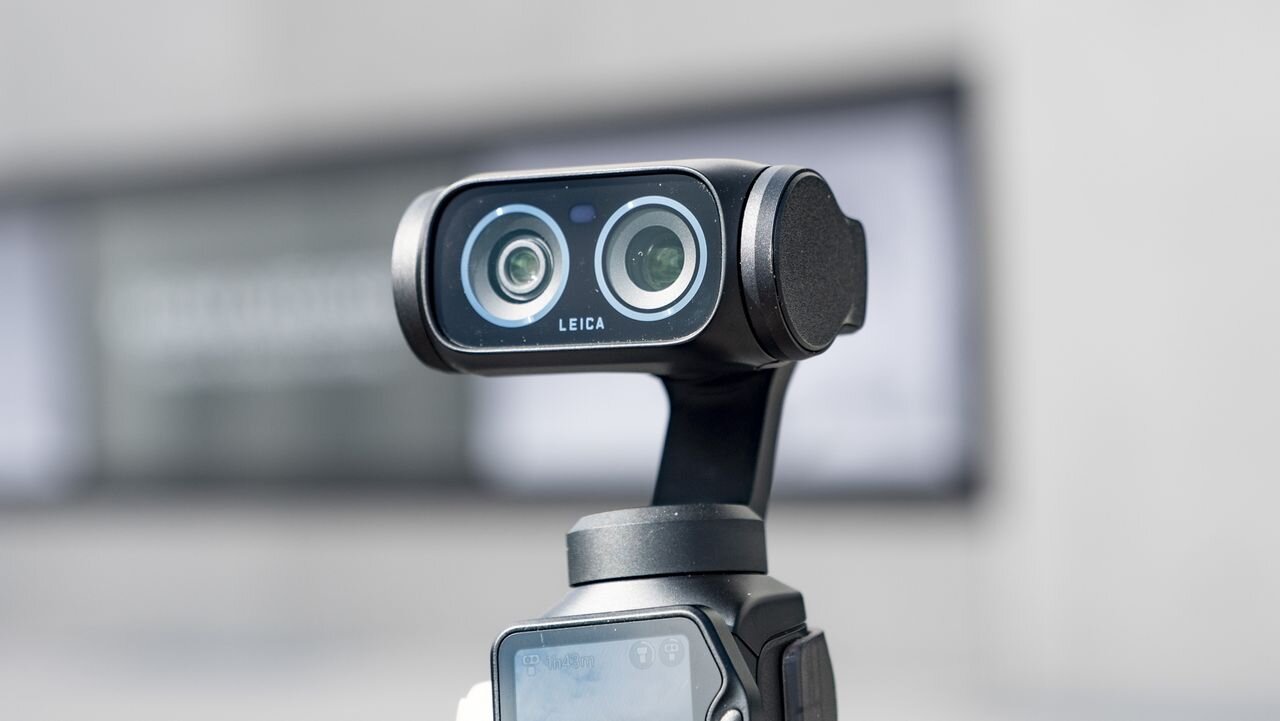
We’re still exploring what the ideal form factor looks like, so in the near term there won’t be one final ultimate product. But we’re already bringing elements of that vision into existing products. For example, Luna Ultra's POV head tracker enables a more seamless, almost invisible shooting experience, and we see that as an important early form of the future cameraman.
TC: Are we to take it that the 'intelligent photography robot' will be fully automated and independent?
Insta360: First, it’s important to clarify that the future cameraman doesn’t mean a humanoid robot. It’s a product concept and a long-term vision for how cameras should evolve.
The idea is to free users from complicated operation so they can be truly present in the moment while still getting professional-looking results. In that sense, the camera starts to play more of the role of a photographer. Imagine a family outing where the system can automatically frame, capture, edit, and output content end-to-end, without someone constantly needing to manage the device.
That said, this isn’t about a camera acting independently without the user. It’s about highly intelligent operation under user direction, intent, and control. The camera should be able to automate far more of the process, including recording comprehensively when the user wants it to, but always within boundaries set by the user. Our goal is for the experience to feel effortless and natural — even to the point where the camera becomes almost imperceptible in everyday life.
In future, could Insta360 might make cameras such as the Luna Ultra (above) fully autonomous? (Image credit: Future / Tim Coleman)
TC: Can you describe the composing, shooting and editing functionalities?
Insta360: To build the future cameraman, a camera needs to do three things well: see, understand, and act.
First, it needs to see more of the world. That’s one reason 360 imaging matters so much to us. A traditional camera captures only a narrow frame, while a 360 camera captures the full scene. That gives both the user and the AI much more context, reduces the risk of missing important moments, and creates a stronger foundation for tracking, reframing, and scene understanding.
Second, it needs spatial intelligence. The camera has to understand depth, motion, orientation, and what’s happening in the environment — not just record pixels, but actually interpret the scene.
Third, it needs to act in real time. That means tracking subjects, stabilizing footage, composing shots, predicting movement, and eventually making smarter filming decisions automatically based on the user’s intent. If it can’t respond instantly, it doesn’t real...