This is one outlet's own report from Gothamist — the article as it was filed. Other outlets are covering the same event; open the full story to compare every source side by side.
A non-profit newsroom, powered by WNYC. Gothamist Listen Live Donate News The ‘blast furnace’ subway sauna at Union Square makes life hell for riders By Ramsey Khalifeh Published Aug 14, 2026 at 11:00 a.m. ET
Twitter Reddit Email Never miss a story Email address By submitting your information, you're agreeing to receive communications from New York Public Radio in accordance with our Terms . By Ramsey Khalifeh Published Aug 14, 2026 at 11:00 a.m. ET
Twitter Reddit Email We rely on your support to make local news available to all Make your contribution now and help Gothamist thrive in 2026. Donate today
Gothamist is funded by sponsors and member donations
This column originally appeared in On The Way, a weekly newsletter covering everything you need to know about NYC-area transportation.
Summertime in New York City means the subway turns into a sauna. And there’s no better place for commuters to schvitz than the Union Square station, which is notoriously the hottest in the entire system.
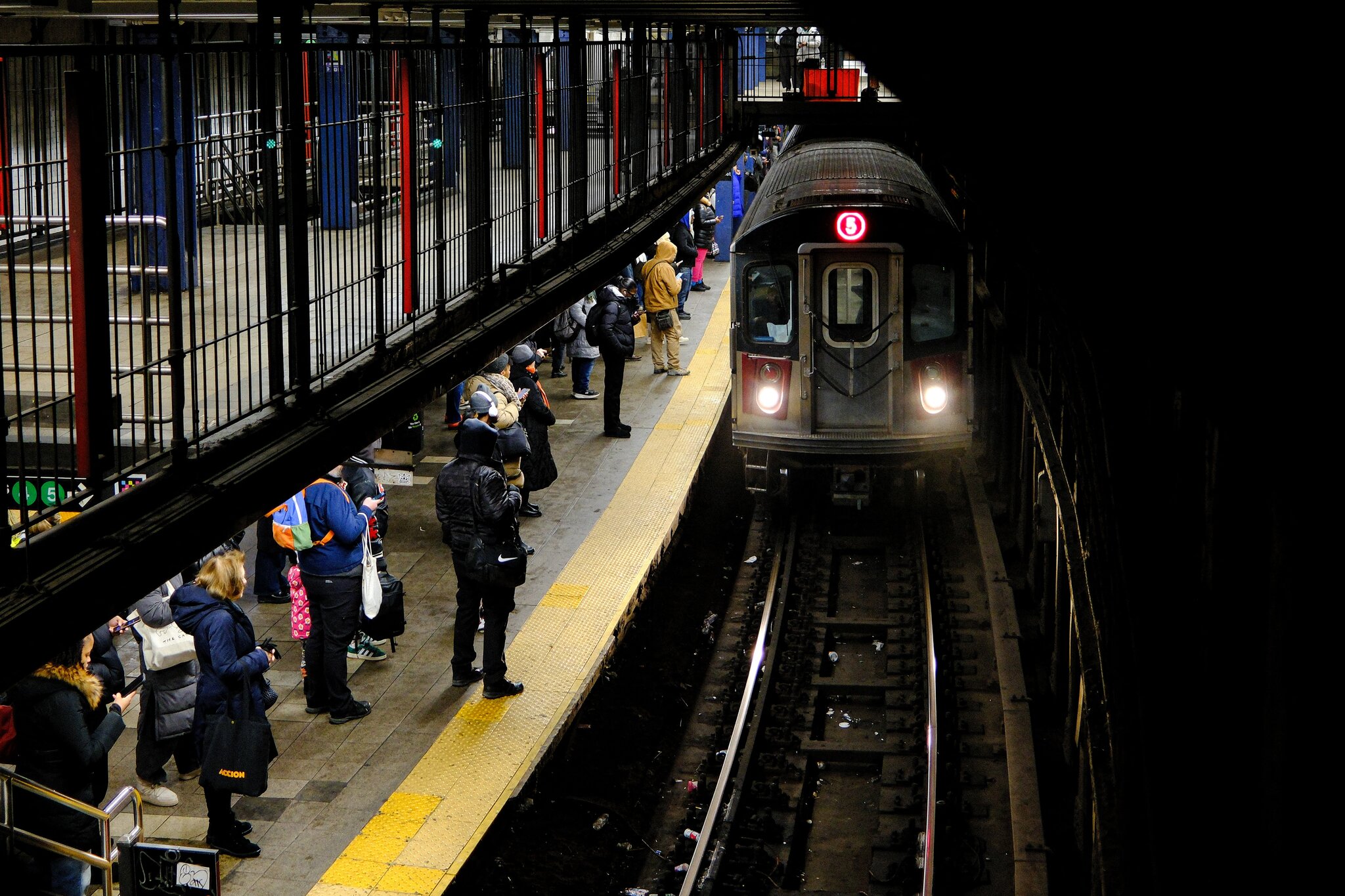
The station, which serves eight subway lines and is one of the busiest in the city, is reliably hotter than it is above ground. Gothamist clocked sweltering 92-degree temperatures on the station’s mezzanine Tuesday morning, when it was 80 degrees outside. Meanwhile, temperatures reached a steamy 98 degrees on the platform, where waiting riders were blanketed in hot air as a 5 train pulled into the station.
“It’s very hot, sweltering, dungeon, hellish, oven, blast furnace,” said Shameek Robinson, 50, who commutes through the station everyday.
Back in 2018, the Regional Plan Association identified Union Square as the city’s hottest subway station, measuring its temperature at 104 degrees when it was 86 outside. As climate change makes summers hotter, officials have started to grasp for solutions to ease the underground heat.
The MTA and Mayor Zohran Mamdani said this week that they’re looking into technology that could transfer hot air at the City Hall-Brooklyn Bridge subway station into nearby municipal buildings’ heating systems. But that solution isn’t likely to bring relief to the melting masses at the Union Square stop, which sits beneath a park, not giant buildings in need of heat.
Khadijah Bryan, who transfers through Union Square three times a week on her way to Midtown from Canarsie, said a trip through the station was akin to being boiled alive.
“There’s so many different kinds of trains here, and they all generate heat, so it just makes this one big cooking pot,” she said.
Many commuters said the MTA should invest in a far simpler solution to beat the heat: Run more frequent service so riders spend less time sweating on platforms.
Have a question for us? Use this form to submit yours and we may answer it in a future newsletter!
Everyone knows how hot most (non-outdoor) subway platforms are in the summer. Which is the coolest station? Is it one of the newer stations? And does the MTA plan to have air conditioning at newer stations that will be built on the Q line?
The newer stations in the system are in fact the coolest ones. The MTA said it has built five new subway stations since 1990 — including those new Q line stops on the Upper East Side — and each has modern cooling systems that legacy train stations don’t have. The systems help maintain more comfortable temperatures for stations deep underground. MTA spokesperson Lucas Bejarano said the stations have cooling towers that remove heat through water evaporation, known as “exchangers,” which use air to cool temperatures without water.
A few old stations, like World Trade Center-Cortlandt Street and South Ferry, have been retrofitted with the technology during major reconstruction projects following 9/11 and Superstorm Sandy. The MTA has also added the cooling tech to the Grand Central Terminal subway station. The MTA said the new stations being built in East Harlem as part of the Second Avenue subway extension will also have cooling systems.
Gothamist clocked the temperature at the 96th Street station mezzanine this week at just 79 degrees.
Cyclists say electric Citi Bikes are too expensive. The cost to ride electric Citi Bikes is too damn high, according to advocates who are calling on Mayor Zohran Mamdani to cap the e-bike fee for members at $3. Citi Bike members currently pay $12.15 for a 45-minute e-bike ride, on top of a $239 annual membership fee that also gives them free rides on analog, non-electric bikes. The city currently provides no subsidies for Citi Bike, which is owned by Lyft. Its current contract with Lyft allows the company to raise Citi Bike prices. But when the agreement expires in 2029, the city transportation department could push for a price cap during negotiations .
Sunnyside Yard stalls. According to Queens leaders, a $21 billion plan to build a massive platform over a railyard – largely owned by Amtrak – and 12,000 housing units at Sunnyside Yard has gone quiet .
Baby on board for NYC buses. The MTA said it is expanding a pilot program that converts two seats by the rear doors of the bus into a designated stroller space, with the goal to have all buses outfitted with a spot for parents and guardians to park a stroller by next year .
Bye bye, SmartLink. By the end of the month, PATH will have to say goodbye to SmartLink, the deprecated turquoise train card featuring Lady Liberty looking towards the horizon .
NYC to crack down on online vendors of illegal e-bikes. Mayor Zohran Mamdani said the city will crack down on the online sales of illegal e-bikes and scooters following a series of deadly crashes involving so-called micromobility devices .
Ramsey Khalifeh is a transportation reporter on the NYC Accountability desk covering the largest transit system in the country. He was previously a general assignment reporter at Gothamist and worked on the Boston Globe's metro and copy desk. Got a tip? Email [email protected]
Because Japanese grocery stores have an 8 p.m. discount, here are your early l...
AIPROPX is an independent multi-source news index — we track, compare, and connect coverage from across the web into one place you won't find anywhere else.