This is one outlet's own report from BBC Sport — the article as it was filed. Other outlets are covering the same event; open the full story to compare every source side by side.
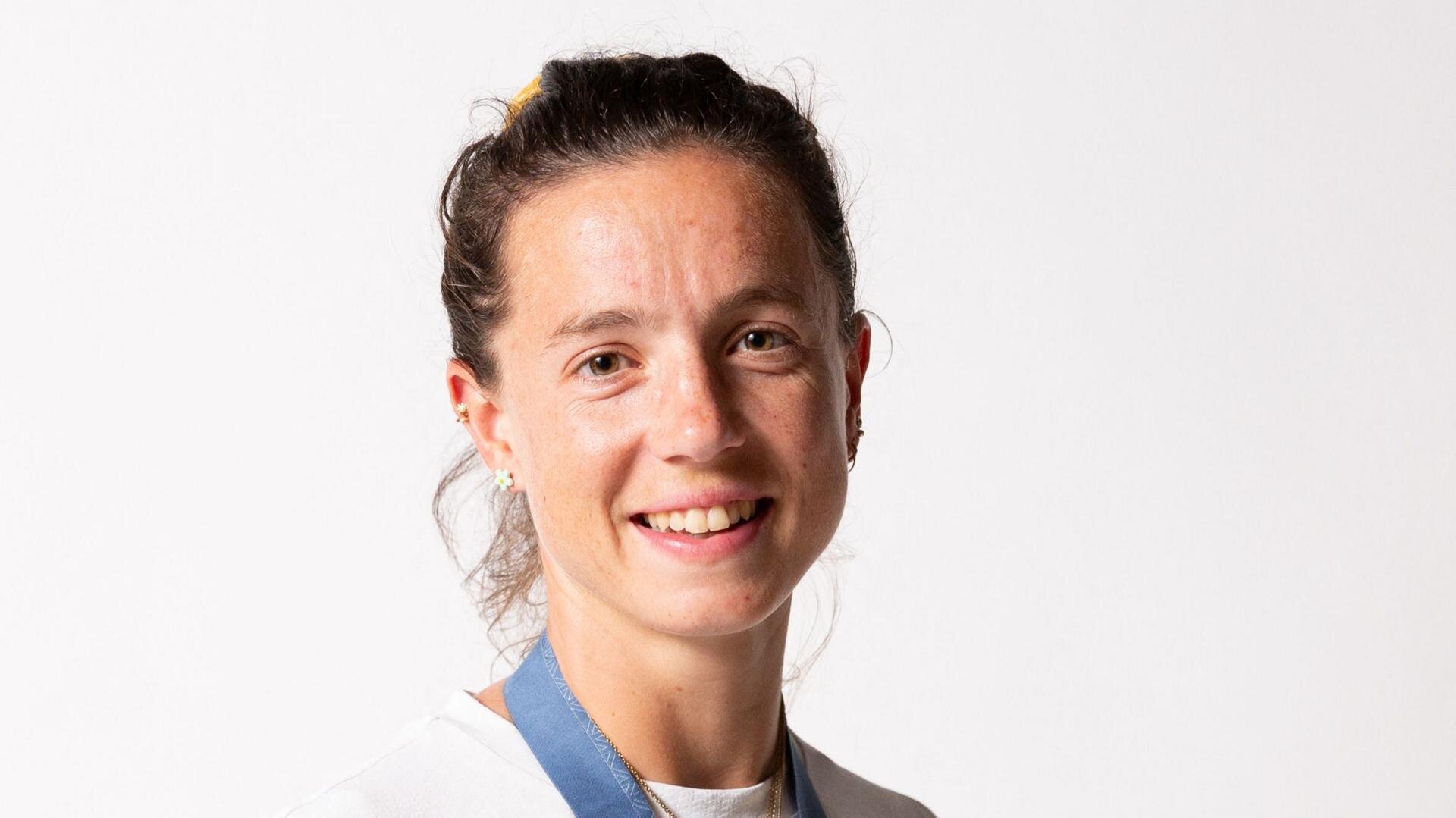
BBC Sport correspondent Published 1 hour ago When British rower Imogen Grant won Olympic gold in Paris, it could easily have been the final race of her career.
Lightweight rowing, the discipline in which she had enjoyed her greatest success, was disappearing from the Olympic calendar. Within days she was back at work as a doctor.
For a while, retirement felt a genuine possibility.
But once her race was over, Grant had a chance to experience the rest of the Paris Games, and something shifted.
"It's so special. I just have to try and do it again," she remembers thinking.
To get to Los Angeles 2028 though, the 5ft 6in rower would have to become a different kind of athlete - and move into open-weight rowing.
There she would have to find a way to compete with women who are usually at least four inches taller and 20kg heavier - an important advantage in a sport where greater size can translate into more power.
Rather than making weight, Grant now needed to gain it.
And she would be doing it on a vegan diet.
For much of Grant's elite rowing career, the scales were an unavoidable part of the job.
To compete in the lightweight women's double sculls, she and partner Emily Craig, who retired last year, had to average no more than 57kg at their pre-race weigh-in.
Open-weight rowing comes with no such restriction.
But she is significantly smaller than many of the women she is now competing with as she targets a place in Britain's quadruple sculls for LA.
"It was definitely a bit daunting thinking about just like physically whether I'd be competitive," the 30-year-old told BBC Sport.
"I'm never going to be the strongest person in the boat."
What Grant does have is the technique and efficiency honed during years of being one of the world's best lightweight rowers.
"It's not just about the raw power in a rowing boat," she explains.
"It's about all of those other things, how well you can row with each other, how well you can move the boat."
The challenge now is to see how much bigger and stronger she can become. That has meant fundamentally changing her relationship with food.
"As a lightweight rower, a lot of the fuelling was really focused on making sure that you were fuelling well for the sessions, but also making sure that you were targeting a specific weight," she adds.
"I'm heavier now, I'm bigger now, I'm stronger now and I think all of those things are really positive," Grant says.
There is another element to Grant's challenge.
She is vegan - a decision linked to her commitment to climate activism and environmental sustainability. Grant is trying to add muscle while also meeting the huge energy demands of an Olympic endurance athlete.
"We do so much training and eat so frequently that as long as we're getting three good meals a day, what we're eating around the sides, that doesn't really matter so long as it's energy dense," she explains.
"We're an endurance sport, so carbs are king."
Grant estimates that she consumes around 3,500-4,000 calories a day when she's training, significantly more than when she was in lightweight rowing.
The average woman needs 2,000 calories a day.
Protein comes largely through tofu, chickpeas, beans and vegan protein shakes.
Grant is wary of presenting her diet as something remarkable, or suggesting sporting performance alone will persuade others to eat differently.
"I never want it to be a really big part of kind of how I perform, because I don't think that's really how you convince people that being plant-based or reducing meat and dairy is the way to go forward," she says.
"But just consistently showing up and showing that it is possible is really important to me."
Results are beginning to show on the water.
Grant spent much of the period after Paris balancing rowing with her work as a resident doctor in the NHS.
At the 2025 World Rowing Championships in Shanghai she travelled as a reserve.
This year, after returning to full-time rowing, she is in the boat.
In June, she helped Britain's women's quad team win World Cup gold Lucerne.
"I think it was a slow and steady start, trying to understand how to fuel and how to gain a bit of weight and gain a bit of muscle.
"I feel like the momentum has been really building."
She has now been selected alongside Paris Olympic champions Lola Anderson and Hannah Scott, plus Finnola Stratton, for this month's World Championships, taking place from 24-30 August in Amsterdam.
"It's such a privilege to race as a lightweight and then turn my hand to seeing if I can throw my lot in with all of the open weight girls, who are so inspiring, and feel that I've got a shot," she adds.
Grant knows there are no guarantees. Reaching Los Angeles, for her, would mark 10 years of representing Britain.
But it is the wider message that appeals to her, as much as the prospect of another Olympics appearance.
"A lot of people think they're not built for rowing because they're too short or too small," she says.
"Showing that that's actually not the case and you can still achieve if you're a little bit smaller is also really important."
AIPROPX is an independent multi-source news index — we track, compare, and connect coverage from across the web into one place you won't find anywhere else.