This is one outlet's own report from Wired — the article as it was filed. Other outlets are covering the same event; open the full story to compare every source side by side.
Buy Now Multiple Buying Options Available $700 at Dell (8 GB) $900 at Dell (16 GB) Comment Loader Save Story Save this story Comment Loader Save Story Save this story Rating: 8 /10
WIRED The display is gorgeous. Excellent touchpad and backlit keyboard. Decent battery life and performance. Charges from both sides. 16-GB model available, unlike MacBook Neo. TIRED 8 GB of RAM in base model is just not enough. No headphone jack. It’s hard to talk about the new Dell XPS 13 without mentioning the MacBook Neo. To say it takes inspiration from the choices of its rival would be an understatement—whether that’s the type of processor, the quality of the display, or the amount of memory.
But don’t think that’s a bad thing. The Dell XPS 13 feels different from other Windows laptops you can buy for $700 (or $900 for the better configuration), and a lot of that is for the better. I have some beef with this laptop's starting configuration, but I also can’t deny what makes it so compelling and unique, even among the very best laptops you can buy.
The MacBook Neo did one thing very well: translate what people love about MacBooks into a $700 package (or $600 at the time it was announced). In terms of the things you can touch and feel, the MacBook Neo is every bit as premium-feeling as a MacBook Air . The materials used in the chassis, the quality of the keyboard and trackpad, and the caliber of the display—none of it has the “budget device” stink. There's more to the story of the MacBook Neo than that, but you can tell it’s how Apple made decisions on which features to cut or compromise on.
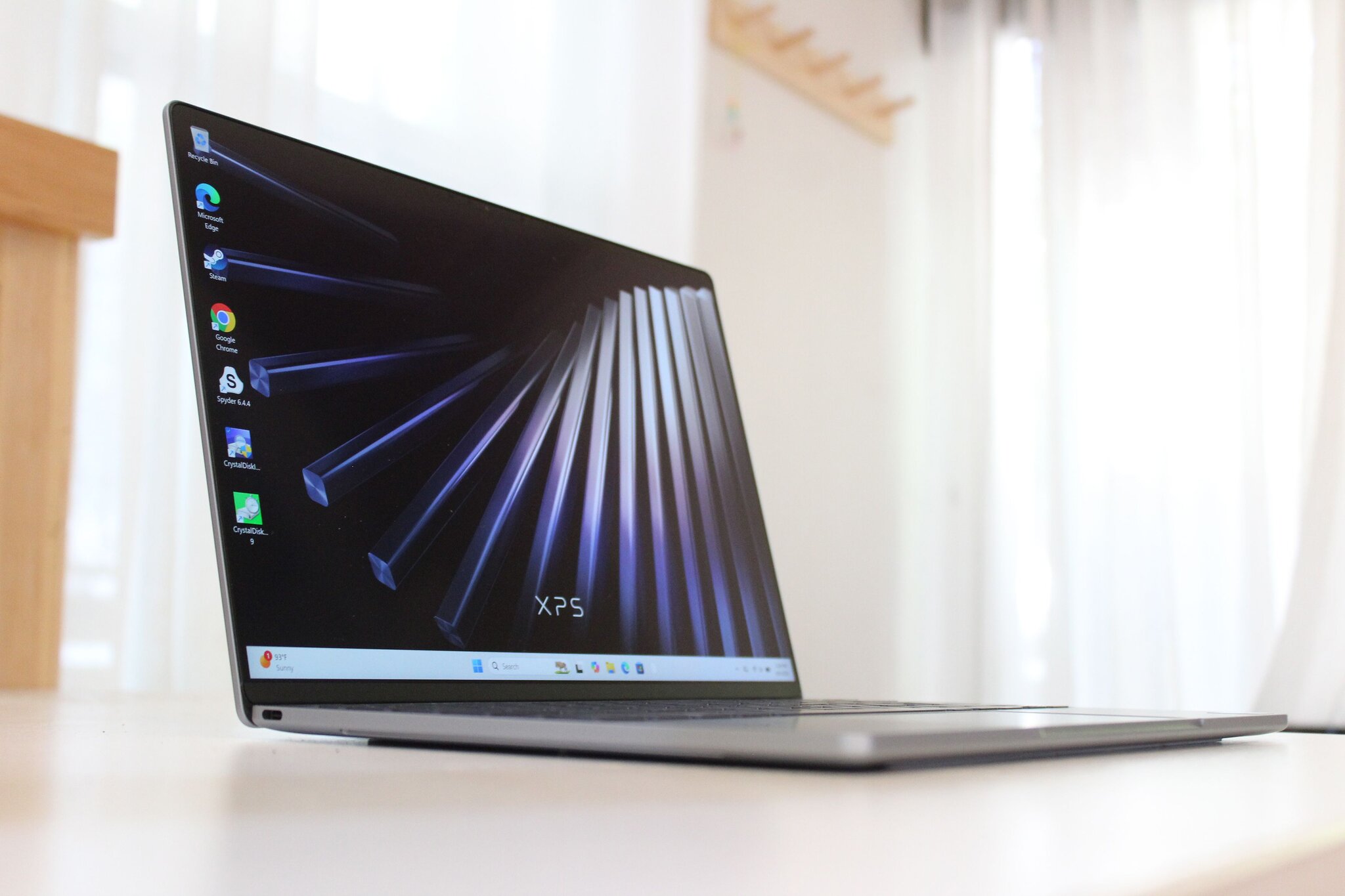
Unlike nearly every Windows laptop selling for under $1,000 , the Dell XPS 13 takes that same approach. Even the base configuration comes with a 2560 x 1600-resolution touch display with a 120-Hz refresh rate, up to 427 nits, and excellent color reproduction. The touchpad is glass and feels excellent to use. In terms of build quality, it’s top-tier. It’s made out of aluminum, and there’s no flexing to be heard of in the chassis. It opens with one finger, and the hinge doesn’t wobble. The bezels around the display are tiny, giving it a very modern look. It’s also incredibly thin at just half an inch thick, matching the MacBook Neo. That’s all very attractive stuff that makes a strong first impression when handling the device for the first time.
Here are some things the new Dell XPS 13 has that the Neo doesn’t:
The one thing it’s missing is a headphone jack. The MacBook Neo includes one, and I do think that’s an unfortunate miss. But I really appreciate that Dell didn’t skimp on port quality. There’s one USB-C port on each side of the device, both of which can support a 4K display simultaneously at 60 Hz, charge the device, or transfer files at 10 Gbps.
While the speakers aren’t what I’d call good, Dell did throw in two tweeters for 8 watts of output. They’re at least on par with the Neo. It's the same story with the 1080p webcam. The addition of an IR camera for Windows Hello login is appreciated.
So, with all that, you might be wondering how Dell is getting away with selling the XPS 13 for a starting price of $700. There's a catch, as always.
Dell made two significant compromises to reduce the price of the XPS 13. First, it uses a lower-powered Intel processor, the Core 5 320. Dell is surely saving money on this six-core chip, but to my surprise, I was impressed by this modest little piece of silicon. The XPS 13 is one of the first laptops to use this chip, which is part of the new Intel Wildcat Lake line . There are some other laptops coming out with this chip, meant to compete with the Apple A18 Pro used in the MacBook Neo and the Qualcomm Snapdragon X. The Lenovo IdeaPad Slim 3i is one such option, which uses the Intel Core 7 350, but as a 16-inch laptop, it's hardly a competitor to the highly compact XPS 13.
But really, there’s plenty of performance here for what the device is intended to be used for. The Core 5 320's raw single-core performance and graphics aren’t as strong as the A18 Pro, but in terms of multicore performance, it’s much more powerful. Then, there's the battery life. You're not getting quite as much as the MacBook Neo, but I was satisfied being able to stay away from the outlet all day and still last 15 hours in local video playback.
Memory is the other major area of compromise, and it’s where my concerns lie. The $700 model starts with only 8 GB of RAM, which is what I tested. This is rare these days. You’d have to be shopping in the sub-$500 category to find an 8-GB Windows laptop, which puts the $700 Dell XPS 13 in perspective. It’s a more premium laptop than you could ever find at that price in terms of build quality, display, trackpad, and keyboard. But it’s actually quite expensive for the amount of memory you get. Fortunately, Dell includes 512 GB of storage in all the models, which is also an important consideration when evaluating the price. While it was originally stated that the device would be configurable up to 1 TB of storage, right now you're maxed out at 512 GB.
But maybe you’re wondering whether you really need 16 GB of RAM. After all, five years ago, it was the default on laptops at this price. I was curious how well an 8-GB model could handle multitasking. Outside of the MacBook Neo, I haven’t used an 8-GB laptop in a long time, as even budget-level Windows machines have come with 16 GB of RAM over the past few years.
The RAM limitation was much worse than I even expected. Performance generally starts to slow when you’re using 80 percent of the available memory. At idle, with no open applications, Windows 11 was using well over 80 percent of memory due to background processes. Ending the background tasks that Microsoft Edge is always running brought that down to 70 to 75 percent, but Search alone was taking somewhere between 150 and 190 megabytes of memory at all times. That’s not Dell’s fault, but there’s a reason Microsoft has been pushing for broader acceptance...
AIPROPX is an independent multi-source news index — we track, compare, and connect coverage from across the web into one place you won't find anywhere else.

.jpg)