Noble Audio Vanguard review
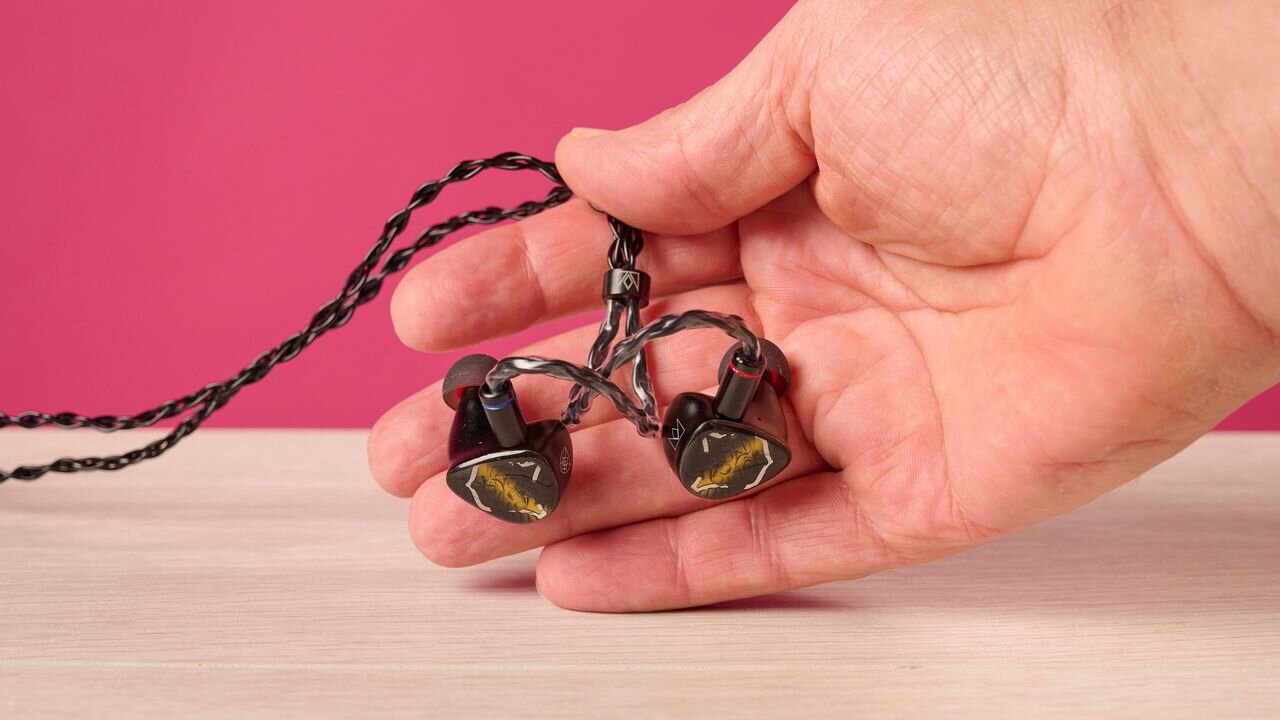
Right out of the box, the Noble Audio Vanguard look and feel unlike any other in-ear monitors (IEMs) that I've tried before. Their medieval-like outer casework, their shield-shaped ear tip case, and their ink-black cable all caught my eye in a way that few rivals have in my years testing audio gear.
The striking visuals are undeniable. But what of their sound? Well, Noble Audio says that the Vanguard are “designed for control, clarity, and balance,” aiming to deliver excellent clarity across the frequency range through their triple driver configuration.
But are the Vanguard actually able to compete with the very best wired earbuds around? Here’s my verdict after extensive testing and many an hour of listening.
Let’s start by taking a look under the hood. The Noble Audio Vanguard make use of three drivers — all of which are focused on specific roles. For the low frequencies, there’s a 10mm dynamic driver, but there are also two custom balanced armature drivers on board — one for the mid-high frequencies, and another for the ultra-high domain. You can connect to an audio device with the standard 4.4mm connector, although there’s also a USB-C adapter included if you want to listen to tracks on your phone or desktop PC, for instance. Unfortunately, there’s no 3.5mm option out of the box, so you’ll need to use an adapter if you need access to that.
The Vanguard also come with a shield-shaped case filled with an outrageous number of extra ear tips, including gel and foam options. And with the right seal, the Vanguard are able to offer very solid noise isolation, with sounds such as typing and chatter in my office subdued to great effect. As well as the shield case for ear tips, you also get a fabric pouch for the IEMs. It's a neat addition, although it's incredibly susceptible to picking up fibers from a pocket or bag.
One thing that I have to discuss is the actual shape of the IEMs. They’re very chunky, and stuck out from my ears a fair bit, creating a slightly odd feel in-use. Their broad construction meant that they weren’t the most comfortable wired in-ears I’ve ever used, but I still felt that they were secure and fine to keep in for an hour or so at a time.
From a purely aesthetic perspective, the Vanguard fare a bit better in my eyes. They appear to be inspired by medieval-style fantasy, with a shield on each bud containing a splash of gold deep black outer casing. The buds are also constructed from aluminium and a “precision-machined shell,” and they feel highly premium — perhaps even more than their price would suggest. The black, intertwined wire is also a thing of beauty, and I was never subjected to distracting cable noise.
(Image credit: Future)
But you want to know how they sound now, don’t you? Well, I’ve kept you waiting long enough. And it’s good news, because for the price you pay, these IEMs sound exceptional.
In All'Acqua Ghiacciata by Marco Castello, the Vanguard performed brilliantly across the board. Acoustic guitars occupied a distinct pocket, and came through with gorgeous tonality. They were well separated from the vocals, which sounded textured and natural. The real highlight, though, was the energetic drums, which came through with incredible clarity and precision, and sounded tastefully prominent without feeling overly bright. Smooth bass was also perfectly balanced in the mix, communicated with impact and warmth without overstepping.
More generally, bass is well-balanced on the Vanguard — though it can hit hard if needed. For instance, on First Night by Vitess, the kick came through with tremendous impact and power, really immersing me in the cosmic house banger. And this was never at the expense of spacey synths or animated drums, which were perfectly weighted in the mix.
As you may expect from the driver configuration — with one specifically tailored for upper treble, and another for mids-highs — the higher frequencies sound excellent on the Vanguard. I’d say they sound a little forward, but tastefully so, emphasizing excitement and detail in the upper echelons of the frequency range. This may not be ideal for those who want the most neutral monitoring solution, but for sheer music-listening enjoyment it’s a welcome decision.
While the Vanguard perhaps don’t provide the enveloping, super-expansive soundstage that some listeners may like, I personally love their dynamic, tight, and detailed approach. And they still provide impressive instrument separation, enabling each component of your favorite tracks to breathe. The dynamic drivers provide weighty yet controlled bass, and the duo of balanced armature drivers are fantastic at supplying textured vocals and clear mids, and especially talented in plating up expressive highs. So the Vanguard are a hit as far as sound quality is concerned.
At $325 / £299 / AU$467, the Noble Audio Vanguard feel well worth the outlay. Sure, they’re a bit chunky, and could be a bit more snug in-use. But the level of detail and precision they supply is spectacular at this price-point. With high build quality and multiple connectivity options, the Vanguard are an excellent affordable-to-mid-range option that audiophiles are sure to love.
(Image credit: Future)
Noble Audio Vanguard review: price & release date
Priced at $325 / £299 / AU$467
Released in July 2026
At $325 / £299 / AU$467, the Noble Audio Vanguard sit in the affordable-to-mid-range section of the IEM market. They were released in July 2026, as something of a successor to 2025’s Noble Audio Knight IEMs.
For this money, their closest competition might be the Activo Q1 , at $349 / £299 (about AU$600), from audiophile staple Astell & Kern's affordable sub-brand. And while the ethereal aesthetic of those wired buds is very different to that of the Noble, the star-rating is just as competitive.
One thing: they may be a little hard to find online, with no planned availability on Amazon or other big third party retailers. But that ...