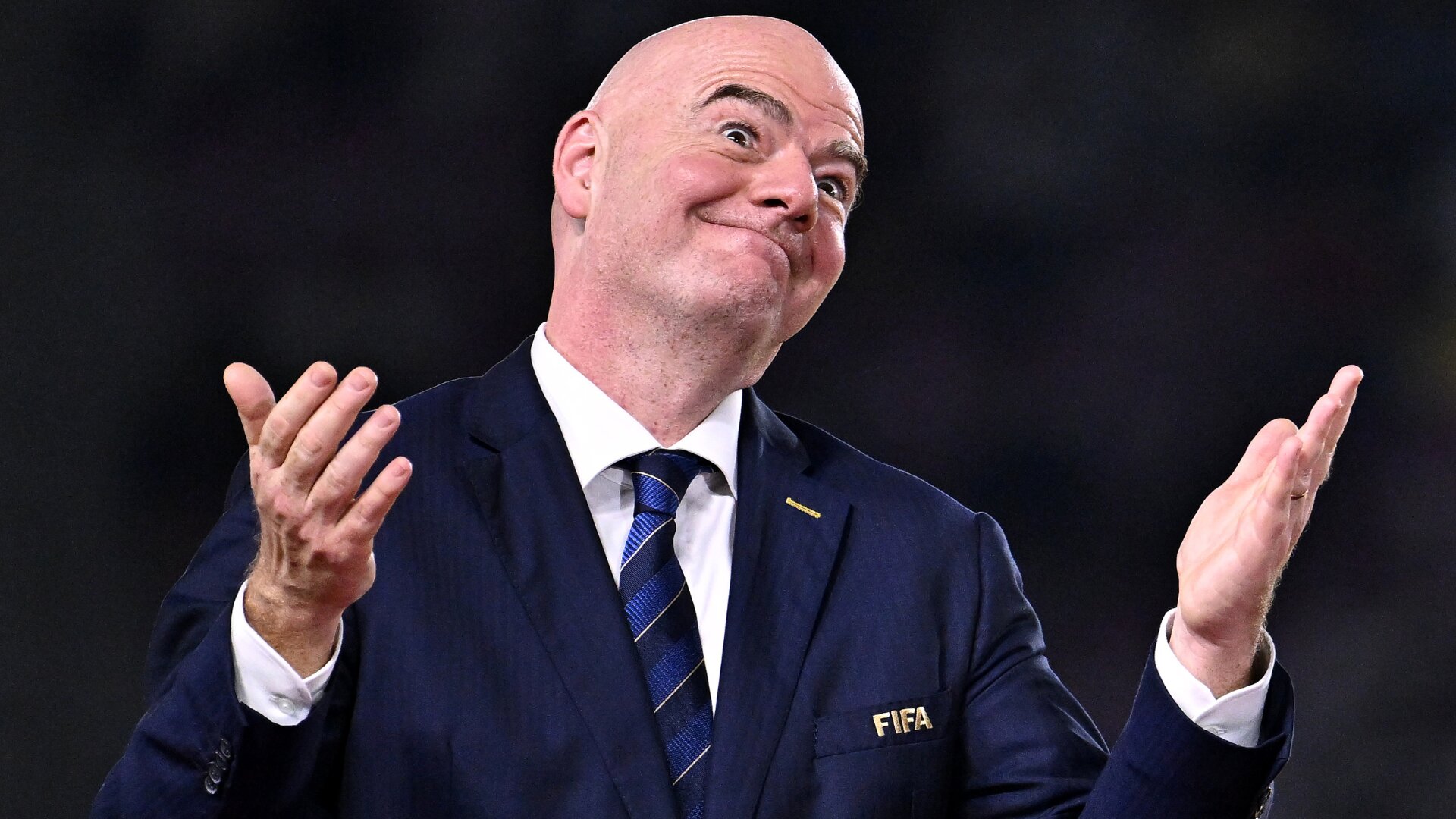
After a decade of nearly unquestioned authority, FIFA president Gianni Infantino has finally forced his critics to mount just enough opposition that he may be out of a job sooner rather than later. The most obvious question is who might follow him in the role, but there is another equally important query: what should the job actually entail?
For decades, the job has been interpreted as one that allows a central figure to assume as much control over the bureaucratic rhythms of the game as possible. FIFA has had just three presidents since 1974, all of whom have done what they can to increase the commercial rigor of the organization and, in particular, the men's World Cup, sports' most popular and valuable competition. The expressed motivation, at times, has been to increase investment in the parts of the world that need it the most, even if that line has often felt like window dressing. None of it has come without extreme levels of politicking along the way, meaning whoever becomes Infantino's successor -- if he is actually going to be unemployed, that is -- will inherit a mess, an organization that is deeply flawed so much so that there is no pair of rose-colored glasses to look at FIFA through.
Infantino's potential expulsion, either through a vote of no-confidence or simply March's upcoming election, marks a chance at an actual reset, no matter how unlikely it might actually be. Meritocracy is not exactly a defining feature of FIFA's succession plans. Joao Havelange, the president from 1974 to 1998, backed his general secretary Sepp Blatter to succeed him and Blatter ultimately won the votes to do just that. Blatter seemed poised to do the same with Michel Platini, the France legend turned UEFA president, before both were forced out of their jobs in the 2015 corruption scandal. Infantino billed himself as a breath of fresh air in a hotly contested election, but quickly put his own spin on FIFA's usual order of business. Plus, he keeps such a tight circle -- and might have tried to use FIFA Forward Enterprise, his failed proposal to privatize the World Cup , to offer him the chance to stay in charge as long as he wanted to -- that he had not picked out an heir apparent.
The best case scenario for FIFA's future, though, would actually involve a president who would not be lured away from the tasks at hand by backroom affairs that have made world soccer's governing body a prevailing symbol of cynicism for decades on end. There are, after all, very real matters to discuss outside the inner machinations of world soccer.
FIFA can barely go a decade without forcing the game's power-brokers, even the ones who are often resigned to the order of operations, to admit that governance is an issue that needs to be solved. The people at the top have changed, but they have only reinforced a longstanding problem -- the FIFA president has a lot of unchecked power and plenty of authority to game the system in the hopes of staying in the job as long as possible.
Havelange and Blatter's presidencies were ultimately defined by different corruption scandals, each using their positions to game the system as they saw fit. A report from Swiss prosecutors found that Havelange and his son-in-law Ricardo Teixeira received around $50 million in bribes relating to World Cup broadcasting rights , while Blatter was forced out in the 2015 corruption scandal that centered around a separate set of World Cup broadcast rights. Infantino's style, though, has been keeping things to himself -- FFE failed because he did not actually consult FIFA's 211 member associations (MA) or the FIFA Council, while he also went around them and the sport's official lawmakers to institute hydration breaks at this summer's World Cup and to hand U.S. president Donald Trump the FIFA Peace Prize in December. Proper procedures were an afterthought, eventually to the detriment of all three FIFA presidents.
Whether Infantino's successor likes it or not, their first responsibility should be ensuring that a system of checks and balances actually exists and cannot be overruled on a consistent basis. The fact that FFE required both sign-off from the 211 MAs and approval from the FIFA Council, the organization's main decision-making body, is a good thing and those who complained that they were not consulted on a game-changing – and remarkably controversial – plan were right to do so. A democratic, transparent set of procedures will be the only ironclad way to ensure that the next president does not find a way to turn FIFA into a self-serving organization – and maybe, just maybe, a boring one that is actually focused on sporting matters.
Despite Infantino's attempts to wrestle control of the World Cup away from the MAs and towards private equity with FFE, world soccer is mostly run by sports administration types who are qualified for their jobs but have a lousy way of showing it. A proper system of checks and balances would be foundational, then, to ensure that FIFA's main role is not to uplift the president but rather make sporting decisions that are in the best interest of the sport at large.
Fair processes would allow 211 MAs with understandably different priorities to actually advocate for the resources and opportunities they need and get in the way of things that actually offer few benefits to anyone. That would apply to ideas big and small, like the hydration breaks that disrupted the flow of World Cup games and were met with boos in just about all 16 stadiums across North America this summer, or the halftime show that dragged out the halftime break as Spain and Argentina duked it out for sports' most prestigious title and did not hype up the 80,000-plus inside MetLife Stadium in any real way.
The next FIFA president also could break a streak of World Cup expansion, a carrot that each of Havelange, Blatter and Infantino has dangled in front of low revenue-generating MAs in the hopes of currying favor in elections later on, the tournament...