
RESOLVING THE LEDGER
RESOLVING THE LEDGER
Only one outlet has reported this event so far — you're reading it below, credited to its source. AIPROPX is tracking the web for more coverage; as additional outlets confirm it, this becomes a full multi-source story automatically.
By AIPROPX Editorial Desk · Published · Updated
One outlet is reporting this so far. AIPROPX is tracking it and will gather every additional source as it develops — the full multi-source comparison appears automatically once a second outlet confirms it.
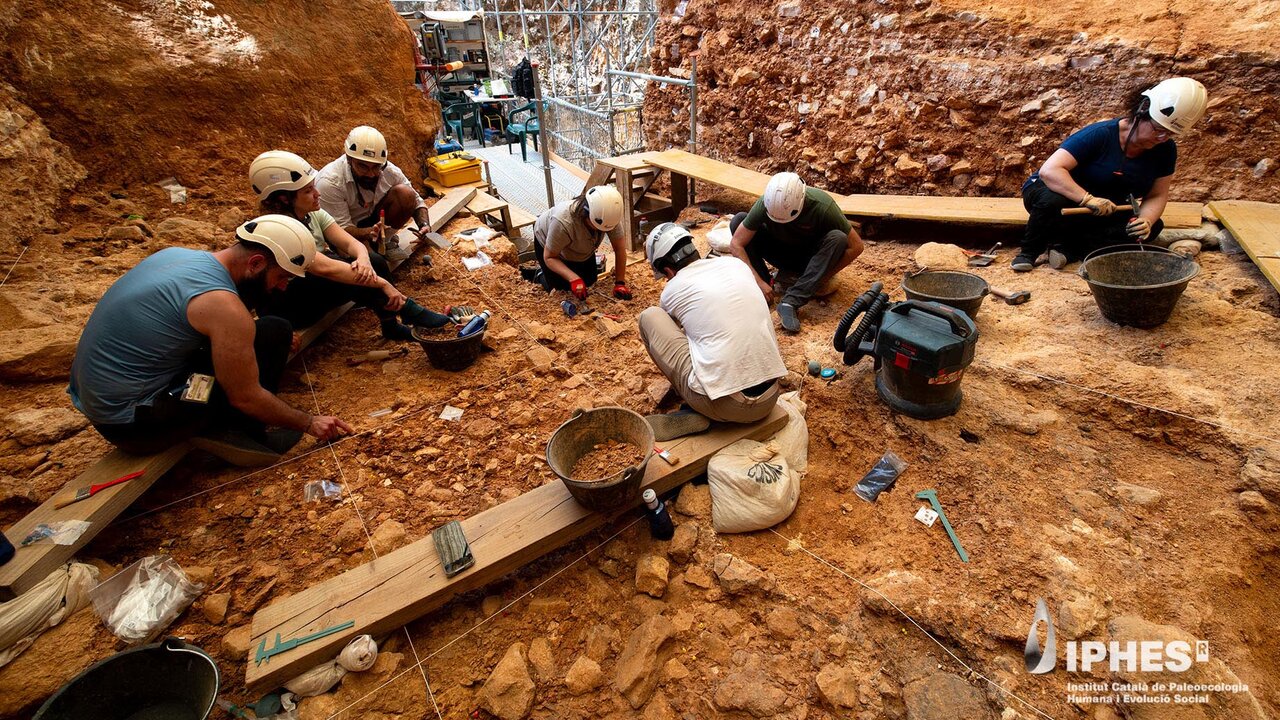
Cut marks suggestive of cannibalism have been discovered on the fossils of an ancient human relative in a cave in Spain, new research finds. But many of the bones from the species, known as Homo antecessor, were from adults — not just children, as previous discoveries had found — adding a new dimension to the cannibalism that was practiced in this area 850,000 years ago.
The two dozen bones and teeth were recently found in Gran Dolina cave, part of the Sierra de Atapuerca archaeological complex in northern Spain, according to a July 24 translated statement from the Catalan Institute of Human Paleoecology and Social Evolution (IPHES). Among the remains were fragments of a skull, spine, arm and leg bones, as well as three teeth from several members of the now-extinct H. antecessor , a relative of modern humans that lived in Europe between about 1.2 million and 770,000 years ago. Several of the bone fragments had cut marks from stone tools.
Over the past few decades, researchers have identified numerous cases of cannibalism at Gran Dolina , meaning H. antecessor is the oldest known human relative to eat its own group members for nutritional reasons . In a 2010 study , researchers noted that most of the evidence of cannibalism at Gran Dolina came from the bones of infants and juveniles, who would have been easier to capture and kill as the young, defenseless members of a rival group. But the newly excavated fossils have upended that assumption.
"The discovery of more adult individuals, some of whom also bear cut marks, demonstrates that cannibalism was not restricted to younger individuals," Palmira Saladié , a biological anthropologist at the IPHES who coordinated the work, said in the statement.
The first-ever ulna (forearm bone) discovered from an adult Homo antecessor individual at Gran Dolina in Atapuerca, Spain. (Image credit: Maria D. Guillén / IPHES-CERCA)
The number of individuals found at Gran Dolina has now risen to at least 13, and about half of them are adults. "The increase in the number of individuals, and especially the addition of more adults, allows us to begin understanding this population from a much more complete perspective than ever before," Andreu Ollé , an archaeologist at the IPHES, said in the statement.
Excavation at Gran Dolina has also brought to light an assemblage of stone tools made from flint, quartzite and sandstone, along with animal bones from hyenas, beavers, deer, horses and rhinoceroses, according to the statement.
Evidence of cannibalism at the site is extensive. Stone tools found in the cave are consistent with the cut marks on the human bones, and the animal bones have revealed butchering techniques that were also used on humans. Some of the human bones also had human bite marks, Saladié told Live Science in 2025 , which is the "most reliable evidence that the bodies found at the site were indeed consumed."
RELATED STORIES
Last common ancestor of modern humans and Neanderthals possibly found in Casablanca, Morocco
Human ancestors arrived in Western Europe much earlier than previously thought, fossil face fragments reveal
Prehistoric cannibal victim found in death cave ID'ed as a young girl
But while the practice of cannibalism at Gran Dolina has been confirmed, the reason for it is still unclear. Researchers hope the newly discovered adult bones may help them better understand the practice among H. antecessor groups.
"We have only just begun excavating this new area" at Gran Dolina, Marina Mosquera , an archaeologist at the IPHES, said in the statement, "and the first results already demonstrate its enormous scientific potential."
Further analyses on the bones are now underway to explore questions about age-related differences in cannibalism, the number and length of cannibalistic episodes, and the social organization of H. antecessor , according to the statement.
What do you know about early humans? Test your knowledge with our human origins quiz!
Indexed and credited by AIPROPX. Originating outlet: Live Science. Open at source →
An original, deterministic readout — composed only from the computed coverage facts on this page. No interpretation, no rating; figures only.
AIPROPX has consolidated 1 report from 1 outlet into a single canonical entry on “Ancient human relative cannibalized both adults and children in a cave in Spain 850,000 years ago, fossils reveal.” Every covered outlet is based in Other.
The only timestamped report came from Live Science (Jul 27, 2026, 21:02 UTC).
Comparing the wording across sources, the phrase recurring most across the coverage is “ancient human relative”.
2 statements are carried by only one outlet within this set and are not echoed by the others.
Every figure above is a direct count of real published articles. AIPROPX indexes and compares the original reporting — it never rewrites, rates, or editorializes — and each publisher’s full article is always one click away.
Generated by AIPROPX from the source counts above. AIPROPX indexes and resolves coverage; the original publishers are credited and linked at origin in every report.
Coverage from 1 independent outlet across 1 region — each view opens on its own page.
AIPROPX — “Ancient human relative cannibalized both adults and children in a cave in Spain 850,000 years ago, fossils reveal” · https://www.aipropx.com/story/07a18bf48e0df5ed1fda698ddde5e93b
Other events being covered across multiple sources right now.
300,000 evacuate as wildfires devastate Spain and France
6 outletsWildfires rage across France and Spain as thousands flee and flames spread
5 outletsTemporary Protected Status for more than 300,000 Haitians set to expire
5 outletsThe Valley Hospital Celebrates 75 Years
3 outletsEurope wildfire in pictures: Gigantic fire cloud engulfing France, Spain regions
3 outletsSpain protests mass ‘touristification’ of Mallorca