
RESOLVING THE LEDGER
RESOLVING THE LEDGER
Only one outlet has reported this event so far — you're reading it below, credited to its source. AIPROPX is tracking the web for more coverage; as additional outlets confirm it, this becomes a full multi-source story automatically.
By AIPROPX Editorial Desk · Published · Updated
One outlet is reporting this so far. AIPROPX is tracking it and will gather every additional source as it develops — the full multi-source comparison appears automatically once a second outlet confirms it.
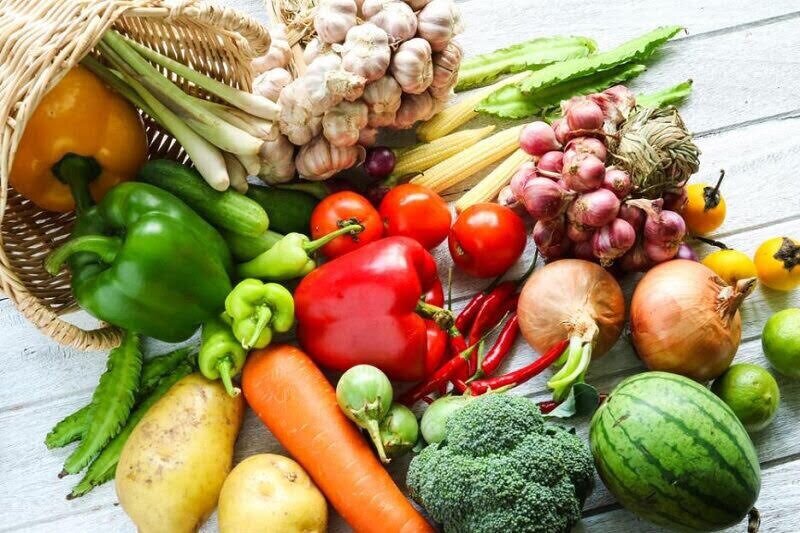
TEHRAN- The Deputy Agriculture Minister for Cultivation Affairs stated that while the agricultural sector plays a fundamental role in ensuring the country's food security, agricultural production has risen from approximately 130 million to 137 million tons despite drought, water resource constraints, sanctions, and existing imbalances.
According to IRNA, Majid Anjafi said in a meeting with the Governor of Kermanshah: "The country's conditions and the limitations facing the agricultural sector highlight its importance and position more than ever before, and today food security is one of the key pillars of national security."
He added: "Last year, we faced one of the most unprecedented drought periods in the last 50 years, while water resource limitations, sanctions, and imbalance-related issues also affected the agricultural sector. Nevertheless, the efforts of farmers, producers, experts, and managers led to an increase in agricultural production."
Referring to the water resources available to the agricultural sector, Anjafi said: "According to the law of the development plan, by the end of the plan, about 65 billion cubic meters of water should be allocated to the agricultural sector. However, last year the Ministry of Energy announced 51 billion cubic meters for cultivation. Therefore, the agricultural sector has faced a significant reduction in water resources compared to the amount foreseen by law."
Record production achieved despite severe water shortage
The Deputy Minister for Cultivation Affairs continued: "Despite these limitations, increased production has been achieved, which demonstrates the efforts of the entire agricultural sector to overcome difficult conditions and utilize existing capacities."
He identified Kermanshah province as one of the country's key and important provinces in agriculture and said: "The diversity and value of agricultural production in Kermanshah have given this province a special position, and the province's improved ranking in the cultivation sector reflects part of its existing capacities."
Anjafi, expressing gratitude to the provincial management and the entire Kermanshah Agriculture Organization, stated: "The support of the province's top management for the agricultural sector can be very instrumental in advancing programs, and we expect the existing cooperation and support to continue."
Referring to the Ministry of Agriculture's plans to overcome the water crisis, he said: "At the national level, we are trying to find new ways to increase production and productivity by using past experiences, cooperating with research institutions, and implementing new projects."
The Deputy Minister for Cultivation Affairs added: "We have defined a vision for the next five years, based on which, in addition to cereals, the development of oilseed production, various types of fodder, and medicinal plants will also be pursued, and better use will be made of existing capacities in these sectors."
Technology, new wheat varieties, and a push for oilseeds
Emphasizing the role of technology and knowledge in increasing water productivity, Anjafi said: "Many products that were previously considered water-intensive are now being produced with less water using new methods, while yield per unit area has also increased."
He added: "For example, in the past, producing wheat required about 7,000 cubic meters of water per hectare, but today, using new methods and cultivars, in some cases, higher yields are achieved with about half of that amount."
Anjafi also reported the cultivation of about 90 wheat cultivars tailored to the climatic conditions of different regions of the country and said: "The goal is to select and cultivate cultivars for each plain and region that are most compatible with their climatic conditions and capacities."
Referring to the shift in the cultivation pattern approach, he emphasized: "We must use knowledge and technology to increase crop diversity and raise resource productivity so that we can achieve sustainable production despite existing limitations."
The Deputy Minister for Cultivation Affairs identified the implementation of the targeted subsidy system in the agricultural sector as one of the significant changes in recent years and said: "In the past, part of the government subsidy was allocated to importers in the form of preferential foreign exchange, but now efforts have been made to direct support more directly to producers and farmers."
He added: "These resources can be used as a lever and incentive to guide farmers toward positive changes in the production pattern and increased productivity."
Anjafi also described the expansion of oilseed cultivation as one of the major transformations in the agricultural sector and said: "For about 30 years, the development of these products had a fairly steady trend, but in the past year or two, with new decisions, some of the problems related to pricing and payment of farmers' dues have been resolved."
He continued: "The result of these measures has been an increase in farmers' interest in cultivating oilseeds across the country, and we predict that this year, Kermanshah province will also see significant growth in this area."
Referring to the provision of inputs needed for the next crop year, the Deputy Minister for Cultivation Affairs said: "The necessary measures for supplying required inputs have been taken, and we hope that, according to meteorological forecasts, we will have a good crop year ahead."
Anjafi, pointing to the high share of crop products in the country's agricultural output, said: "Total agricultural production in the country has reached about 137 million tons, and about 70 to 75 percent of this production, depending on the year's conditions, is related to crop products. This capacity, under the existing difficult conditions, is a significant achievement for ensuring the country's food security."
Kermanshah emerges as a national agricultural powerhouse
The Deputy ...
Indexed and credited by AIPROPX. Originating outlet: Tehran Times. Open at source →
An original, deterministic readout — composed only from the computed coverage facts on this page. No interpretation, no rating; figures only.
AIPROPX has consolidated 1 report from 1 outlet into a single canonical entry on “Iran's agricultural production reaches 137 million tons.” Every covered outlet is based in Middle East.
The only timestamped report came from Tehran Times (Aug 30, 2026, 05:54 UTC).
Comparing the wording across sources, the phrase recurring most across the coverage is “agricultural production”.
Every figure above is a direct count of real published articles. AIPROPX indexes and compares the original reporting — it never rewrites, rates, or editorializes — and each publisher’s full article is always one click away.
Generated by AIPROPX from the source counts above. AIPROPX indexes and resolves coverage; the original publishers are credited and linked at origin in every report.
Coverage from 1 independent outlet across 1 region — each view opens on its own page.
AIPROPX — “Iran's agricultural production reaches 137 million tons” · https://www.aipropx.com/story/0bdffcf8f616ab9e46d882894bfd37b2
Other events being covered across multiple sources right now.
Iran’s Khamenei urges Gulf rulers in written message to confront ‘real enemy
3 outletsVienna thieves steal diamond necklace Egyptian queen wore at daughter’s wedding to future Iran shah
3 outletsWalmart settles DOJ opioid crisis lawsuit for $50 million
2 outletsMelinda French Gates Doubles Olivia Rodrigo’s Daisy Chain Fields Donation Sum Bringing Total to $20 Million
2 outletsFor Trump, the Iran War Is Stuck Between Combat and Genuine Peace
1 outletsInvestors prosper, consumers pay as Iran war exacts uneven economic toll 6 months in