
RESOLVING THE LEDGER
RESOLVING THE LEDGER
Only one outlet has reported this event so far — you're reading it below, credited to its source. AIPROPX is tracking the web for more coverage; as additional outlets confirm it, this becomes a full multi-source story automatically.
By AIPROPX Editorial Desk · Published · Updated
One outlet is reporting this so far. AIPROPX is tracking it and will gather every additional source as it develops — the full multi-source comparison appears automatically once a second outlet confirms it.
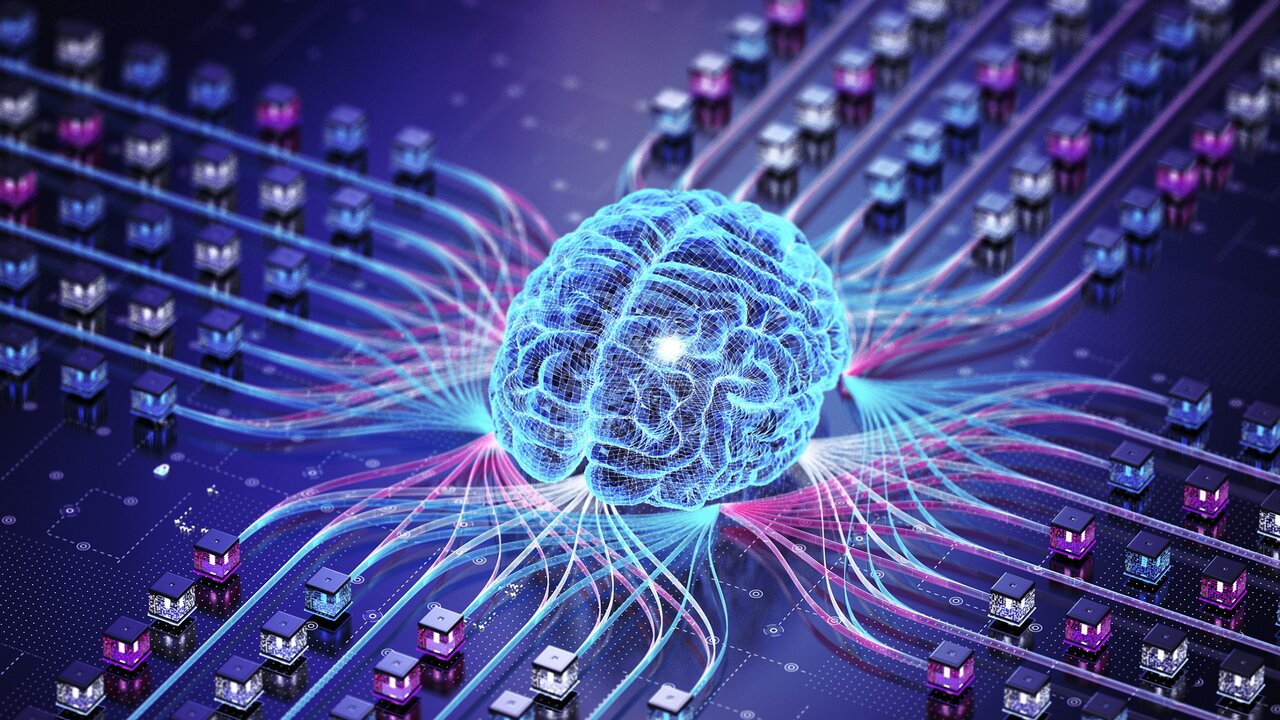
Scientists have developed a new type of artificial intelligence (AI) chip that mimics the human brain's aptitude for instinctive motor responses.
Modeled after the cerebellum , the part of the brain that helps coordinate balance and fine muscle control, the chip is designed to ignore routine information and respond only to unexpected events.
In simulated tests using electrocardiogram (ECG) data, the device flagged irregular heartbeats (arrhythmias) within one-fifth of a heartbeat and with 98% accuracy, according to the researchers — and did so twice as fast as conventional AI systems. The team published their findings July 10 in the journal Nature Communications .
The device could pave the way for highly responsive, low-power AI systems capable of spotting and reacting to unusual events without relying on the massive computing resources of data centers — from always-on health monitors to self-driving cars and autonomous robots.
A new approach to neuromorphic computing
Computer architecture inspired by the human brain is known as neuromorphic computing . Many researchers consider it key to developing more advanced and efficient AI systems, because it more closely mimics how neurons fire in the human brain .
Rather than processing all incoming information with equal intensity, the brain's biological circuits prioritize important signals and filter out routine background noise, helping it conserve energy.
Most neuromorphic approaches focus on the cerebrum, the largest part of the human brain and the central "thought center." In the new study, the scientists instead focused on the cerebellum, a smaller brain region responsible for coordination and instinctive motor skills — things we do without much conscious thought.
Neural circuits in the cerebellum contain competing excitatory and inhibitory signals that normally balance each other out. When something unexpected happens, the balance shifts and alerts the brain that it needs to react.
This makes the cerebellum a prime, untapped candidate for neuromorphic AI systems, said study co-author Mark Hersam , a professor of materials science and engineering at Northwestern University.
"The cerebellum is excellent at ignoring the expected and reserving its resources for reacting to the unexpected," Hersam said in a statement . "That approach ultimately translates into lower energy consumption."
A map of the human brain, including the cerebellum. (Image credit: grayjay/Shutterstock)
Merging memory and compute
While current AI is exceptionally good at recognizing patterns, it spends enormous amounts of computing power continuously analyzing streams of data.
One of the constraints is the hardware itself. Processing information involves shuttling data back and forth between separate memory and processing components, resulting in a delay known as the von Neumann bottleneck .
This new device integrates memory and processing into a single component called a memtransistor (a portmanteau of "memory" and " transistor "), enabling it to move data much more quickly and efficiently.
The memtransistor is made from an atomically thin semiconductor called molybdenum disulfide, which forms a channel between two electrodes . One electrode makes direct contact with the semiconductor, while the other sits partly above it, separated by a thin insulating layer.
This asymmetry changes how electricity flows through the device, allowing it to switch between "excitatory" and "inhibitory" modes when the direction of the voltage is reversed, the researchers explained in the study.
The "output layer" of spiking neural networks
The device is designed to form the core of the output layer of a larger spiking neural network (SSN), Hersam explained in an email to Live Science.
SNNs are a type of neural network that processes information as a series of electrical spikes, mimicking how signals pass between neurons . For the study, the researchers measured how individual memtransistors responded to repeated electrical pulses, then used the results to simulate a network comprising multiple devices that could distinguish normal ECG patterns from arrhythmias.
They then fed the same ECG data into the cerebellum-inspired memtransistor network and a standard transformer model — the AI architecture that underpins large language models (LLMs) — and compared how quickly and efficiently each detected an arrhythmia. The cerebellum-inspired system was more than twice as fast and required around 10,000 times fewer computer calculations, according to the team.
Hersam said the results should translate into faster, more energy-efficient hardware, though he added that real-world performance would depend on the speed and size of the devices.
"We have not scaled memtransistors to the level of commercial Si [silicon] chips, but in principle, 2D materials and memtransistors can be scaled to comparable sizes and operating speeds," he told Live Science.
More efficient AI at the edge
Hersam said the new device was particularly suited to scenarios where quick inference was needed using minimal power. "One example could be edge computing, or in cases where access to the cloud is not available or is not desired due to the sensitivity of the data," he added.
A huge potential benefit of the technology is that it could slash AI's reliance on data centers. According to the International Energy Agency, global data center electricity demand could reach around 945 terawatt-hours by 2030 — slightly more than the entire electricity consumption of Japan — largely driven by AI. One terawatt-hour is equal to 1 trillion watt-hours — enough electricity to power a 60-watt lightbulb continuously for 1.9 million years.
Related stories
New device could make processors run 1,000 times faster without additional waste heat — scientists say it could reduce data center energy demands
'World models' are the future of AI, but how do they work?
Startup's 'oscillator-based' AI technology could be 1,000 tim...
Indexed and credited by AIPROPX. Originating outlet: Live Science. Open at source →
An original, deterministic readout — composed only from the computed coverage facts on this page. No interpretation, no rating; figures only.
AIPROPX has consolidated 1 report from 1 outlet into a single canonical entry on “New AI chip mimics the human brain's capacity for split-second motor control — it solved problems using 10,000 times fewer….” Every covered outlet is based in Other.
The only timestamped report came from Live Science (Aug 11, 2026, 18:46 UTC).
2 statements are carried by only one outlet within this set and are not echoed by the others.
Every figure above is a direct count of real published articles. AIPROPX indexes and compares the original reporting — it never rewrites, rates, or editorializes — and each publisher’s full article is always one click away.
Generated by AIPROPX from the source counts above. AIPROPX indexes and resolves coverage; the original publishers are credited and linked at origin in every report.
Coverage from 1 independent outlet across 1 region — each view opens on its own page.
AIPROPX — “New AI chip mimics the human brain's capacity for split-second motor control — it solved problems using 10,000 times fewer…” · https://www.aipropx.com/story/0d34cc8981e8b0a2e832785ba1008253
Other events being covered across multiple sources right now.
North Korea fires second ballistic missile in a week ahead of US-South Korea war drills
6 outletsDR Congo Ebola death toll surpasses 2,000
6 outlets$150,000 Powerball ticket sold at gas station in Walker
5 outletsTrump addresses secretly using catering truck to switch planes
5 outletsStrong storms down trees, cause 80,000 power outages in Kentucky
9 outletsJudge Awards $250,000 to Musician Who Fled Trump-Led Kennedy Center Gig