
RESOLVING THE LEDGER
RESOLVING THE LEDGER
Only one outlet has reported this event so far — you're reading it below, credited to its source. AIPROPX is tracking the web for more coverage; as additional outlets confirm it, this becomes a full multi-source story automatically.
By AIPROPX Editorial Desk · Published · Updated
One outlet is reporting this so far. AIPROPX is tracking it and will gather every additional source as it develops — the full multi-source comparison appears automatically once a second outlet confirms it.
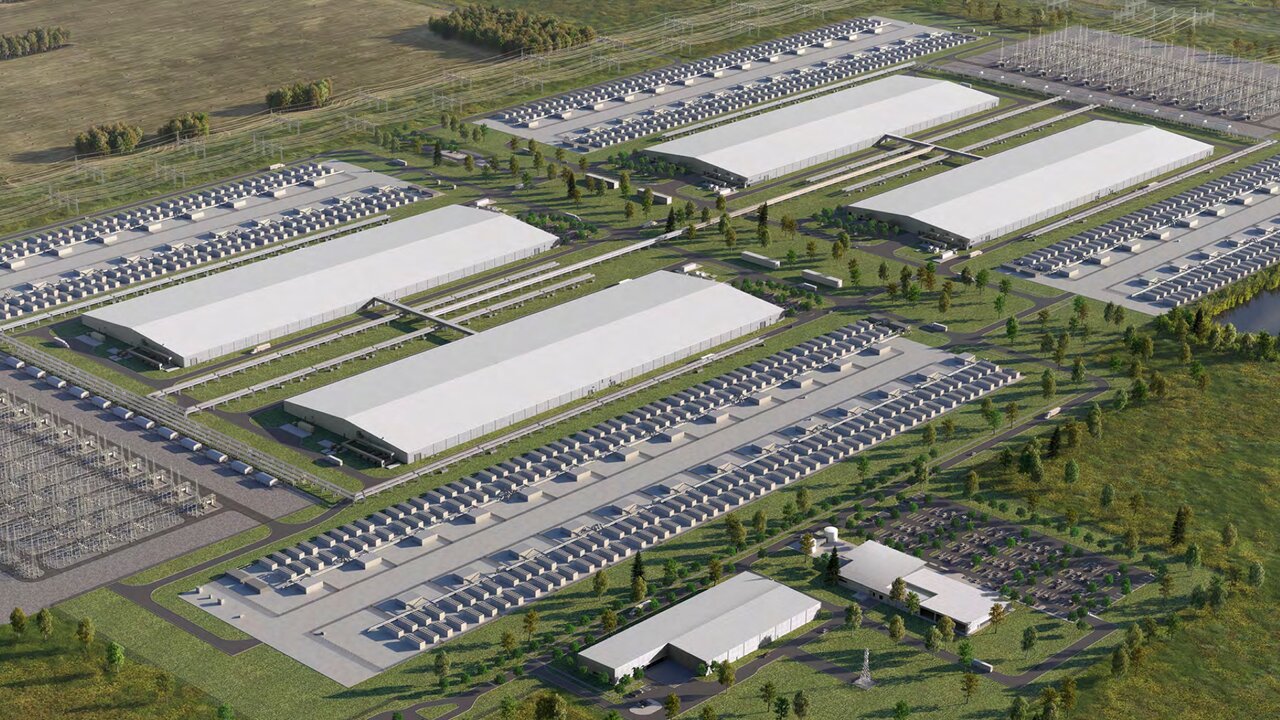
Adding to the existing pressures that data centers face regarding energy supply and grid connections, land shortages and chip availability, many hyperscalers are now facing local opposition to project proposals.
At a congressional hearing earlier this year, US Representative Alexandria Ocasio-Cortez presented two jars of murky water, filled from homes in Morgan County, Georgia, near one of Meta’s data center campuses.
Though Meta has disputed any connection between its construction work and residents’ private wells and water sources, tensions are becoming harder to ignore as the digital world’s physical infrastructure continues to expand.
We are creating our own data center paradox
Enterprise demand for cloud compute and the mass consumer and enterprise consumption of AI have ultimately led to a surge in demand for physical data centers, but they’re now being seen in a similar vein to airports and power stations – physical infrastructure that’s used by nearly all citizens, but projects that nobody actually wants to live by.
And it’s this paradox that many are grappling with at the moment – in this case, residents with a Facebook account can hardly argue against Meta’s need for physical infrastructure, and the same logic applies to users of streaming platforms, ecommerce websites, cloud storage, AI chatbots and so much more.
While International Data Center Authority (IDCA) founder and CEO Mehdi Paryavi believes this digital hypocrisy could afford hyperscalers some justification in their actions, it’s clear that service providers and infrastructure companies are not valuing communication and public engagement enough.
With hyperscalers planning data center buildouts years in advance and chipmakers facing major backlogs, it’s no longer about whether we need extra capacity – rather, it’s about where that compute should reside and how communities are consulted and engaged.
Should data centres be renamed as data factories instead given that they essentially process data at scale?
Data centers are just fine with their current naming. Data centers come in different sizes and types, fulfilling diverse purposes.
Some produce data and house AI as AI factories, some import and house data from the cloud and enterprise applications, some just serve as internet exchange and telecom shelter, and some just sit on your desk as USB drives and PCs that just house data with the least amenities.
Data centers are more holistic and overarching than data factories, while the latter is easier to understand for the general public. What differentiates data centers from one another is not their sheer size, but rather the type of data they house or process.
Depending on the use case, a small enterprise data center that is home to very sensitive information might prove to be more mission-critical than a large-scale AI data center that manufactures data at scale.
You mention that if you have a Facebook account, you can’t complain about data centers. I assume that this rings true for all hyperscalers and big cloud services as well. Is there any going back and what can be done to educate users more?
Our Facebook account, Amazon shopping cart, Gmail, iMessage or WhatsApp, Netflix, online banking, Google Maps, YouTube, ChatGPT, will simply cease to exist without data centers.
We are the reason that data centers get built and expanded. Our “consumption” and demand for higher speeds and better quality of service in the utilization of AI and Cloud services and the technological amenities we receive on an ever-evolving and ever-growing basis draw data centers to our communities.
Speaking of consumers, on the subject of it being digital hypocrisy to describe the paradoxical relationship between the user and the service provider. Can you expand on that further?
When you protest against the expansion of data centers, yet you publicize your protest on social media that are solely enabled through data centers, when you oppose the development of data centers while they offer some of the last standing jobs that can stay for the predictable future, when you push back on the data center industry, when you go home at night and use ChatGPT for your everyday needs, Google for your search, Amazon for your shopping, and Netflix for your entertainment, you are the creator of a paradox between yourself as the end-user and the ultimate beneficiary of what the service providers offer.
The cordial relationship between data center owners and local communities has given way to something more confrontational. What can Meta and others do to solve the increasing public distrust?
First of all, what companies such as Meta do as the ultimate goal of their companies and what data centers do are two separate conversations, and providers must draw a clear line between the two. If you have issues with the morality of Facebook, or the evolution of AI and the future of tech, your problem shouldn’t be pointing at data centers.
Economically and practically, data centers must be built to keep our economy going and our e-Gov, e-Health, e-Education, and even climate-friendly developments that are results of digital transformation, flowing.
Secondly, if data centers put the grid under stress or depict a shortage of water in certain areas, all fingers should be pointed at policymakers who have failed to invest in our old and fragile infrastructure.
Third, as far as data center owners and operators are concerned, they must allocate a fraction of their revenues to creating awareness, spending time with communities, and investing in the education of the local public they aim to serve and/or live amongst.
Last but not least, communication is key. Anywhere that a provider has initiated talks with the local community and invested in sparking dialog, success was on the horizon, and defensive lines against data centers were not formed by the public.
What is the biggest misconception - in your view - about data center water usage? And what can be do...
Indexed and credited by AIPROPX. Originating outlet: TechRadar. Open at source →
An original, deterministic readout — composed only from the computed coverage facts on this page. No interpretation, no rating; figures only.
AIPROPX has consolidated 1 report from 1 outlet into a single canonical entry on “We are the reason that data centers get built and expanded’: It’s not about whether we need them, but it’s about where we build….” Every covered outlet is based in Other.
The only timestamped report came from TechRadar (Jul 29, 2026, 14:05 UTC).
2 statements are carried by only one outlet within this set and are not echoed by the others.
Every figure above is a direct count of real published articles. AIPROPX indexes and compares the original reporting — it never rewrites, rates, or editorializes — and each publisher’s full article is always one click away.
Generated by AIPROPX from the source counts above. AIPROPX indexes and resolves coverage; the original publishers are credited and linked at origin in every report.
Coverage from 1 independent outlet across 1 region — each view opens on its own page.
AIPROPX — “We are the reason that data centers get built and expanded’: It’s not about whether we need them, but it’s about where we build…” · https://www.aipropx.com/story/1513b2389874f8b55b551050cf8f34f7
Other events being covered across multiple sources right now.
Country Music Is Coming Out Strong Against Data Centers
3 outletsWhere to get free backpacks and school supplies across Connecticut: LIST
3 outletsHow the booming backlash to AI data centers is shaping the midterm election
25 outletsAll American Airlines Flights Not in the Air Were Grounded on Tuesday Due to an IT Problem
5 outletsApple Upgrade program: Common questions about Apples new leasing program, answered
4 outletsAgentic security doesn't need a whole new definition – you just need to reframe what you already know