
RESOLVING THE LEDGER
RESOLVING THE LEDGER
Only one outlet has reported this event so far — you're reading it below, credited to its source. AIPROPX is tracking the web for more coverage; as additional outlets confirm it, this becomes a full multi-source story automatically.
By AIPROPX Editorial Desk · Published · Updated
One outlet is reporting this so far. AIPROPX is tracking it and will gather every additional source as it develops — the full multi-source comparison appears automatically once a second outlet confirms it.
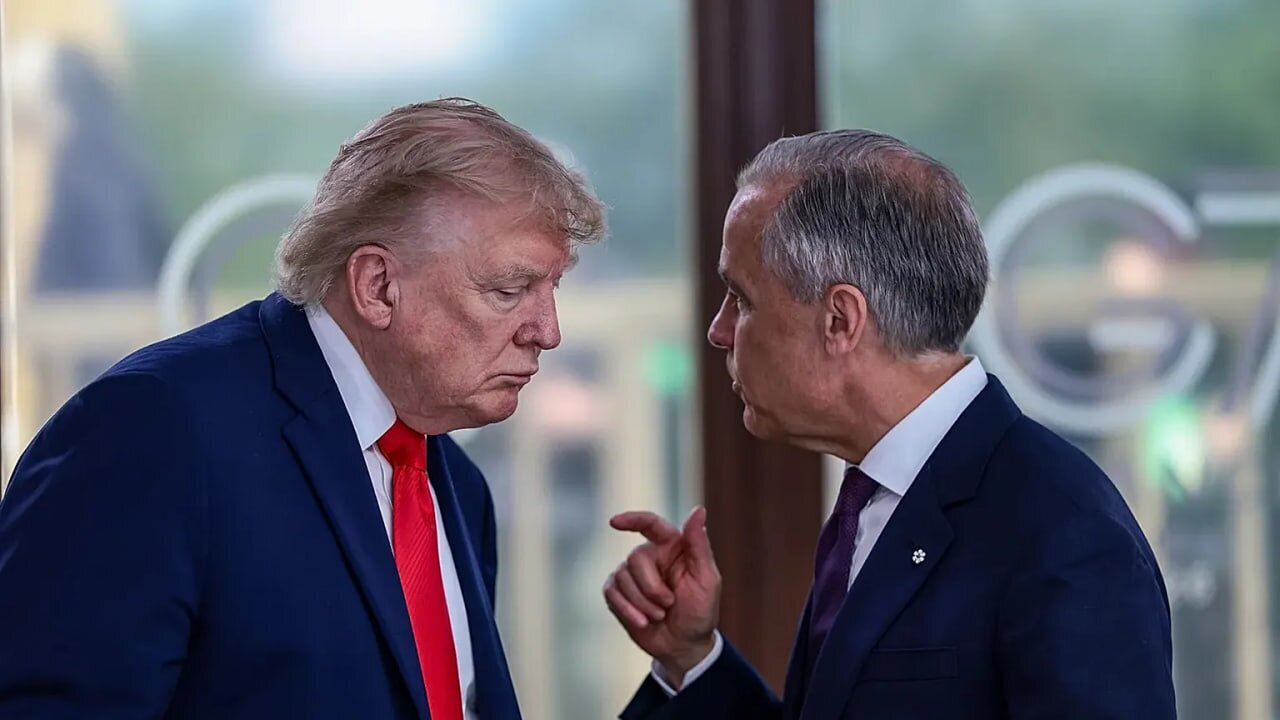
TEHRAN — From using negotiations as a pretext for surprise attacks to abducting and assassinating heads of state and reneging on American commitments, including his own, Trump’s damage to U.S. diplomacy will remain evident for many years to come.
One example is reflected in America’s close allies such as Canada and its trade war with the Trump administration, which has exploded over the past several days.
At a press conference, Canadian Prime Minister, Mark Carney said, “We’ve been under no illusions, we recognized from the start that America has changed. Our government understood before many that America would transform all of its commercial relationships, that it would put a series of tariffs on its closest allies and use economic integration as a weapon. We recognized that sometimes its signature was written in pencil.”
When asked by a journalist: “Why does it feel that Mark Carney is going to war?” the prime minister responded, “Because we were attacked.”
As the U.S.-Israeli aggression against Iran is in its sixth month, it is becoming clear to everyone except Trump’s most shameless loyalists and the most pro-war supporters of the Zionist regime that the war has been an undeniable failure.
It was an aggressive war that was supposed to ignite an armed insurgency. Instead, it rallied popular support around the Iranian government in defiance of the country’s oppressors, who have killed thousands of citizens and destroyed civilian infrastructure.
And a war launched to neutralize Israel’s primary adversary will likely make that adversary far stronger geopolitically than before, while driving American support for the regime to its lowest point.
In addition to wasting the lives of American soldiers in an unwarranted war launched on false pretenses, Trump’s blunder has depleted America’s arsenal and saddled the U.S. with roughly $100 billion more in debt. Meanwhile, the longer Trump delays the inevitable admission of defeat, the greater the risk of an economic catastrophe that could engulf not only America but the entire world.
According to American writer Brian McGlinchey, if this nightmare can be avoided, we will likely find that Trump has inflicted lasting damage to a critically important but intangible national asset: the ability of American diplomacy to engage constructively and effectively with its counterparts around the world.
Of course, this does not mean that the reputation of American foreign policy was spotless before Trump took office. It means that he and his team managed to drag it to extraordinarily low levels.
According to McGlinchey, Trump’s cooperation with the Israeli regime in waging an unjustified war against Iran represents one of the worst foreign policy decisions in the history of the American republic. But it is important to recognize that Trump laid the groundwork for the catastrophe of 2026 eight years earlier.
In May 2018, at the urging of then national security adviser John Bolton and Trump’s pro-Israel donors, Trump withdrew from the Iran nuclear deal.
Abandoning the nuclear deal and trust in America
The Iran nuclear deal was the culmination of two years of painstaking negotiations over highly technical provisions, conducted not only by representatives of the United States and Iran, but also by China, France, Germany, Russia, the United Kingdom, and the European Union.
Under the nuclear deal, Iran accepted significant restrictions on its nuclear energy program in exchange for the lifting of harsh economic sanctions. Among other provisions, the agreement required Iran to eliminate its stockpile of medium-enriched uranium, reduce its low-enriched uranium stockpile by 98 percent, cap future enrichment at 3.67 percent, accept additional international monitoring, and disable its heavy water reactor.
Responding to the demands of fervent Zionist supporters and Republicans eager to brand any Obama-era agreement as treason, Trump viciously attacked the Iran nuclear deal throughout his 2016 campaign, declaring that his “number one priority is to dismantle this disastrous deal with Iran.”
After appointing John Bolton as national security adviser in April 2018, an ardent advocate for war with Iran, he urged Trump to follow through on his pledge to scrap the deal, despite Iran’s full compliance with it.
At the time, Michael Malin at Queen’s University Belfast said: “Trump’s announcement that the United States will unilaterally withdraw from the nuclear deal with Iran is the most consequential foreign policy blunder yet from an administration that appears determined to undermine U.S. influence around the world. Trump’s move demonstrates that the United States cannot be trusted to keep its promises. It deepens the divide between the United States and its closest European allies. It will heighten tensions in an already smoldering Middle East”
After Trump withdrew from the agreement and reimposed the previous sanctions, Iran waited a full year before beginning to scale back its own commitments as stipulated in the terms of the deal.
After repeatedly denying that it was developing a nuclear weapon, a position that U.S. intelligence agencies repeatedly judged to be accurate, Iran returned to negotiations during Trump’s second term, once again prepared to give up its uranium stockpile.
In fact, less than 48 hours before the U.S.-Israeli aggression on February 28, Iran offered concessions that included diluting 60-percent enriched uranium, halting new enrichment for several years, capping future enrichment at around 20 percent, and expanding the scope of International Atomic Energy Agency oversight.
British National Security Adviser Jonathan Powell was struck by the strength of Iran’s offer, seeing it as a reason for hope that war could be avoided. But his hopes, and those of others, were about to be dashed.
The Trump administration's assault on diplomacy takes many forms, but nothing is more egregious than exploiting ongoing negotiations as a means to laun...
Indexed and credited by AIPROPX. Originating outlet: Tehran Times. Open at source →
An original, deterministic readout — composed only from the computed coverage facts on this page. No interpretation, no rating; figures only.
AIPROPX has consolidated 1 report from 1 outlet into a single canonical entry on “Trump destroys U.S. diplomacy and global trust in America.” Every covered outlet is based in Middle East.
The only timestamped report came from Tehran Times (Aug 23, 2026, 17:19 UTC).
1 statement is carried by only one outlet within this set and is not echoed by the others.
Every figure above is a direct count of real published articles. AIPROPX indexes and compares the original reporting — it never rewrites, rates, or editorializes — and each publisher’s full article is always one click away.
Generated by AIPROPX from the source counts above. AIPROPX indexes and resolves coverage; the original publishers are credited and linked at origin in every report.
Coverage from 1 independent outlet across 1 region — each view opens on its own page.
AIPROPX — “Trump destroys U.S. diplomacy and global trust in America” · https://www.aipropx.com/story/16c2d158fcd309b019bb0d6b6094420e
Other events being covered across multiple sources right now.
The Supreme Court Let Trump’s Ballroom Proceed—for Now. Here’s What That Means
8 outletsIran Warns Gulf States Not to Join Trump’s Economic War
3 outletsSyria’s foreign minister says door open for diplomacy with Israel
2 outletsEl-Sayed under fire online after taking aim at Usha Vance, female Trump aide in weekend social media posts
19 outletsTrump tariffs: What India can learn from Canada’s failed trade talks with US
7 outletsTrump arrives at high-speed IndyCar race through Washington's streets