
RESOLVING THE LEDGER
RESOLVING THE LEDGER
Only one outlet has reported this event so far — you're reading it below, credited to its source. AIPROPX is tracking the web for more coverage; as additional outlets confirm it, this becomes a full multi-source story automatically.
By AIPROPX Editorial Desk · Published · Updated
One outlet is reporting this so far. AIPROPX is tracking it and will gather every additional source as it develops — the full multi-source comparison appears automatically once a second outlet confirms it.
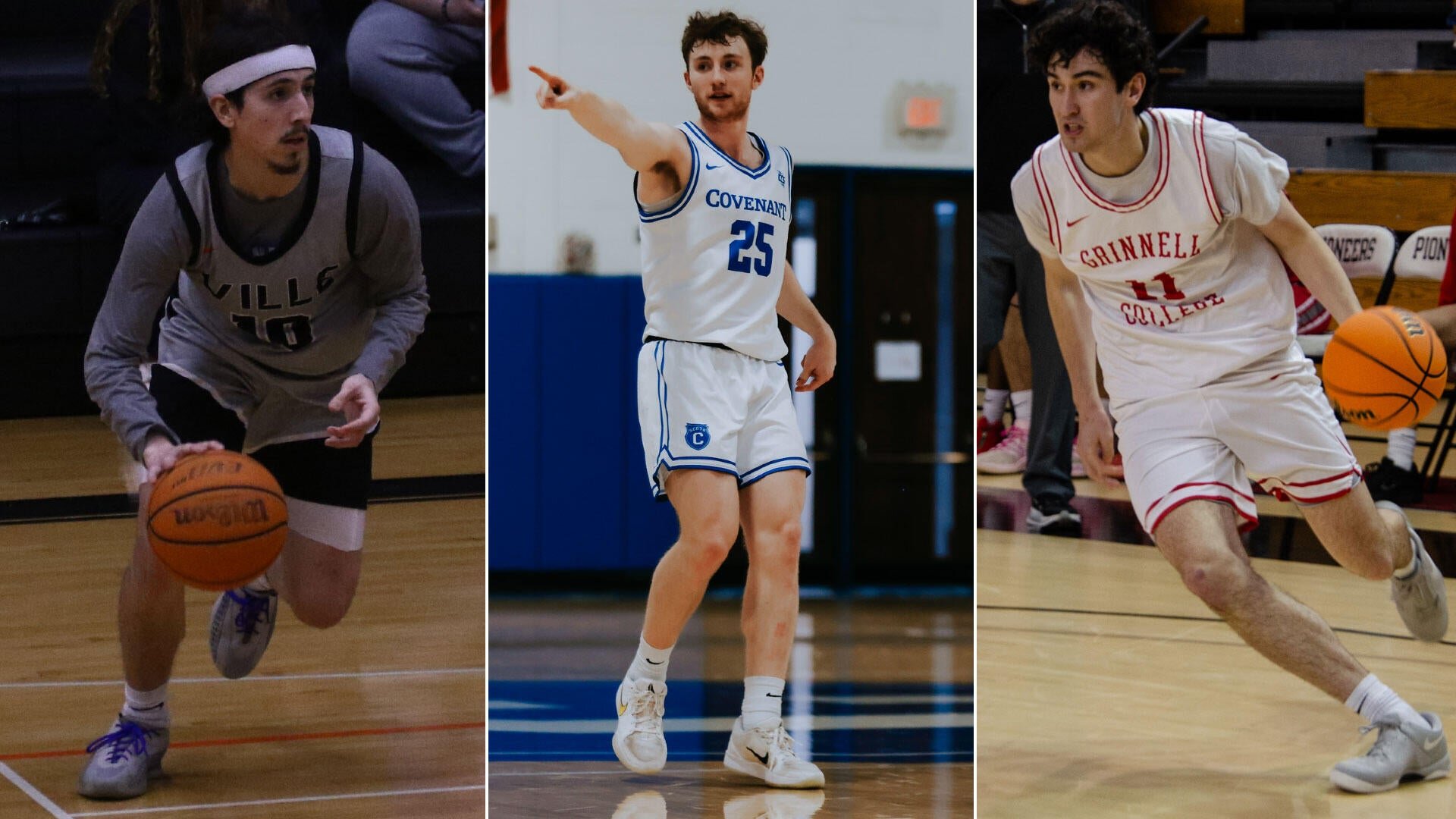
While the rest of college basketball sleeps as the calendar flips from Nov. 5 to Nov. 6, a 1,000-seat gym on Elm Street in sleepy Greenville, Illinois, will be gearing up for an unhinged round-robin series involving a group of hoops madmen pushing the game beyond its perceived limits.
At midnight, the first allowable moment for the Division III season to begin, the two fastest teams at any level of college basketball will tip-off off their season to little external fanfare.
The Grinnell vs. Greenville game isn't scheduled to be nationally televised, and it won't be contested between players on seven-figure NIL deals. There will be no NBA scouts in attendance and no pyrotechnics accompanying the starting lineup introductions.
Besides, the starters won't last more than a couple minutes anyway. Their lungs will be burning 90 seconds into a matchup between two programs that have co-authored the Division III record book with a blistering strategy known simply as the "System."
The game might approach 300 total points, and its style would seem extreme anywhere else. But the constant full-court pressure, stream of astoundingly quick shots and mass substitutions will be normal for two teams playing at a pace that makes even the fastest Division I programs look slow.
Then, after their track meet is complete sometime in the middle of the night, they'll both gear up to do it against fellow System program Covenant College over the ensuing 36 hours. The Scots are a relatively new adherent to the philosophy, which calls for possessions to last no longer than 12 seconds.
It made them them the perfect candidate to round out a three-game, season-opening showcase celebrating a style of play that most believe will never be fully adopted in Division I.
"No one else except the guy at Covenant College would even think about coming out to play two System teams in 36 hours," said Covenant coach Josh Brown. Covenant ranked 268th in Division III in possessions per game during the 2023-24 season before Brown decided his program needed an identity.
He found one after calling an estimated 35-40 coaches, brainstorming about the merits and pitfalls of adopting the System.
"Every single one of them was like, 'you're going to get called crazy,'" Brown recalled. "It's just a part of it. I was OK with being crazy. I'm already crazy for being in this profession. So being called crazy for wanting to play fast is a small price to pay."
The next season, Covenant, which sits atop Lookout Mountain in Georgia, surged from 81.2 possessions per game to 105.2 and more than doubled its win total. Thus, the Scots became new residents in an enclave of speed demons where Grinnell and Greenville are the landords.
Programs such as Alabama , Texas A&M and Cal Poly are finding success utilizing elements of the System that have been pared down to fit within the outer limits of what most believe could be sustainable at the Division I level.
But they are snails compared to the three who will assemble in Greenville for a lab session on college basketball's speed frontier. As the most extreme of the bunch, Greenville attempted 100+ shots in 14 of its 26 games last season.
The last time a Division I team attempted 100+ shots against another Division I opponent was in 2016 when the Citadel did it in a double-overtime loss at UMBC .
Alabama, commonly viewed as the standard for playing fast at the high-major level, has reached 90 shot attempts once in coach Nate Oats' seven seasons. That was in a four-overtime game. It took the Crimson Tide 60 minutes to come within 10 attempts of the shot threshold that Greenville aims for in every 40-minute game.
Grinnell, located between Iowa City and Des Moines, is the Division III standard for System success. The Pioneers are 61-19 over the past three seasons with consecutive NCAA Tournament appearances. Their nickname is fitting since their former coach, David Arseneault Sr., is widely credited with pioneering the System at Grinnell in the 1990s.
His son, David Arseneault Jr., is now in charge and putting his own stamp on the System for a program that is humming. Grinnell is still running and gunning, averaging 102.9 points per game in 2025-26. But the Pioneers also finished in the top-50 nationally in defensive efficiency within the 400+ team Division III landscape last season. While they beat Greenville 161-130 head-to-head last season, they didn't catch the Panthers in the season-long scoring race.
When it comes to points, everyone is chasing Greenville coach George Barber, who adopted the System from Grinnell and has pushed it even further. The Panthers averaged 113.2 points in 2025-26, which was 22 points more than Division I leader Alabama.
Since surpassing Grinnell atop the Division III points chart in 2015-16, Greenville has not relinquished the scoring crown.
"I keep asking Dr. Barber when he's going to retire so that we can lead the country in scoring again," Arseneault Jr. said. "Or I'm going to have to figure out a way for us to increase our tempo and pace and perhaps be more liberal with our shot selection."
Excluding the COVID-impacted 2020-21 season, when Greenville played several non-Division III opponents, the Panthers are 145-121 since adopting the System and taking the scoring belt. That winning record has come with a distinct feast-or-famine pattern that has brought both brutal seasons and conference titles.
"In my opinion, there's so much emphasis, almost too much emphasis, on winning," Barber said. "We've reduced giving it your best shot and challenging yourself. I go to these high school games and both teams are playing zone, and the score is 32 to 31, and we're in the fourth quarter, I'm going, 'these poor kids don't even want pizza. after the game.' They haven't even worked hard because the coaches are afraid to lose."
Around Greenville, a town of 7,000 that sits 50 miles east of St. Louis, Barber is known as the mayor. It's not just because he has been Greenvi...
Indexed and credited by AIPROPX. Originating outlet: CBS Sports. Open at source →
An original, deterministic readout — composed only from the computed coverage facts on this page. No interpretation, no rating; figures only.
AIPROPX has consolidated 1 report from 1 outlet into a single canonical entry on “College basketball's three fastest teams use same 'system' and play each other in chaotic start to season.” Every covered outlet is based in Other.
The only timestamped report came from CBS Sports (Jul 28, 2026, 18:13 UTC).
1 statement is carried by only one outlet within this set and is not echoed by the others.
Every figure above is a direct count of real published articles. AIPROPX indexes and compares the original reporting — it never rewrites, rates, or editorializes — and each publisher’s full article is always one click away.
Generated by AIPROPX from the source counts above. AIPROPX indexes and resolves coverage; the original publishers are credited and linked at origin in every report.
Coverage from 1 independent outlet across 1 region — each view opens on its own page.
AIPROPX — “College basketball's three fastest teams use same 'system' and play each other in chaotic start to season” · https://www.aipropx.com/story/17702e52fb96d07cd84f9c67e0372ed4
Other events being covered across multiple sources right now.
A New School Year, A New Sports Season: Helping Kids Start Safely
1 outletsMayor proposes new rate for BGE, other users of conduit system
7 outletsNumber of suspects in fatal Seattle food festival shooting rises to three
4 outletsAaron Rodgers makes it clear this is his last season
4 outletsTed Lasso gets season 4 trailer with fan favorites and new faces
4 outletsRoberto Mancini returns to rescue Italy after three straight FIFA World Cup misses