
RESOLVING THE LEDGER
RESOLVING THE LEDGER
Only one outlet has reported this event so far — you're reading it below, credited to its source. AIPROPX is tracking the web for more coverage; as additional outlets confirm it, this becomes a full multi-source story automatically.
By AIPROPX Editorial Desk · Published · Updated
One outlet is reporting this so far. AIPROPX is tracking it and will gather every additional source as it develops — the full multi-source comparison appears automatically once a second outlet confirms it.
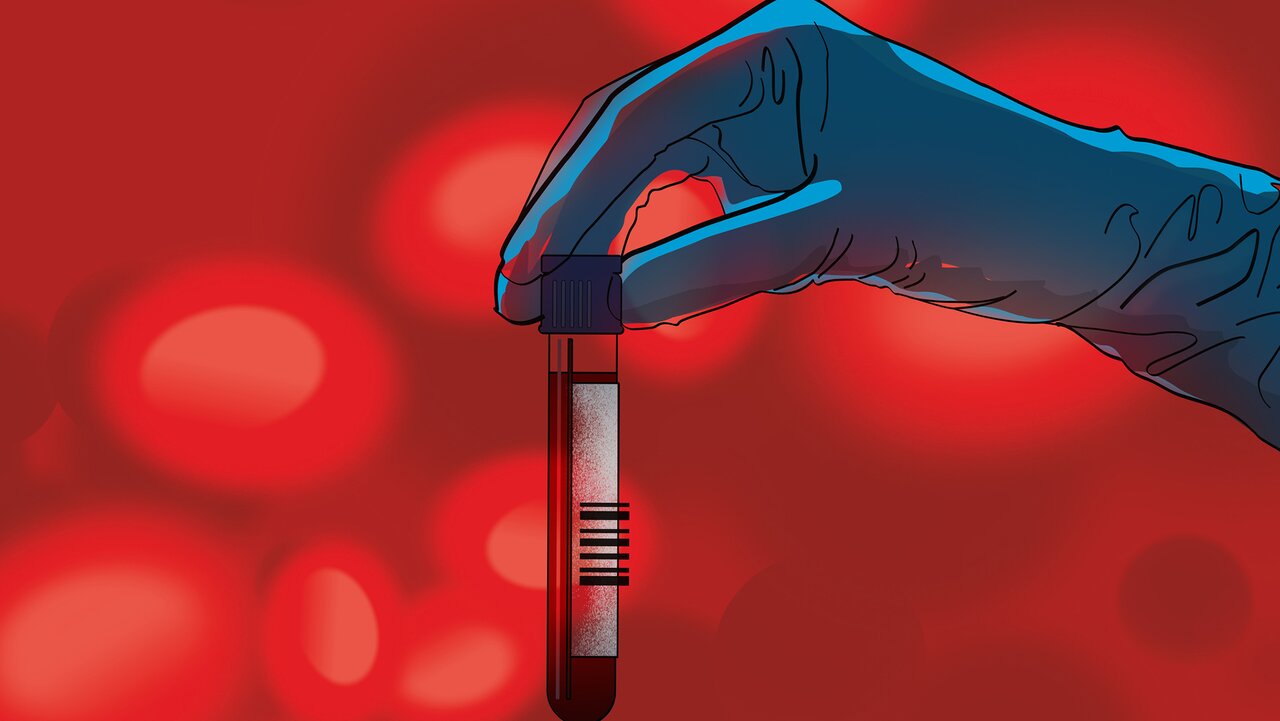
LONDON — New blood tests for Alzheimer's disease aim to catch the condition in its earliest stages. Scientists hope that, someday, by spotting very early signs of dementia and enabling earlier treatments, these tests could significantly improve patients' prognoses.
But how well do current blood tests work for that purpose?
At the Alzheimer's Association International Conference in London on July 12-15, Live Science spoke with researchers and clinicians who study and use blood tests for Alzheimer's disease. Here's their take on the current state of these tests and their practicality for real-world use
Scientists' big hopes for the tests
People diagnosed with Alzheimer's disease face an incurable condition, but their outlook is marginally more hopeful than it was 10 years ago. That's because the first "disease-modifying" drugs for Alzheimer's, which target the disease's causes rather than its symptoms, have been approved in recent years.
These drugs, which include the lab-made antibodies lecanemab and donanemab , only slow, rather than stop, the progression of the disease. However, researchers hope these medicines could be the precursors to more effective treatments .
Alzheimer's disease researchers hotly debate the exact causes of the condition, but they are united on the idea that early intervention is likely to produce the best possible outcome for patients. The aim is to remove disease-linked proteins before they can damage the brain.
That's why new blood tests for Alzheimer's disease , some of which have been approved in the past year, are exciting so many scientists. These tests, which measure chemical signals of the disease circulating through the bloodstream, are currently paired with other clinical exams to provide an accurate Alzheimer's diagnosis for patients with early symptoms, such as subtle changes to memory or personality.
The hope is that if these patients could be identified at this stage, they could access clinical trials and treatments when they might be the most helpful.
New blood tests for Alzheimer's can help patients get diagnosed earlier, which experts think could help boost the degree to which treatments help them. (Image credit: Iparraguirre Recio via Getty Images)
What do Alzheimer's blood tests measure?
The U.S. Food and Drug Administration (FDA) has approved two blood tests for Alzheimer's disease: Roche's Elecsys pTau181 assay and Fujirebio's Lumipulse G pTau217/ß-Amyloid 1-42 Plasma Ratio test.
An additional test from Roche (the Elecsys pTau217 test) has received a basic safety certification in the European Union and U.K., which allows it to be sold but is not equivalent to FDA approval. This test is not approved in the U.S. yet. A second test from Fujirebio (the Lumipulse G pTau 217 Plasma assay) is in the same boat.
Plus, there are a host of other tests made in specific clinical laboratories; these are not FDA-approved but they are available in certain specialist clinics.
All of these tests in varying stages of approval measure "a core part of the pathology of Alzheimer's disease in the brain," said Dr. Sebastian Palmqvist , a clinical neurologist at Lund University in Sweden. These include two proteins that build up in the brains of Alzheimer's patients: tau and amyloid.
The Elecsys tests and the FDA-approved Lumipulse test measure levels of tau in the blood, while the other Lumipulse test measures the ratio of tau to amyloid. Both measurements can be used to indirectly assess the presence of amyloid plaques, sticky deposits in the brain that are associated with the disease's progression.
It's important to note that the blood tests alone aren't diagnostics for Alzheimer's disease, said Dr. Jemma Hazan , an old-age psychiatrist at University College London. Instead, "the test is telling you whether you have certain abnormal proteins in your brain." This, she said, makes it important to use the test in a setting where patients can be properly directed to the next steps of diagnosis and treatment.
How are Alzheimer's disease blood tests used?
Currently in the U.S., Alzheimer's blood tests are approved for use only for adults ages 55 and older who have signs of cognitive impairment, like memory problems. Palmqvist said these tests are best used by specialists with knowledge of dementia, such as doctors in memory clinics. They aren't approved for use by primary care doctors in the U.S.
"The clinicians working there [at memory clinics] have many, many years of experience of interpreting these types of biomarkers," he explained.
Before the advent of these blood tests, memory clinics had to rely solely on expensive brain scanning technology or invasive lumbar punctures to identify physical signs of Alzheimer's disease. The new tests greatly simplify diagnosis, Palmqvist said, but they still need to be used in combination with other tests.
So currently, if a patient receives a positive blood test, they must undergo further cognitive testing, brain scans or invasive biomarker analyses to confirm the diagnosis.
While for now the blood tests are best used by specialists, data that Palmqvist presented at the conference suggested that access to a blood test result may improve a primary care physician’s diagnostic accuracy to levels closer to a memory clinic specialist's. That hints that the test may eventually be usable in primary care, without more invasive diagnostics.
The blood tests look for Alzheimer's-related proteins, including tau and amyloid, which form tangles in the brains of patients with the condition. (Image credit: wildpixel via Getty Images)
How well do the approved Alzheimer's tests work?
In clinical trials, the approved Lumipulse test had a sensitivity of 97.6% and a specificity of 90.8% . Sensitivity refers to the percentage of people who do have amyloid in their brains that test positive — so it's the rate of true positives. Specificity refers to the percentage of healthy people who test negative, meaning true negatives...
Indexed and credited by AIPROPX. Originating outlet: Live Science. Open at source →
An original, deterministic readout — composed only from the computed coverage facts on this page. No interpretation, no rating; figures only.
AIPROPX has consolidated 1 report from 1 outlet into a single canonical entry on “Alzheimer's blood tests are transforming how patients get diagnosed.” Every covered outlet is based in Other.
The only timestamped report came from Live Science (Jul 31, 2026, 09:00 UTC).
2 statements are carried by only one outlet within this set and are not echoed by the others.
Every figure above is a direct count of real published articles. AIPROPX indexes and compares the original reporting — it never rewrites, rates, or editorializes — and each publisher’s full article is always one click away.
Generated by AIPROPX from the source counts above. AIPROPX indexes and resolves coverage; the original publishers are credited and linked at origin in every report.
Coverage from 1 independent outlet across 1 region — each view opens on its own page.
AIPROPX — “Alzheimer's blood tests are transforming how patients get diagnosed” · https://www.aipropx.com/story/1c8ff0a06dcfef81f2a7e4b9beff3474
Other events being covered across multiple sources right now.
Impact of American Red Cross' 2nd national blood crisis at Boston hospitals
5 outletsHow did climate change fuel the wildfires ravaging Europe this summer?
1 outletsGet a $200 Cash Back Bonus on Holiday Gift Buying
30 outletsThings to do in Denver this weekend, July 31-Aug. 2
19 outletsFriday, July 31, 2026
18 outletsSpain deploys military to Ceuta after thousands of migrants breach the border