
RESOLVING THE LEDGER
RESOLVING THE LEDGER
Only one outlet has reported this event so far — you're reading it below, credited to its source. AIPROPX is tracking the web for more coverage; as additional outlets confirm it, this becomes a full multi-source story automatically.
By AIPROPX Editorial Desk · Published · Updated
One outlet is reporting this so far. AIPROPX is tracking it and will gather every additional source as it develops — the full multi-source comparison appears automatically once a second outlet confirms it.
x whatsapp-stroke copylink google Add Al Jazeera on Google info By Dijah Jawo Published On 6 Aug 2026 6 Aug 2026 Banjul, The Gambia – At dawn, before the heat settles over the coast, Fatou Jarjue waits for the tide to retreat.
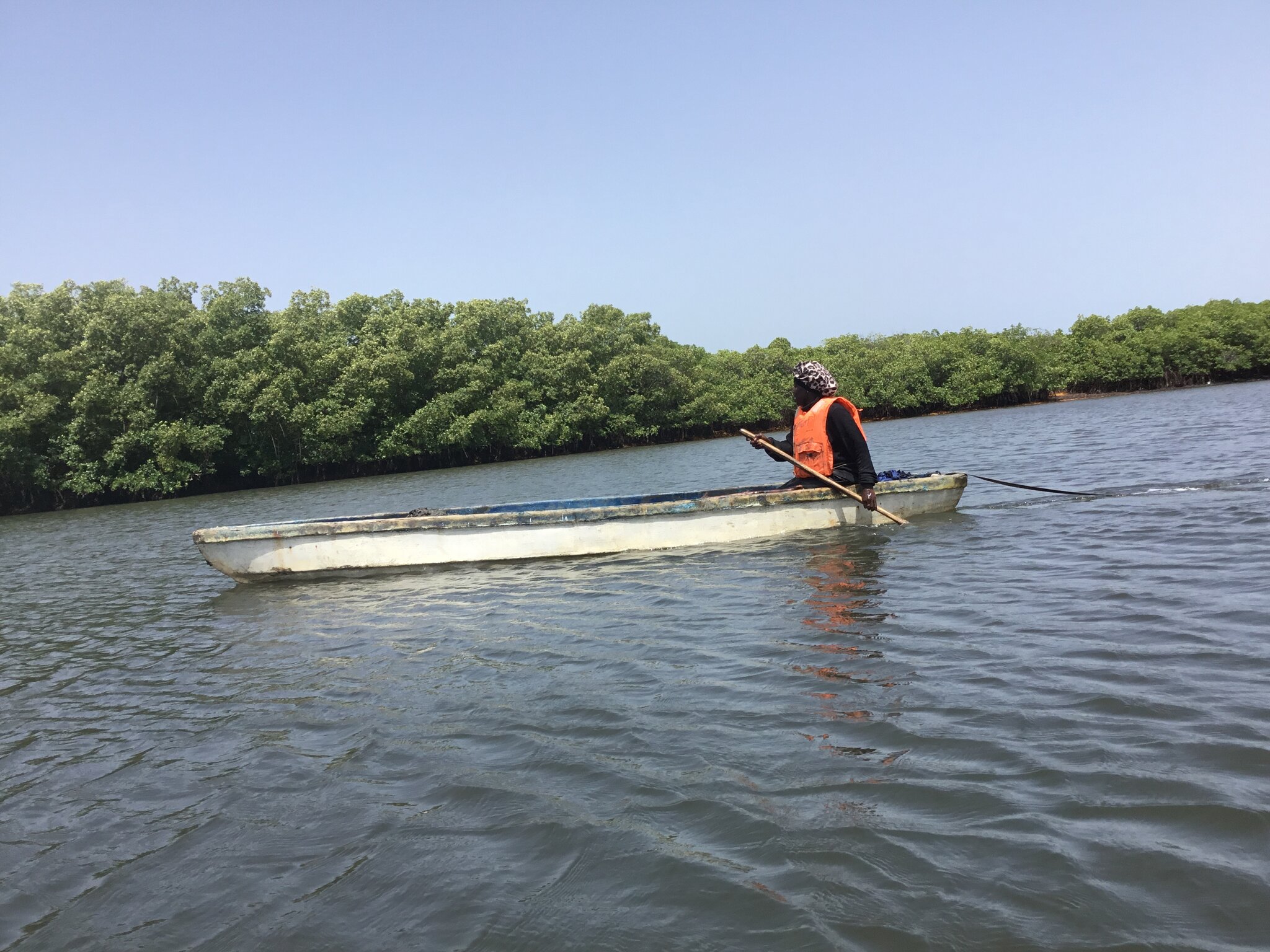
She pulls on her gloves and socks, steps into the muddy edge of the Tanbi Wetland and pushes her wooden canoe through narrow channels surrounded by tangled mangrove roots. Inside the canoe sit empty pans waiting to be filled, not with oysters today, but with crabs hiding beneath the surface.
The life of this mother of one is inseparable from the wetland she navigates each day. The mangroves – salt-tolerant coastal trees that protect shorelines from erosion and flooding – provide the oysters, crabs and fish that sustain her family’s livelihood while serving as a natural barrier against erosion and flooding for her coastal community.
Her brother, Musa, trails behind in a smaller canoe whenever he can, keeping watch as she moves deeper into the mangrove channels. On days when he is busy elsewhere, Jarjue ventures into the wetland alone.
For generations, women around the Tanbi Wetland have depended on these waters for survival. Jarjue still does. But unlike previous generations, she also spends part of her time restoring the ecosystem that has sustained her family for decades.
Only months earlier, these waterways were filled with women collecting oysters attached to mangrove roots. With the arrival of The Gambia’s rainy season, oyster harvesting pauses, forcing many women to turn to crabs and fishing until the shellfish season reopens.
For the 34-year-old, the change in her daily catch is temporary. Her commitment to restoring the mangroves is not.
“I have restored more than 5,000 mangroves since last year,” she told Al Jazeera.
Jarjue grew up in Ndangan, a small settlement of about 300 people located roughly 2km (1.2 miles) from Banjul, the capital of The Gambia. Like many children in the community, she grew up with the rhythms of the wetland.
At just 12 years old, she began following her mother into the mangroves, learning how to harvest oysters and catch crabs and fish.
The forest was both a classroom and a source of income.
Over the years, Jarjue watched the environment around her change. Rising seas, coastal erosion and changing weather patterns began threatening the coastline her community depends on.
Instead of only taking from the wetland, she decided to help rebuild it.
Today, she returns regularly not only to harvest but also to inspect young seedlings, replace damaged plants and monitor areas where restoration is needed.
“The mangroves are part of our lives,” she said.
For Jarjue, conservation is not separate from survival. The healthier the mangroves become, the stronger the future of her community.
As Jarjue paddles deeper into the wetland, oysters cling to the roots of the mangroves. They are large, growing and ready for harvest in another season. She leaves them untouched.
She points towards them proudly, knowing that protecting them now will mean a better harvest later.
Although crab harvesting provides income during the rainy season, oysters remain the more profitable catch. A milk-can measure of oysters sells for about 100 dalasis ($1.34), and demand at local markets is higher.
“Oysters are difficult to harvest,” Jarjue explained. “But that is where the money is.”
The annual closure of oyster harvesting during the rainy season is sometimes misunderstood as a warning that oysters become poisonous at that time of year.
But marine scientist Dawda Saine says the reason is more complex and is rooted in conservation, ecology and food safety.
The closure forms part of The Gambia’s Oyster and Cockle Co-management Plan, which allows oyster stocks time to regenerate, reproduce and grow while reducing pressure on the resource.
“We don’t close the season because oysters are poisonous,” Saine told Al Jazeera. “We close it to protect the resource and because, during the rains, oysters filter everything in the water, including increased run-off, which can affect their quality, taste and safety.”
During the rainy season, increased run-off can carry waste and other materials into waterways where oysters feed by filtering water. Allowing them to remain undisturbed helps protect both the ecosystem and consumers.
For women like Jarjue, respecting the closure is an investment in the future.
Jarjue is among several women in Ndangan who have become guardians of the ecosystem they depend on.
For 48-year-old Sussan Colley, the difference is visible every time she enters the wetland.
Colley has harvested oysters, fished and collected crabs since she was a teenager. She remembers when declining mangrove cover began affecting the community’s catches.
There were fewer oysters. Harvests became smaller. Families who depended on the wetland faced increasing uncertainty.
As restoration efforts expanded, Colley began noticing changes beneath the roots.
The oysters returned. They grew faster and larger. The wetland became productive again.
“The mangroves are changing our lives for the better,” she told Al Jazeera.
For Colley, restoration is also about preparing the next generation. She is teaching her children the skills she inherited from her parents while passing on another lesson: People must protect the natural systems that sustain them.
“I want them to make a livelihood from this,” she said, “but also understand the importance of the mangroves and the role they play in our lives.”
Jarjue and other women received training in mangrove restoration through a local conservation initiative supporting coastal communities in The Gambia. The programme equipped them with the skills to restore degraded mangroves, protect the ecosystems that support fisheries and strengthen their communities’ resilience to climate change.
For the women of Ndangan, the training changed how they viewed the forest, not only as a place to harvest, but also as something they ...
Indexed and credited by AIPROPX. Originating outlet: Al Jazeera. Open at source →
An original, deterministic readout — composed only from the computed coverage facts on this page. No interpretation, no rating; figures only.
AIPROPX has consolidated 1 report from 1 outlet into a single canonical entry on “How Gambian women are restoring the mangroves protecting Banjul.” Every covered outlet is based in Middle East.
The only timestamped report came from Al Jazeera (Aug 6, 2026, 02:34 UTC).
1 statement is carried by only one outlet within this set and is not echoed by the others.
Every figure above is a direct count of real published articles. AIPROPX indexes and compares the original reporting — it never rewrites, rates, or editorializes — and each publisher’s full article is always one click away.
Generated by AIPROPX from the source counts above. AIPROPX indexes and resolves coverage; the original publishers are credited and linked at origin in every report.
Coverage from 1 independent outlet across 1 region — each view opens on its own page.
AIPROPX — “How Gambian women are restoring the mangroves protecting Banjul” · https://www.aipropx.com/story/1ce65898a966b100e956fdd92dc042f1
Other events being covered across multiple sources right now.
How Abdul El-Sayed went from political oblivion to progressive breakthrough in Michigan Senate race
3 outletsCan Progressive Candidates Pop in Purple States? How Medical Aid in Dying Will Work in NY
3 outletsGOP Women’s Caucus chair says House should follow through on Edwards censure
3 outletsHere’s how Mass. hospitals fared in the latest U.S. News rankings
15 outletsNews Wrap: Senate confirms Dr. Erica Schwartz as CDC director
12 outletsIran says deal with Oman on Strait of Hormuz is in final stages