
RESOLVING THE LEDGER
RESOLVING THE LEDGER
Only one outlet has reported this event so far — you're reading it below, credited to its source. AIPROPX is tracking the web for more coverage; as additional outlets confirm it, this becomes a full multi-source story automatically.
By AIPROPX Editorial Desk · Published · Updated
One outlet is reporting this so far. AIPROPX is tracking it and will gather every additional source as it develops — the full multi-source comparison appears automatically once a second outlet confirms it.
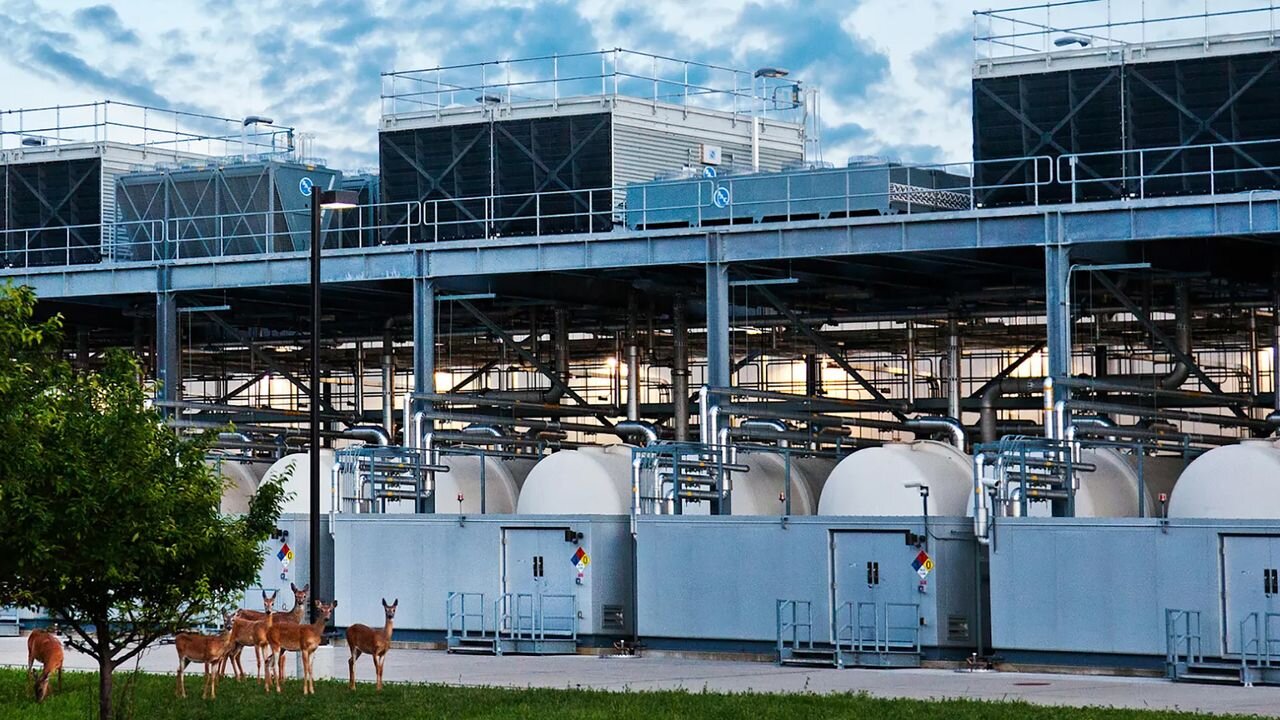
The contentious issue of data centers — and their impact on the environment and local communities — continues to make headlines , as the need for more computing power comes up against concerns about whether that extra capacity is worth the cost.
One of the natural resources that data centers need is water, and plenty of it, to cool down the chips running calculations. For regions already living through rising temperatures and climate change, that's a big ask, and it's understandably getting a lot of attention.
It's also something the tech giants building these data centers are aware of, and Google has just announced a strategy for using water more responsibly: "how we build is just as important as what we build," Google says. Here's what the plans are, and the size of the problem we're dealing with.
Data center water usage
Data centers are nothing new of course, and are needed for everything from hosting this TechRadar website to delivering movies on Netflix . With the rise of AI, however, there's been a need for more data center capacity, and a higher level of performance from data centers — which all adds to the amount of water needed for cooling.
If you find data center water usage figures confusing, you're certainly not alone. There's a lot of variation in the statistics used to measure it, for all kinds of reasons: data centers water usage can vary significantly from site to site, for example, and there's also the question of what counts as water usage.
Should the water needed to generate the electricity to power a data center be included, or not? What standard is used to measure water 'lost' to the environment if it's returned to the local water cycle? These questions are answered differently in different reports, hence the discrepancies in figures — and the problem is compounded by the fact that many data centers simply don't report their water usage at all.
Data center water usage is in the spotlight (Image credit: May Cloud/Unsplash )
While these figures are a little out of date now, a 2021 study put direct (on-site) data center water usage at 1.7 billion liters per day in the US, compared to a national water consumption of 1,218 billion liters per day — so that's less than 1%. As is often pointed out, golf course usage is about four times more .
A few points worth noting: that doesn't account for indirect water usage, and data center demand is rising fast (unlike, say, water for golf courses). Most importantly though, the significant impacts of data center installations are felt at the local level, not the national level. The largest data centers can use up the same amount of water as a town of 50,000 people , which has clear implications for the people in that town.
Many data centers are being built in water-stressed areas, and then there are the other factors to consider, like electricity demand and noise pollution. While water usage for data centers at a national level may be a small fraction, that doesn't mean it isn't a major problem at a local level , and the problem is getting worse.
What Google is proposing
There are five commitments that Google is making. First, more water will be added back into the system than is consumed by Google data centers by 2030, mostly by separate projects looking at more efficient water use and reduced waste (a little bit like planting trees to offset plane trips).
Second, the company is going to invest hundreds of millions of dollars into water infrastructure, to make sure areas where data centers are located are kept well supplied. Third, Google says it will use air-cooled or recycled water data centers in places where water is particularly scarce (these solutions use more electricity and are more expensive, but they don't demand as much water).
Fourth, Google is committing to being transparent when it comes to the water use of its data centers — something that is by no means standard across the industry at the moment. Fifthly and finally, Google says it will "pursue alternative and reclaimed solutions to protect water resources", including looking at reclaimed wastewater.
Google is using water stewardship projects to offset data center demands (Image credit: Google)
"We think it’s really important to sort of put a blueprint out there that communities can reference," Google's Ben Townsend told The Verge . "So if somebody else comes and says, 'we'd like to build a data center there', a community can say, 'well, here are five different things that really put the community and the watershed first... are you doing these?'"
Water usage is only part of the data center story, and it's a story that's becoming increasingly complex and multi-faceted. But positive action (or at least the promise of positive action) is better than nothing, and this may help to shift the industry towards more responsible and sustainable infrastructure .
Turning around public sentiment might be more difficult than cutting down on water usage though. While the hype from AI companies continues, and huge changes are being seen in areas such as software coding, there are still a significant number of people who aren't keen on generative AI and what it brings with it — even before getting to the issue of how many natural resources it uses up.
Indexed and credited by AIPROPX. Originating outlet: TechRadar. Open at source →
An original, deterministic readout — composed only from the computed coverage facts on this page. No interpretation, no rating; figures only.
AIPROPX has consolidated 1 report from 1 outlet into a single canonical entry on “How we build is just as important as what we build' — Google reveals how it's going to solve the AI data center water problem by….” Every covered outlet is based in Other.
The only timestamped report came from TechRadar (Jul 26, 2026, 16:00 UTC).
Comparing the wording across sources, the phrase recurring most across the coverage is “data center”.
2 statements are carried by only one outlet within this set and are not echoed by the others.
Every figure above is a direct count of real published articles. AIPROPX indexes and compares the original reporting — it never rewrites, rates, or editorializes — and each publisher’s full article is always one click away.
Generated by AIPROPX from the source counts above. AIPROPX indexes and resolves coverage; the original publishers are credited and linked at origin in every report.
Coverage from 1 independent outlet across 1 region — each view opens on its own page.
AIPROPX — “How we build is just as important as what we build' — Google reveals how it's going to solve the AI data center water problem by…” · https://www.aipropx.com/story/1eafe816c2bdc8074765e8a74544f185
Other events being covered across multiple sources right now.
Black Panther’ Actor Winston Duke Reveals What He Told David Jonsson About Taking On The Iconic Role
1 outletsWhat is a ‘Super El Niño,' and how could it impact Chicago winter weather?
5 outletsOut and About: What's Happening in Philly
3 outletsHere’s How to Watch ‘K-Pop Shark Heroes’ Online for Free
3 outletsHungarian Grand Prix 2026: Race start time, how to watch, full schedule, predictions
3 outletsHow often the sun would rise after 8 a.m. under permanent daylight saving time