
RESOLVING THE LEDGER
RESOLVING THE LEDGER
Only one outlet has reported this event so far — you're reading it below, credited to its source. AIPROPX is tracking the web for more coverage; as additional outlets confirm it, this becomes a full multi-source story automatically.
By AIPROPX Editorial Desk · Published · Updated
One outlet is reporting this so far. AIPROPX is tracking it and will gather every additional source as it develops — the full multi-source comparison appears automatically once a second outlet confirms it.
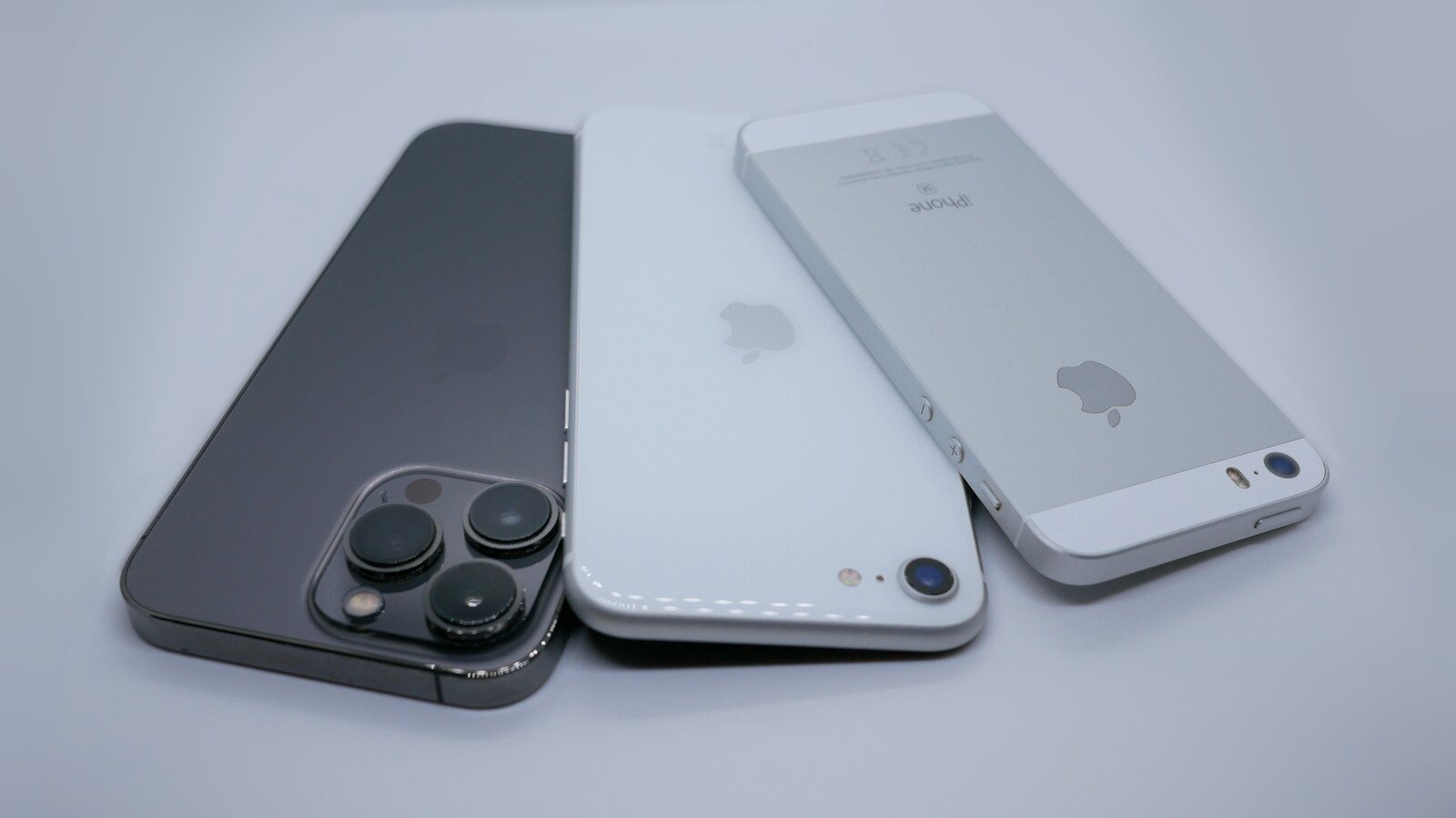
Five years of progress, quirks, surprises, and the occasional eyebrow raise
Anastasiia Sapozhnikova/Shutterstock Smartphone progress has become so incremental that you might struggle to spot any differences between the latest two models of a given device. But when you zoom out and survey longer periods, it's much easier to see what's shifted. You might want to know what an upgrade offers you, or perhaps you enjoy iPhone history for nostalgia.
Beyond the obvious increased internal power, the iPhone has evolved in the past half-decade. Since 2021's iPhone 13 line, we've seen revisions of the iPhone's display, physical buttons, camera functionality, charging port, OS, and software design. Some of these points stayed the same for a long while, illustrating how far the device has come. Features previously exclusive to Pro-level phones have migrated to the base devices. And with the expected reveal of the iPhone 18 series coming in a few months, we could see even more deviation from early-2020s models.
tinhkhuong/Shutterstock Starting with the iPhone 5 in 2012, every generation used Apple's proprietary Lightning port for charging and accessories. While this was an improvement over the old 30-pin connector, it was limited to USB 2.0 speeds on iPhones. It felt increasingly outdated as other phones moved to USB-C. Following an EU law requiring all phones sold in the region to use USB-C, Apple phased out Lightning beginning with the iPhone 15 (and 15 Plus, 15 Pro, and 15 Pro Max) in 2023.
The iPhone 15 Pro and Pro Max are also the first models that changed the mute switch to the Action Button. That slider had been on the top-left of every iPhone since the original in 2007, allowing you to mute the ringer without opening Settings. While the replacement can replicate this behavior, the Action Button is also customizable , letting you turn on the flashlight, activate the camera, or do anything you like using the Shortcuts app. The iPhone 16 and newer have kept the Action Button, completing the transition.
Additionally, the iPhone 16 and iPhone 17 lineups (excluding the lower-cost "e" models) added an all-new button: Camera Control. Pushing this opens the camera and captures photos; it's also touch-sensitive for adjusting controls like zoom and exposure.
Thanes.Op/Shutterstock The iPhone's display has received some minor upgrades over the last five years, such as smaller bezels and a higher peak brightness. A more exciting evolution is ProMotion, which is Apple's name for an adaptive refresh rate. On the iPhone 13 Pro/Max through iPhone 16 Pro/Max, and everything in the iPhone 17 lineup, the screen goes up to 120Hz for high-movement activities like scrolling or gaming. It drops to 1Hz to save battery when not moving. iPhones that lack this stay at 60Hz, which is less smooth. You'll notice the higher refresh rate all over your phone, making it one of the best upgrades in recent years. And it's thankfully now part of the base iPhone.
After the iPhone X introduced the notch in 2017, every subsequent iPhone carried it over without changes until the iPhone 13 line slimmed it down. The following year, the iPhone 14 Pro/Pro Max replaced the notch with the Dynamic Island, and it's been on every iPhone since (except the "e" devices). Instead of a static bar, the Dynamic Island shows in-progress actions from other apps, like a running timer, Maps navigation, or music playback. Using it, you can keep an eye on your Uber while you scroll social media or skip the current song without leaving the message you're composing.
An always-on display is present on the Pro and Pro Max phones starting with the iPhone 14 Pro, and all iPhone 17 models (including the iPhone Air). This keeps the Lock screen dark while still showing details like the time, widgets, and notifications. It uses some battery, but it can help you avoid picking your phone up as often and getting sucked into a rabbit hole.
DenPhotos/Shutterstock AI as we know it today wasn't publicly available in 2021, so it's no surprise the iPhone has since seen major transformations in this realm. Apple has been infamously slower to adopt AI on its platforms, with Apple Intelligence not arriving until October 2024. On the iPhone 15 Pro/Pro Max and all later models, it's an optional feature that unlocks a suite of tools across your device.
Most of these will be familiar if you've used other AI offerings. Writing Tools summarizes long documents and helps you rewrite your own text for clarity and correctness. Image Playground generates images or emojis from your prompts and can also make edits to your own photos. Siri is enhanced by Apple Intelligence with more natural understanding and can optionally connect with ChatGPT to process more complex requests. Other functions include visual intelligence (showing information about items scanned with your camera) and live translations across calls and messages.
When iOS 27 arrives in fall 2026, Siri is getting a long-awaited full AI upgrade. However, some Apple Intelligence features will be locked to the high-end models . The iPhone 17 Pro/Pro Max and iPhone Air will get a few exclusive functions, like customizable expressiveness for Siri.
Anna Hoychuk/Shutterstock Every new iPhone brings camera enhancements, so you'll notice a lot of upgrades between the iPhone 13 and iPhone 17. The iPhone 13 used 12-megapixel lenses for both its main and ultra-wide cameras, while the iPhone 17 bumps those up to 48MP each. Macro photography is supported on the iPhone 17, which the iPhone 13 lacked. Selfies have been enhanced too, with the iPhone 17 packing an 18MP front-facing camera compared to the 2021 model's 12MP.
On the Pro side, the iPhone 17 Pro supports optical zoom at 0.5x, 1x, 2x, 4x, and 8x. In contrast, the iPhone 13 Pro was limited to 0.5x, 1x, and 3x. On an iPhone 17 Pro, you can also record 4K video in Dolby Vision up to 120FPS, while the older device was limited to 60FPS in this regard.
Brand-new functionality ...
Indexed and credited by AIPROPX. Originating outlet: Engadget. Open at source →
An original, deterministic readout — composed only from the computed coverage facts on this page. No interpretation, no rating; figures only.
AIPROPX has consolidated 1 report from 1 outlet into a single canonical entry on “How the iPhone has changed in the last five years.” Every covered outlet is based in Other.
The only timestamped report came from Engadget (Aug 11, 2026, 17:30 UTC).
1 statement is carried by only one outlet within this set and is not echoed by the others.
Every figure above is a direct count of real published articles. AIPROPX indexes and compares the original reporting — it never rewrites, rates, or editorializes — and each publisher’s full article is always one click away.
Generated by AIPROPX from the source counts above. AIPROPX indexes and resolves coverage; the original publishers are credited and linked at origin in every report.
Coverage from 1 independent outlet across 1 region — each view opens on its own page.
AIPROPX — “How the iPhone has changed in the last five years” · https://www.aipropx.com/story/25db0f65f51fa671f09ec08b890d8c9e
Other events being covered across multiple sources right now.
A solar eclipse will be visible to millions of people tomorrow: How to watch in person and online
17 outletsEx-Marine Robert Gilman Is Freed by Russia After 4 Years in Prison
7 outletsHow we know that splitting up the MMR vaccine could be dangerous
6 outletsHow and When to View the Perseid Meteor Shower (August 2026)
5 outletsHow Donald Trump swapped planes to avoid threat from Iran
5 outletsSpaceX to livestream next Vandenberg rocket launch. How to watch