
RESOLVING THE LEDGER
RESOLVING THE LEDGER
Only one outlet has reported this event so far — you're reading it below, credited to its source. AIPROPX is tracking the web for more coverage; as additional outlets confirm it, this becomes a full multi-source story automatically.
By AIPROPX Editorial Desk · Published · Updated
One outlet is reporting this so far. AIPROPX is tracking it and will gather every additional source as it develops — the full multi-source comparison appears automatically once a second outlet confirms it.
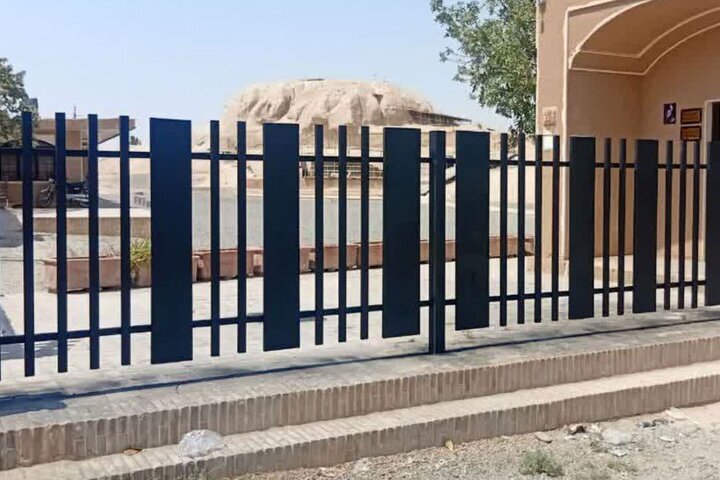
TEHRAN – Iranian authorities have launched the second phase of restoration work at the Tepe Sialk archaeological site in Kashan following the completion of improvements to the site's entrance, a provincial cultural heritage official said on Sunday.
Amir Karamzadeh, director general of the Cultural Heritage, Tourism and Handicrafts Department of Isfahan province, said the latest conservation program includes protective mud-plaster treatment on damaged sections of the ancient site and improvements to its drainage system to reduce the impact of natural erosion.
The announcement came after authorities completed work to reorganize the entrance area of the archaeological site and finish fencing around its perimeter.
Karamzadeh said the completed works included improving the route connecting the southern mound of Tepe Sialk to the parking area and the site's entrance.
He said the project was designed to facilitate visitor access while strengthening protection of the archaeological site and improving visitor management.
"Proper protection of the nationally registered site requires continuous conservation, restoration and infrastructure improvements," Karamzadeh said, adding that the provincial department is pursuing those measures through a long-term preservation plan.
The official added that safeguarding Tepe Sialk, one of Iran's most significant archaeological sites and a symbol of Kashan's historical identity, remains a priority for the provincial cultural heritage authorities. He added that future conservation and site management projects would continue in accordance with professional heritage conservation standards.
Situated near the city of Kashan, Tepe Sialk is one of the oldest known human settlements on the Iranian plateau, with archaeological evidence dating back to around 6000–5500 BC. The site consists of two main mounds, known as the northern and southern hills, containing multiple cultural layers that document thousands of years of human occupation.
The site was first excavated in the 1930s by French archaeologist Roman Ghirshman and his wife, Tania Ghirshman, revealing evidence of successive prehistoric civilizations, including early mud-brick architecture, pottery production, metallurgy, and the emergence of trade networks.
Excavations identified six major cultural phases, documenting developments ranging from early farming communities and handmade pottery to the introduction of the potter's wheel, metallurgy, urban organization, and the appearance of Proto-Elamite writing around the third millennium BC.
Archaeological investigations resumed in 2001 under Iranian archaeologist Malek Shahmirzadi, whose research expanded understanding of the site's chronology and cultural significance.
In 2019, the Louvre Museum hosted an international conference on Tepe Sialk attended by archaeologists from Iran, France, Germany and Britain to review eight decades of research and discuss strategies for the site's preservation. According to the Louvre, the earliest levels at Tepe Sialk document more than two millennia of occupation from the Neolithic through the Chalcolithic period before the settlement became part of the wider Proto-Elamite cultural sphere around 3000 BC, when one of the earliest writing systems in the region emerged.
Indexed and credited by AIPROPX. Originating outlet: Tehran Times. Open at source →
An original, deterministic readout — composed only from the computed coverage facts on this page. No interpretation, no rating; figures only.
AIPROPX has consolidated 1 report from 1 outlet into a single canonical entry on “7,500-year-old Tepe Sialk undergoes restoration work.” Every covered outlet is based in Middle East.
The only timestamped report came from Tehran Times (Jul 26, 2026, 13:42 UTC).
Comparing the wording across sources, the phrase recurring most across the coverage is “restoration work”.
1 statement is carried by only one outlet within this set and is not echoed by the others.
Every figure above is a direct count of real published articles. AIPROPX indexes and compares the original reporting — it never rewrites, rates, or editorializes — and each publisher’s full article is always one click away.
Generated by AIPROPX from the source counts above. AIPROPX indexes and resolves coverage; the original publishers are credited and linked at origin in every report.
Coverage from 1 independent outlet across 1 region — each view opens on its own page.
AIPROPX — “7,500-year-old Tepe Sialk undergoes restoration work” · https://www.aipropx.com/story/26193c7d452c0b6270450cffb266190f
Other events being covered across multiple sources right now.
12-year-old killed in shooting outside Bronx bodega
3 outletsBerlin police seek 21-year-old after vehicle crashes into crowd during LGBTQ+ parade
3 outletsUncle Saves 3-Year-Old Girl After Near-Drowning In Backyard Cresskill Pool: Police
3 outlets23-year-old in critical condition after early morning shooting: Cleveland EMS
3 outletsFamily mourns 22-year-old killed in Phoenix gas station shooting
2 outlets29-year-old man dies in city custody after arraignment at Bronx courthouse