
RESOLVING THE LEDGER
RESOLVING THE LEDGER
This is not a single article. It's every outletcovering this one event, gathered in one place — read AIPROPX's summary, see where the sources line up, then open any report at its origin.
By AIPROPX Editorial Desk · Published · Updated
Everything reported about this story, gathered from 3 sources. Read the summary below, then tap any source to open that report.

NASA’s Swift Observatory observed a supermassive black hole ripping apart a star more than 30,000 light-years from the center of a distant galaxy. The extraordinary flare briefly outshone its entire host galaxy in ultraviolet light and revealed a black hole about a million times the Sun’s mass.
Summary indexed by AIPROPX from ScienceDaily’s reporting — the full article is one click away. Open at source →
3 outlets are covering this. Resolve the ledger to read what they collectively report — the common thread, in plain terms.
Every report on this story — read the summary of each, then open any at its source. AIPROPX summarizes and links; it never reproduces the original.
NASA’s Swift Observatory observed a supermassive black hole ripping apart a star more than 30,000 light-years from the center of a distant galaxy. The extraordinary flare briefly outshone its entire host galaxy in ultraviolet light and revealed a black hole about a million times the Sun’s mass.
Read this reportNASA’s Neil Gehrels Swift Observatory captured an “orphan” black hole lighting up as it devoured a star on the outskirts of a faraway galaxy. These phenomena are rare to begin with, and none had ever before been seen so far outside of a galaxy’s core. “We were looking for these star-shredding events as a way […]
Read this report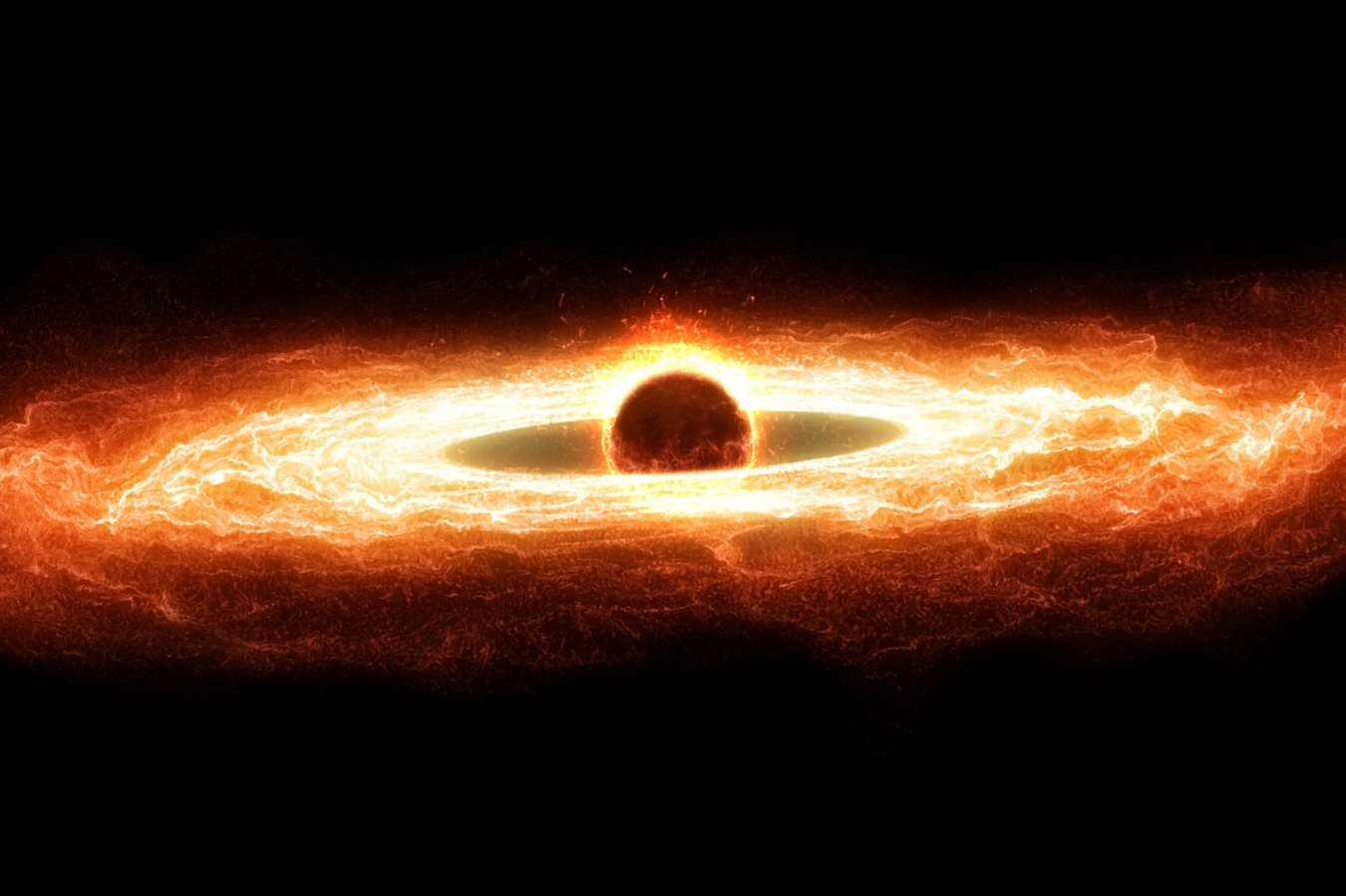
Astronomers have caught a supermassive black hole straying far from the centre of its galaxy using light from a star being ripped apart
Read this reportAn original, deterministic readout — composed only from the computed coverage facts on this page. No interpretation, no rating; figures only.
AIPROPX has consolidated 3 reports from 3 outlets into a single canonical entry on “NASA’s Swift Sees ‘Wandering’ Mega Black Hole Shredding Star.” Every covered outlet is based in Other.
The earliest report in this entry came from New Scientist (Jul 27, 2026, 16:00 UTC); the most recent came from ScienceDaily (Jul 28, 2026, 05:54 UTC).
Comparing the wording across sources, 1 named entity is referenced by multiple outlets and the phrase recurring most across the coverage is “black hole”.
5 statements are carried by only one outlet within this set and are not echoed by the others.
Every figure above is a direct count of real published articles. AIPROPX indexes and compares the original reporting — it never rewrites, rates, or editorializes — and each publisher’s full article is always one click away.
Generated by AIPROPX from the source counts above. AIPROPX indexes and resolves coverage; the original publishers are credited and linked at origin in every report.
Coverage from 3 independent outlets across 1 region — each view opens on its own page.
AIPROPX — “NASA’s Swift Sees ‘Wandering’ Mega Black Hole Shredding Star” · https://www.aipropx.com/story/356390e60518ad3f5382bcacab4169e0
Other events being covered across multiple sources right now.
6 Historically Black Summer Getaways You Need To Know About
4 outletsEx-Olympian charged in Reflecting Pool damage sees 'irregularities' in proceedings
3 outletsNASA science soars during August total solar eclipse
1 outletsKorda handed star-studded major group as Hull given late-early start
24 outletsTrump Asks Supreme Court to Allow Restrictions on Mail-In Ballots Before Midterms
19 outletsPeople trapped and injured after powerful earthquake strikes Japan