
RESOLVING THE LEDGER
RESOLVING THE LEDGER
Only one outlet has reported this event so far — you're reading it below, credited to its source. AIPROPX is tracking the web for more coverage; as additional outlets confirm it, this becomes a full multi-source story automatically.
By AIPROPX Editorial Desk · Published · Updated
One outlet is reporting this so far. AIPROPX is tracking it and will gather every additional source as it develops — the full multi-source comparison appears automatically once a second outlet confirms it.
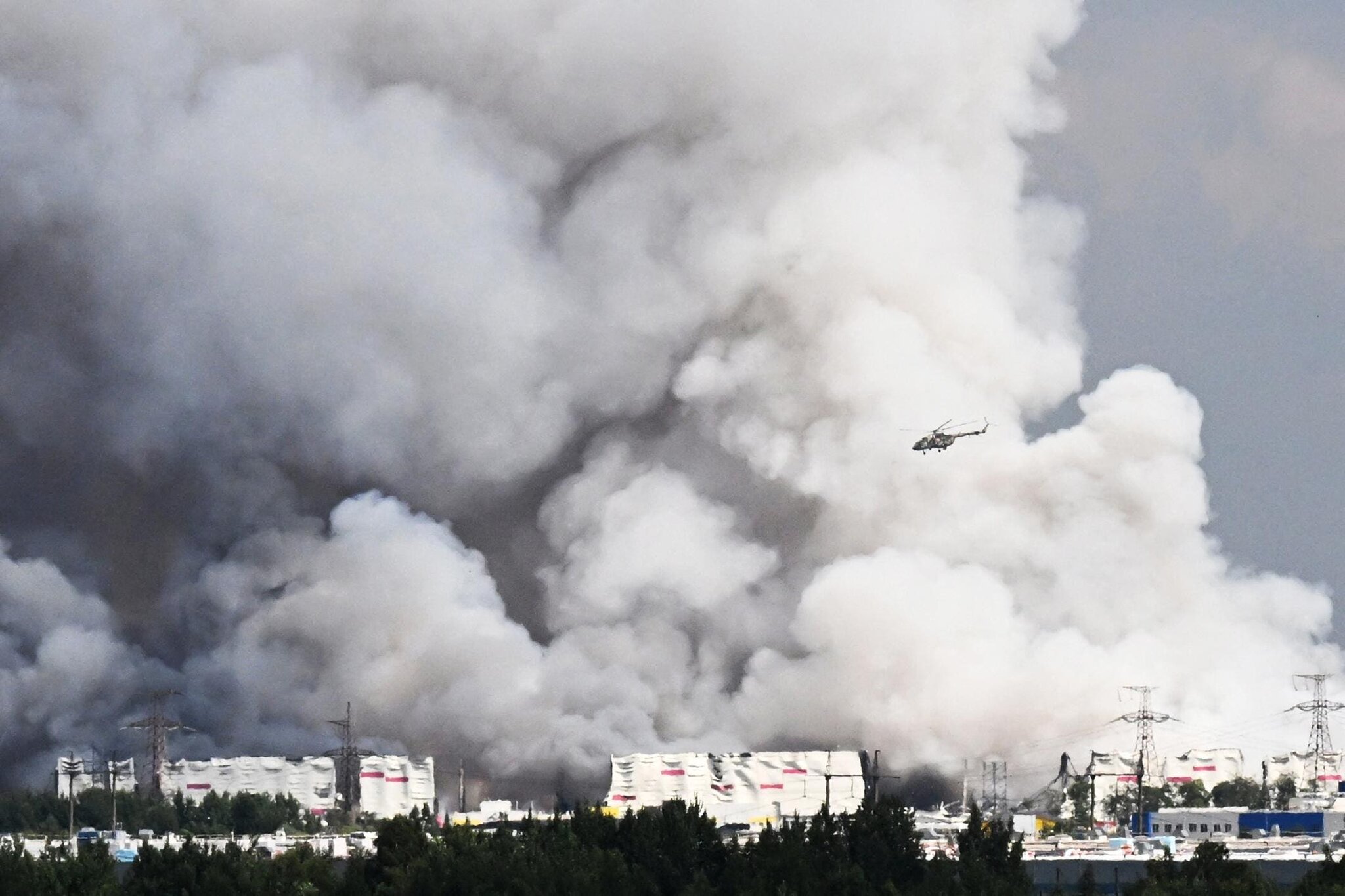
Retail Drone Attacks On Wildberries, Russian Answer To Amazon, Bring War Home By Mark Faithfull ,
Forbes contributors publish independent expert analyses and insights. Mark Faithfull is London-based and covers retail and real estate Follow Author Jul 27, 2026, 04:43am EDT --:-- / --:-- This voice experience is generated by AI. Learn more . This voice experience is generated by AI. Learn more . Summary Ukrainian drones have targeted Wildberries, Russia's largest online retailer, signaling a strategic shift to hit civilian commerce infrastructure. Attacks on logistics facilities near Moscow, St. Petersburg, and other cities caused fires and operational suspensions, damaging an estimated 10% of its network. Ukraine claims these warehouses support military logistics, a charge Russia denies. These strikes directly impact millions of ordinary Russian consumers reliant on Wildberries for goods, exposing vulnerabilities in an already struggling economy. The attacks underscore Russia's retail sector woes, with international brands withdrawing and domestic replacements often failing to satisfy. President Zelensky stated Ukraine is "bringing the war back home."
A wave of Ukrainian drone attacks targeting logistics facilities operated by Wildberries, Russia’s largest online retailer, have signaled a strategic shift in Ukraine's campaign, targeting the infrastructure that underpins everyday Russian commerce while exposing growing weaknesses in an ailing economy.
Often described as Russia's answer to Amazon, Wildberries dominates domestic ecommerce, delivering everything from apparel and electronics to groceries and household goods across the country's vast geography. Following the withdrawal of many Western retailers after the 2022 invasion, its importance only increased.
But during the past week Ukrainian drones have struck multiple Wildberries logistics centres across Russia, with attacks reported in locations including near Moscow, St Petersburg, Krasnodar, Stavropol and Yekaterinburg. Some facilities suffered significant fires while others suspended operations following drone alerts.
According to estimates cited by Russian media, around 10% of Wildberries' logistics network had suffered damage during the latest series of attacks. Ukrainian officials argue the warehouses are legitimate military targets because they allegedly support Russian military logistics and storage, accusations that Moscow denies.
But unlike attacks on oil refineries or military bases, warehouse strikes directly affect ordinary consumers. Millions of Russians depend upon Wildberries for next-day deliveries, particularly in regions where physical retail remains limited.
Together with rival marketplace Ozon , the two companies now account for an extraordinary share of Russian commerce and together contribute around 8.5% of Russia's GDP while employing more than 5% of the country's workforce.
Wildberries and Ozon act almost entirely as marketplaces, connecting sellers with buyers across Russia, storing and delivering their goods and handling payments.
The strikes on Wildberries warehouses were confirmed by company founder and billionaire Tatyana Kim in statements after the attack. She launched in 2004 when a teacher and a young mother, focused at first, on selling apparel.
The company now has more than 200 logistics facilities, with plans to build new warehouses this year in Belarus and Kazakhstan, where Wildberries operates as well, along with Russian-held Crimea.
For retailers, the implications stretch well beyond Wildberries. Russia’s retail sector entered 2026 under increasing pressure and retail analysts have reported that Russia has experienced its first decline in the total number of shops in more than two decades, with thousands of stores disappearing from Moscow and St. Petersburg.
No major new international retail brands entered Russia during the first quarter of 2026, something that had happened only once previously immediately after the invasion began.
International investors largely abandoned Russian retail following the invasion, leaving domestic capital to fund expansion. Turkish, Asian and Chinese brands flooded in at first, spying a once-in-a-generation opportunity to hoover up prime real estate.
But as Russia’s economy continues to slow, IBC Real Estate, formerly the Russian arm of real estate broker JLL, reported that even those international retailers vacated significantly more space than they took up in 2025 and only 12 new international brands entered Russia during 2025, roughly half the number in the prior two years.
As a result, the vacancy rate in Moscow shopping centers increased by 1 percentage point year-on-year to 5.7% across 2025 and while many former Western stores continue to operate under new Russian management (McDonald’s became Vkusno i Tochka, Starbucks was rebranded as Stars Coffee, while Subway restaurants continue to operate as Subjoy), many consumers view these domestic clones as inferior to the brands they replaced.
Western retailers generated footfall and encouraged visitors to shopping centers, leading at one point to Russia’s Shopping Centers Association publicly imploring retailers including H&M, Uniqlo and Zara to return, acknowledging that many domestic replacements had struggled to replicate their success.
There will be few tears for Russia’s self-inflicted retail travails, while the attacks on Wildberries will leave many ordinary Russians unable to access products and hundreds of thousands of small businesses counting the cost.
"We are, quite justly, bringing the war back home - to Russia," said Ukraine's President Volodymyr Zelensky.
Indexed and credited by AIPROPX. Originating outlet: Forbes. Open at source →
An original, deterministic readout — composed only from the computed coverage facts on this page. No interpretation, no rating; figures only.
AIPROPX has consolidated 1 report from 1 outlet into a single canonical entry on “Drone Attacks On Wildberries, Russian Answer To Amazon, Bring War Home.” Every covered outlet is based in US.
The only timestamped report came from Forbes (Jul 27, 2026, 08:43 UTC).
Comparing the wording across sources, the phrase recurring most across the coverage is “drone attacks”.
1 statement is carried by only one outlet within this set and is not echoed by the others.
Every figure above is a direct count of real published articles. AIPROPX indexes and compares the original reporting — it never rewrites, rates, or editorializes — and each publisher’s full article is always one click away.
Generated by AIPROPX from the source counts above. AIPROPX indexes and resolves coverage; the original publishers are credited and linked at origin in every report.
Coverage from 1 independent outlet across 1 region — each view opens on its own page.
AIPROPX — “Drone Attacks On Wildberries, Russian Answer To Amazon, Bring War Home” · https://www.aipropx.com/story/35e401bc0fe4ed5c8ad8ea3243688287
Other events being covered across multiple sources right now.
Pentagon Changes How It Reports Casualties in Iran War
4 outletsUkraine's Caspian Sea attack could widen war on Iran globally, analyst says
3 outletsMediators see progress in diplomatic efforts to halt Iran war, 2 regional officials say
3 outletsTrump Seems Trapped by Iran War, Even as He Wields the World’s Biggest Hammer
1 outletsTurn Your Rising Home Equity Into Cash You Can Use
1 outletsDream Big with a Home Equity Loan