
RESOLVING THE LEDGER
RESOLVING THE LEDGER
Only one outlet has reported this event so far — you're reading it below, credited to its source. AIPROPX is tracking the web for more coverage; as additional outlets confirm it, this becomes a full multi-source story automatically.
By AIPROPX Editorial Desk · Published · Updated
One outlet is reporting this so far. AIPROPX is tracking it and will gather every additional source as it develops — the full multi-source comparison appears automatically once a second outlet confirms it.
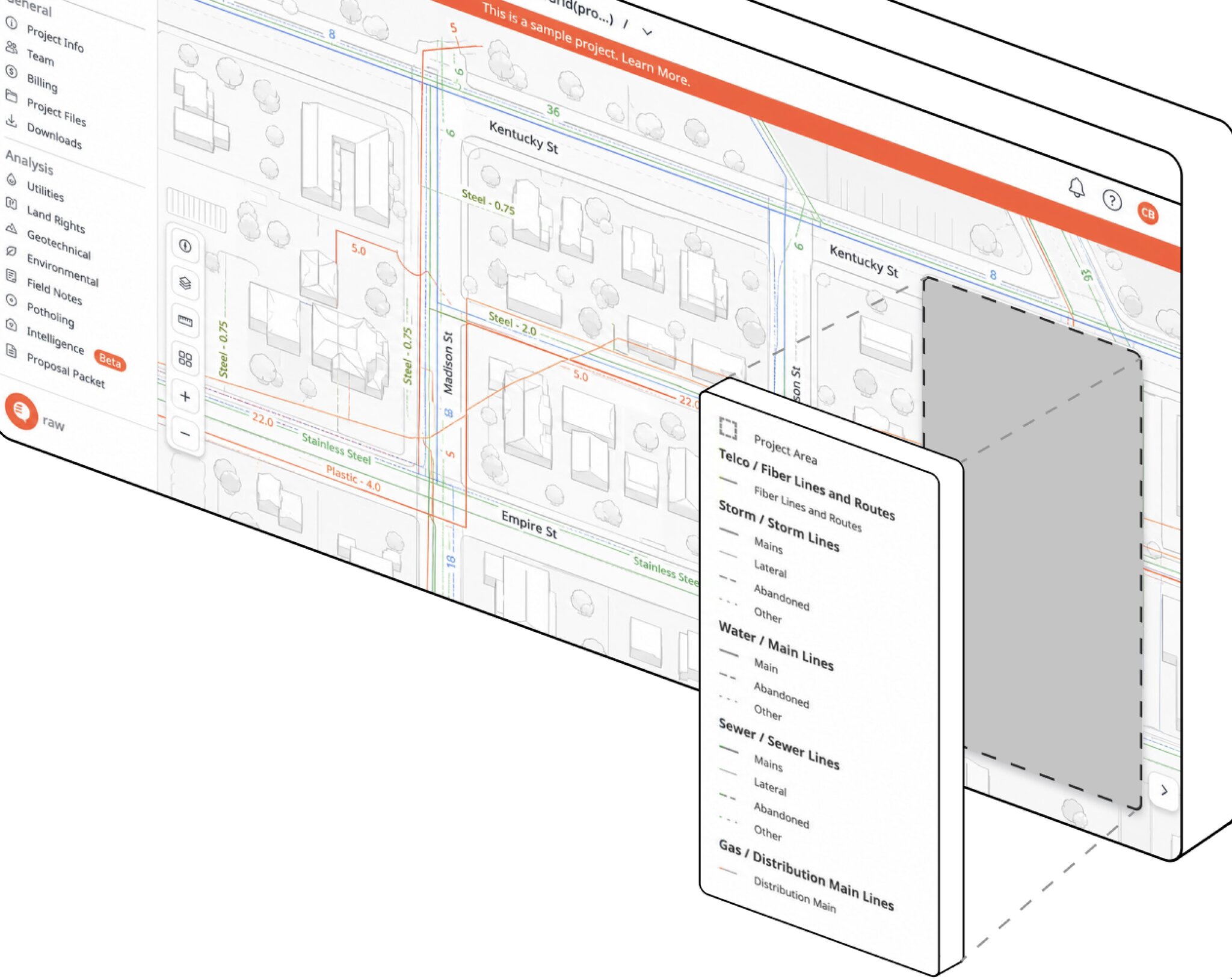
This former PG&E engineer is building a 'Google Maps for the underground' Sean O'Kane 8:00 AM PDT · August 27, 2026 Josh Mackanic left a 10-year engineering career at Pacific Gas and Electric because he kept thinking about what the utility company doesn't know about what's buried underground.
"I had a job that got shut down because a pipe was in the excavation [that] we didn't know about. Fortunately, we saw it before we impacted it," he told TechCrunch. "But then there was this three-day ordeal of running around [asking] like: 'Whose pipe is this? Can we tap it? Can we not? What's in it?'"
Mackanic eventually got the answer, but it took three days, a delay that cost $60,000.
Despite being one of the largest utility companies in the United States, PG&E (and companies like it) only has visibility into the many miles of electric and gas lines it owns and operates. Pipes carrying sewage or water belong to other companies, and so does the information about where exactly they are. This leads to around 200,000 so-called "utility strikes" every year.
So in 2020, Mackanic founded a startup called CivilGrid designed to solve this problem. The company gathers disparate data regarding utility assets, property ownership, and environmental regulations and bundles it into what Mackanic cheekily refers to as "Google Maps for what's underground." It then sells access to governments, civil engineering firms, and utilities — including his former employer.
Now, Mackanic has raised a $26 million Series A to grow CivilGrid into something bigger. The round was led by Spark Capital, with additional investment coming from early-stage funds Afore, A*, Ford Street Ventures, and SNR. CivilGrid also received investment from Energy Impact Partners, a fund with a number of utility companies serving as LPs, which Mackanic pointed to as another vote of confidence from the industry.
"California’s energy needs are growing rapidly, and our customers expect us to deliver the infrastructure they need safely, reliably, and affordably," Christine Cowsert, senior vice president of enterprise business and technology modernization at PG&E, said in a statement. "That means planning smarter from the start with tools like CivilGrid, which help our teams identify risks earlier, build more efficiently, and avoid unnecessary costs while keeping safety front and center."
A case study performed by PG&E has already identified $60 million in avoidable paving costs across 1,600 planned gas distribution projects by using CivilGrid. Mackanic said he wants to bring on more customers and, eventually, start tackling other red tape problems that make it so hard to build things in the U.S.
"Right now, we're providing engineers the data to be able to make a decision" about where to place infrastructure, he told TechCrunch in an exclusive interview. But "once I've given them the constraints, it's not too hard for me to say, 'Well, I would recommend that you put the pipe down right here, and oh, by the way, here are the permits you need in order to move to construction on this pipe. Would you like me to file those permits? Okay, let me file those permits.'"
Mackanic said there's a "lot more" CivilGrid could start to automate "now that we have built this dataset and kind of captured the core user who's at the very early stages of making decisions about what's going to be built."
Creating better visibility into the country's subterranean infrastructure is not a novel idea, Mackanic told TechCrunch. But he said nobody had found a way to solve the problem of collecting, sorting, and securing the data, and striking up relationships with the partners most likely to pay for that information.
"One of the reasons I left PG&E to start CivilGrid was because I felt like this was a problem that was going to be better solved from the outside in than the inside out, and not because there's [a] lack of awareness of the problem or even interest in solving it," he said. "Utilities, they run relatively lean, right? Nobody wants to pay more for their gas bill than they have to."
Like many kids, Mackanic said he spent much of his childhood dreaming of sending rockets into space. But even though he studied mechanical engineering in college and graduate school, he said he never expected to work for or with utility companies, digging into his own planet.
"I was like, aren't these places boring?" he remembered thinking.
But working at PG&E made him realize just how high-stakes utility work can be — all so people can turn on their lights or start a pot of coffee every day without worrying that those things will work.
"The reality is, unfortunately, we do ourselves a disservice in not championing the extent to which they work wonders every day," he said.
When you purchase through links in our articles, we may earn a small commission . This doesn’t affect our editorial independence.
Sean O'Kane Sr. Reporter, Transportation
Sean O’Kane is a reporter who has spent a decade covering the rapidly-evolving business and technology of the transportation industry, including Tesla and the many startups chasing Elon Musk. Most recently, he was a reporter at Bloomberg News where he helped break stories about some of the most notorious EV SPAC flops. He previously worked at The Verge, where he also covered consumer technology, hosted many short- and long-form videos, performed product and editorial photography, and once nearly passed out in a Red Bull Air Race plane.
You can contact or verify outreach from Sean by emailing [email protected] or via encrypted message at okane.01 on Signal.
October 13 – 15 San Francisco Don't miss out . The startup community will gather to answer a pivotal question: How do you build sustainably in the AI era?
Two years after launch, Walmart's Flipkart is closing in on India's quick-commerce leaders Jagmeet Singh
Inherent, founded by DeepMind alumni, says its AI 'teammate' just outperformed Anthropic and OpenAI at replicating r...
Indexed and credited by AIPROPX. Originating outlet: TechCrunch. Open at source →
An original, deterministic readout — composed only from the computed coverage facts on this page. No interpretation, no rating; figures only.
AIPROPX has consolidated 1 report from 1 outlet into a single canonical entry on “This former PG&E engineer is building a ‘Google Maps for the underground.” Every covered outlet is based in Other.
The only timestamped report came from TechCrunch (Aug 27, 2026, 15:00 UTC).
1 statement is carried by only one outlet within this set and is not echoed by the others.
Every figure above is a direct count of real published articles. AIPROPX indexes and compares the original reporting — it never rewrites, rates, or editorializes — and each publisher’s full article is always one click away.
Generated by AIPROPX from the source counts above. AIPROPX indexes and resolves coverage; the original publishers are credited and linked at origin in every report.
Coverage from 1 independent outlet across 1 region — each view opens on its own page.
AIPROPX — “This former PG&E engineer is building a ‘Google Maps for the underground” · https://www.aipropx.com/story/36bbe6f1041fa81abed24c08c5140586
Other events being covered across multiple sources right now.
Google launches Pokémon Sleep special-edition Fitbit Air
3 outletsCrews respond to building fire on Wilmington Street in Jackson
3 outletsThe Best Google Pixel Phones of 2026: Comparison, Features, and Accessories
1 outletsCondo owners remember building scare
30 outletsAn impressive partial lunar eclipse will turn the moon an eerie red for millions of people tonight
29 outletsThe 35 best things to do in D.C. this weekend and next week