
RESOLVING THE LEDGER
RESOLVING THE LEDGER
Only one outlet has reported this event so far — you're reading it below, credited to its source. AIPROPX is tracking the web for more coverage; as additional outlets confirm it, this becomes a full multi-source story automatically.
By AIPROPX Editorial Desk · Published · Updated
One outlet is reporting this so far. AIPROPX is tracking it and will gather every additional source as it develops — the full multi-source comparison appears automatically once a second outlet confirms it.
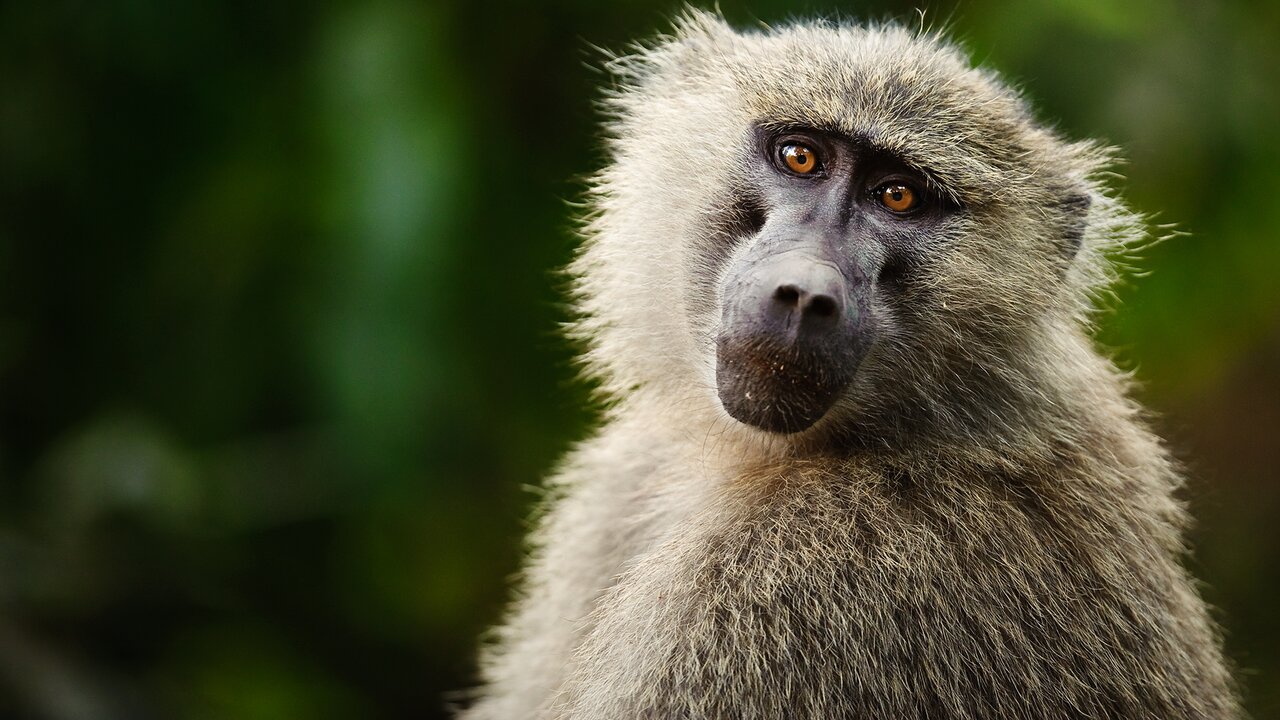
Monkeys use some of the same basic mental strategies as people do to perceive abstract relationships between shapes, a new study suggests.
The findings challenge the idea that humans crossed a sharp evolutionary divide when they learned to recognize geometric properties like symmetry, parallel lines and right angles, the researchers say.
"While humans do come up with geometric descriptions that are more abstract than what nonhumans can do, there's still some overlap, some similarity in the kinds of geometric intuitions you see in humans and those of non-primates," study co-author Jessica Cantlon , a professor of developmental neuroscience and psychology at Carnegie Mellon University, told Live Science. "So there's a thread of continuity that runs through geometric reasoning between humans and nonhumans."
The research, published July 20 in the journal PNAS , adds to a long-standing scientific debate over whether humans possess entirely unique forms of abstract thought or unusually sophisticated versions of abilities found elsewhere in the animal kingdom.
"For decades, cognitive scientists have searched for the 'special ingredient' that distinguishes human intelligence from that of other animals," Elizabeth Brannon , a professor of psychology at the University of Pennsylvania who was not involved in the research, told Live Science in an email. "This study provides compelling evidence that, at least for geometric reasoning, the difference between humans and other primates is more quantitative than qualitative."
In other words, the study suggested that baboons and macaques don't lack the ability to reason about geometry. Instead, they just aren't as proficient at it as humans, meaning that humans didn't evolve a new unique skill in understanding geometry.
A geometric matching game
The researchers tested eight adult monkeys: four rhesus macaques ( Macaca mulatta ) and four olive baboons ( Papio anubis ). The olive baboons participated through the Primate Portal , a touch-screen system installed at Seneca Park Zoo in Rochester, New York. One baboon, Kalamata, was especially enthusiastic.
"Every day he came to the touch screen," Jialin Li , a doctoral student at Carnegie Mellon University and first author of the study, told Live Science. "He just sat there and worked for two hours, three hours straight, completing thousands of trials. That's just amazing."
The macaques participated separately at Carnegie Mellon University, having prior experience with matching tests in other experiments.
The researchers then compared the animals' performance with that of 58 U.S. preschoolers ages 3 to 6, and 79 adults from the Tsimané, an Indigenous farmer-forager society in Bolivia whose members received little formal education. A separate experiment in the larger project involving rotating shapes also included 21 U.S. adults.
In all of the study's cohorts, the participants played a game known as a match-to-sample task.
"[The participants] see a sample shape first," Li said. "For example, it's a square. Then they need to tap the square to make sure that they are looking at it. When they tap it, there will be two shape choices that come up: one on the left and one on the right. They need to choose which shape matches with the sample shape."
The researchers made the choice shapes half the area of the sample shape, thus preventing the participants from solving the task by simply matching overall size or pixel count. In another version of the test, they rotated the choice shapes, thereby forcing the participants to identify the underlying form despite its changed orientation.
Two olive baboons participated in the Primate Portal experiments at the Seneca Park Zoo in Rochester, New York. (Image credit: Rochester Institute of Technology)
Correct answers earned the monkeys fruit-flavored cereal pellets, preschoolers collected stickers that could later be exchanged for prizes, and adults received verbal feedback. Incorrect answers triggered a "bonk" sound and a short timeout from the game.
Despite their limited formal education, the adult group had little trouble with the game, but the monkeys and the children had to put considerable thought into their choices.
"We often think that this matching task will be super easy for humans," Li said. "But actually, young kids were struggling in completing the task in telling the shapes apart, which makes them more similar to monkeys."
Ultimately, the children and monkeys could find the matches, Cantlon said, but only after taking a long time to think about the problem.
The researchers then used computer models to investigate which visual properties best predicted participants' decisions. One model represented simple details, such as edges and lines. Another represented more complex information about a shape's overall form. A third encoded discrete geometric properties, such as equal sides, equal angles, symmetry and parallelism — an approach the researchers described as "symbolic."
According to Cantlon and Li, the term "symbolic" does not mean the monkeys were mentally applying rules such as "a square has four equal sides." Much of the apparent symbolic effect could be explained by the ability to recognize a shape regardless of its orientation, known as rotation invariance.
If abstract geometry depended on a uniquely human symbolic system, only the human participants would have shown evidence of using that thought process. Instead, both monkeys and humans appeared to rely on a mixture of complex visual information and symbolic-like features. Adult humans generally performed the best, followed by preschoolers and monkeys, but their results overlapped. This finding suggests that the differences were quantitative, meaning humans are simply better at the same underlying kind of geometric reasoning rather than possessing an entirely unique ability., Monkeys relied roughly three times more strongly on the symbolic model when the shapes were rotated than when th...
Indexed and credited by AIPROPX. Originating outlet: Live Science. Open at source →
An original, deterministic readout — composed only from the computed coverage facts on this page. No interpretation, no rating; figures only.
AIPROPX has consolidated 1 report from 1 outlet into a single canonical entry on “Monkeys have a basic intuition for geometry, study suggests.” Every covered outlet is based in Other.
The only timestamped report came from Live Science (Jul 29, 2026, 16:43 UTC).
2 statements are carried by only one outlet within this set and are not echoed by the others.
Every figure above is a direct count of real published articles. AIPROPX indexes and compares the original reporting — it never rewrites, rates, or editorializes — and each publisher’s full article is always one click away.
Generated by AIPROPX from the source counts above. AIPROPX indexes and resolves coverage; the original publishers are credited and linked at origin in every report.
Coverage from 1 independent outlet across 1 region — each view opens on its own page.
AIPROPX — “Monkeys have a basic intuition for geometry, study suggests” · https://www.aipropx.com/story/37334748bdb19447067ea134764860f2
Other events being covered across multiple sources right now.
Amy Pascal On Tom Holland’s Spider-Man & Tom Hardy’s Venom Crossover: “We Have Hope
3 outletsOdyssey' translator Emily Wilson says Nolan shouldn't have written the movie himself
3 outletsHave a seat: 6 good things
1 outletsWho will win the AIG Women's Open? Pundit predictions and have your say!
1 outletsWater study could delay commercial construction
26 outletsSen. Paul says he will hold a contempt vote after Fauci invokes 5th Amendment