
RESOLVING THE LEDGER
RESOLVING THE LEDGER
Only one outlet has reported this event so far — you're reading it below, credited to its source. AIPROPX is tracking the web for more coverage; as additional outlets confirm it, this becomes a full multi-source story automatically.
By AIPROPX Editorial Desk · Published · Updated
One outlet is reporting this so far. AIPROPX is tracking it and will gather every additional source as it develops — the full multi-source comparison appears automatically once a second outlet confirms it.
Leonid Ragozin is a freelance journalist based in Riga.
x whatsapp-stroke copylink google Add Al Jazeera on Google info Ukrainian President Volodymyr Zelenskyy’s 40-day campaign to “influence” Russia into ending the war expired last week without much fanfare. The campaign involved high-intensity attacks with long-range missiles that were meant to compel Moscow into accepting Ukraine’s terms. But it does not seem to have worked. Russian President Vladimir Putin is still unwilling to make any concessions.
After yet another failed escalation, Kyiv finds itself facing the same unpalatable choice: continue the war and experience catastrophic devastation, or negotiate peace, largely on Putin’s terms.
The Russian president is demonstrating the kind of merciless consistency that has characterised the Russian approach to this conflict since its inception. The longer Ukraine resists, the more damage it suffers. Any attempt at escalation that tangibly hurts Russia results in a response of even higher magnitude.
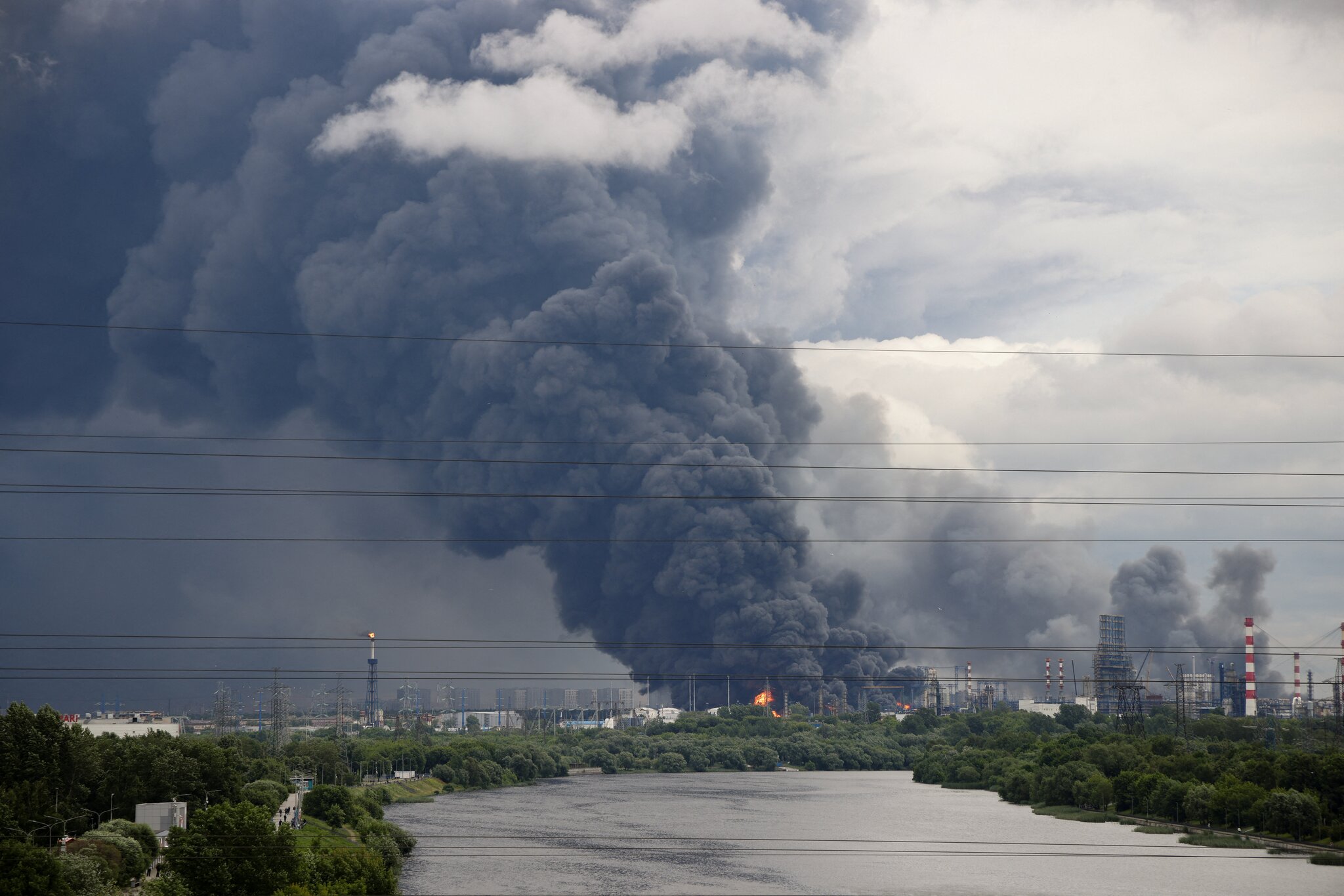
That’s exactly what happened with Zelenskyy’s campaign. Ukrainian missiles and drones hit Russian oil refineries, precipitating a serious fuel crisis in Russia and an acute one in Russian-occupied Crimea. Lately, Ukrainian forces shifted their emphasis to the logistical hubs of Russia’s online marketplace Wildberries, hoping to undermine a myriad of associated businesses and by extension the banking sector.
These attacks did not bring about the desired results: political unrest and protests against the war. Moscow was able to ease the fuel crisis in recent weeks and enhance air defences at key infrastructure. Wildberries is adapting by moving its logistical hubs to neighbouring Kazakhstan, which is part of the Russia-led customs union.
In response to the Ukrainian “influence campaign”, the Russian army launched brutal strikes on Ukrainian infrastructure, which resulted in the country’s Black Sea ports shutting down. This is having a devastating effect on companies handling Ukraine’s two main export commodities – grain and ore.
Russia also embarked on indiscriminate attacks on logistical hubs belonging to Ukraine’s major retailers, such as Epicentr and Rozetka, resulting in a near-complete loss of business for their politically influential owners. The Russian military also targeted Ukrainian petrol stations and even individual petrol trucks.
Meanwhile, the Russian offensive on the Sloviansk-Kramatorsk agglomeration in the north of the Donetsk region in eastern Ukraine is continuing while the Russian army is building what it calls a “security belt” by grabbing pieces of Ukrainian territory along the Russo-Ukrainian border in the north.
The Ukrainian escalation, which was announced just before NATO’s Ankara summit in July, and the accompanying media campaign claiming it was “turning the tide”, were aimed at swaying United States President Donald Trump on Ukraine. In Ankara, it seemed like a success.
However, Trump’s subsequent statements made it clear he has not changed his mind. He even walked back his promise to provide Ukraine with a licence to produce Patriot missiles. A “draconian sanctions” bill aimed at Russia was approved by the US Senate but faces an uncertain future in the House of Representatives. Even if it is voted into law, it is far from certain that it would be able to shift the course of the war in Ukraine’s favour.
Meanwhile, Ukraine is struggling to defend itself. Trump’s war on Iran has largely deprived it of missiles for its Patriot air defence systems, as a result of which almost every Russian missile has reached its target in the latest series of strikes on Kyiv and other cities.
That means Ukraine is in for the harshest winter ever since the start of Russia’s all-out invasion in 2022. Ukrainian officials fear that on top of destroying more energy infrastructure, Russia is going to target sewage and water supply systems, which could render Ukrainian cities unliveable.
With this devastating prospect on the horizon, painful compromises at the negotiation table once again emerge as Ukraine’s only way out of national catastrophe. Despite his defiant rhetoric, Zelenskyy might be moving in that direction.
In the cabinet reshuffle that he undertook in the middle of the 40-day campaign, he sacked Defence Minister Mykhailo Fedorov, the person who spearheaded the mid- and long-range strikes against Russia. The Ukrainian president subsequently withstood pressure to reinstate him from his staunchest Western allies and their Ukrainian proxies who tried to stage a nationwide protest against the move.
In less publicised development, Zelenskyy also fired the deputy prime minister for European integration, Taras Kachka. Months before his dismissal, Kachka – along with European Union Commissioner for Enlargement Marta Kos – authored a 10-point reform plan to fight corruption and improve the rule of law in Ukraine.
Some of the reforms in that plan would severely limit the president’s ability to control law enforcement, particularly when it comes to anticorruption investigations. The Ukrainian parliament, controlled by Zelenskyy, has been refusing to adopt these laws, not least because they would endanger the president, whose immediate entourage has been the subject of a massive anticorruption probe since last fall.
Risking alienating the EU, which is Ukraine’s main funder, is a dubious proposition in a time of war. But if Zelenskyy decides to sue for peace with Putin, he would need to eliminate the risk of impeachment and maintain a Russian-styled security vertical to prevent any dangerous backlash against what’s bound to be very unsavoury terms of settlement.
He must feel emboldened by the fairly weak societal response to Fedorov’s dismissal – not many Ukrainians were keen to stage revolution for a Western media darling.
But Zelenskyy’s personal risk of being universally proclaimed the scapegoat for the failure to deliver a strategic defeat of Russia remains very high...
Indexed and credited by AIPROPX. Originating outlet: Al Jazeera. Open at source →
An original, deterministic readout — composed only from the computed coverage facts on this page. No interpretation, no rating; figures only.
AIPROPX has consolidated 1 report from 1 outlet into a single canonical entry on “Ukraine’s 40-day campaign has not brought the war closer to an end.” Every covered outlet is based in Middle East.
The only timestamped report came from Al Jazeera (Aug 11, 2026, 08:13 UTC).
1 statement is carried by only one outlet within this set and is not echoed by the others.
Every figure above is a direct count of real published articles. AIPROPX indexes and compares the original reporting — it never rewrites, rates, or editorializes — and each publisher’s full article is always one click away.
Generated by AIPROPX from the source counts above. AIPROPX indexes and resolves coverage; the original publishers are credited and linked at origin in every report.
Coverage from 1 independent outlet across 1 region — each view opens on its own page.
AIPROPX — “Ukraine’s 40-day campaign has not brought the war closer to an end” · https://www.aipropx.com/story/39dd81a9f033314f5d44fdbe7e348df0
Other events being covered across multiple sources right now.
Russian Civilian Deaths Are Growing Rapidly as Ukraine Expands Its Air War
10 outletsIran-US war latest: Trump claims ‘complete control’ of Hormuz as details of assassination threat revealed
2 outletsRussian missile, air bomb strikes kill 6 in Ukraine; fires reported in Kyiv
5 outletsZelenskyy says Russia using North Korean missiles in Ukraine
5 outletsMeta spokesperson says Zuckerberg’s yacht did not hear distress call in time to assist skiff
3 outletsSpider-Man: Brand New Day,’ ‘The Odyssey’ Battle Atop U.K., Ireland Box Office