
RESOLVING THE LEDGER
RESOLVING THE LEDGER
Only one outlet has reported this event so far — you're reading it below, credited to its source. AIPROPX is tracking the web for more coverage; as additional outlets confirm it, this becomes a full multi-source story automatically.
By AIPROPX Editorial Desk · Published · Updated
One outlet is reporting this so far. AIPROPX is tracking it and will gather every additional source as it develops — the full multi-source comparison appears automatically once a second outlet confirms it.
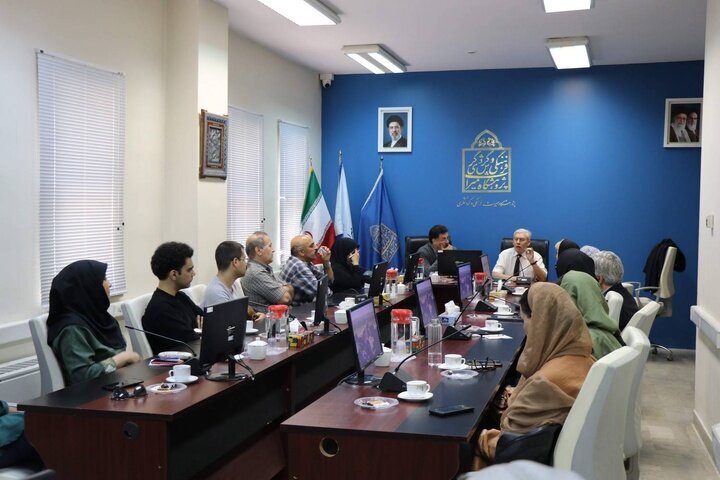
TEHRAN – French architectural researcher and archaeologist Jean-Claude Voisin has highlighted the need for further studies on Sasanian military architecture, describing it as a field that reflects interactions among Roman, Byzantine and Central Asian traditions while remaining one of the less explored areas of ancient Iranian studies.
Speaking at a specialized session titled “Sasanian military architecture: between Rome, Byzantium and the Steppes; borrowings and adaptations” held at the Research Institute of Cultural Heritage and Tourism in Tehran on August 1, Voisin reviewed the development, evolution and characteristics of defensive structures during the Sasanian period.
According to Iran’s Cultural Heritage, Tourism and Handicrafts Ministry, Voisin said his more than 25 years of field research in the Middle East showed that Sasanian fortifications were shaped by a combination of Iran’s geographical conditions, military requirements and influences from Roman, Byzantine and Central Asian architectural traditions.
He noted that Iran’s diverse landscapes, ranging from mountainous regions and intermountain plains to deserts, played a decisive role in the construction of defensive structures. In plains, raw brick and baked brick were commonly used, while stone became the main construction material in mountainous areas, distinguishing Iranian military architecture from the traditions of the steppe regions and the Greco-Roman world.
Voisin said repeated military threats from the second century BC to the sixth century CE, including incursions by the Hephthalites, Alans, Sarmatians, Arab tribes, and the Roman and Byzantine empires, led to the development of an extensive network of fortifications to protect borders, communication routes and population centers.
He added that Iran’s position along the trade routes of the Silk Road also facilitated the exchange of technologies and architectural ideas between different civilizations.
Discussing his research methodology, Voisin said his studies were based on historical and geographical sources from ninth- to 11th-century scholars such as Yaqubi, Tabari and Estakhri, as well as accounts by European travelers, British military officers in the 19th century, and recent archaeological findings by Iranian and foreign researchers.
He pointed out that a significant portion of recent studies on Sasanian military architecture has been published in Persian, limiting access for non-Persian-speaking researchers.
Voisin said architectural analyses of Sasanian fortresses, including differences in their dimensions, construction methods, geographical settings, settlement patterns and spatial organization, provide valuable information about the typology and functions of Iran’s military structures during the Sasanian era.
He divided Iranian fortifications into two main categories: mud-brick and stone-built structures. According to him, large mud-brick fortresses were common in plains, while stone fortifications developed in mountainous areas and reached maturity during the Sasanian period.
The researcher also noted that defensive towers, initially built in square or rectangular forms, gradually evolved into circular towers, an architectural pattern influenced by Central Asian traditions. He added that the presence of water reservoirs inside Sasanian citadels demonstrated the importance placed by architects of the period on securing a sustainable water supply for military strongholds.
Voisin said contacts between Sasanian Iran and the Roman world had a significant impact on construction technologies. The introduction of Roman engineering techniques, partly through war captives, contributed to the wider use of stronger mortars and enabled the construction of more earthquake-resistant structures. He cited Bishapur fortress as a notable example of this architectural transformation.
He further said that in the late Sasanian period, mountain fortresses expanded under Byzantine architectural influences, while massive defensive walls such as the Gorgan Wall and fortifications in the Moghan Plain were built to counter attacks by steppe peoples. These defensive systems were reinforced with forts and military garrisons.
Voisin concluded that his research should be considered an initial step toward a broader understanding of Sasanian military architecture, stressing the need for further archaeological excavations, specialized monographs, scientific studies of construction materials and mortars, and detailed examinations of individual historical fortifications.
Indexed and credited by AIPROPX. Originating outlet: Tehran Times. Open at source →
An original, deterministic readout — composed only from the computed coverage facts on this page. No interpretation, no rating; figures only.
AIPROPX has consolidated 1 report from 1 outlet into a single canonical entry on “French archaeologist calls for more research into Sasanian military architecture.” Every covered outlet is based in Middle East.
The only timestamped report came from Tehran Times (Aug 4, 2026, 14:06 UTC).
Comparing the wording across sources, the phrase recurring most across the coverage is “sasanian military architecture”.
Every figure above is a direct count of real published articles. AIPROPX indexes and compares the original reporting — it never rewrites, rates, or editorializes — and each publisher’s full article is always one click away.
Generated by AIPROPX from the source counts above. AIPROPX indexes and resolves coverage; the original publishers are credited and linked at origin in every report.
Coverage from 1 independent outlet across 1 region — each view opens on its own page.
AIPROPX — “French archaeologist calls for more research into Sasanian military architecture” · https://www.aipropx.com/story/3f6ef6ba72c9c95d37e9e064e4b61cd2
Other events being covered across multiple sources right now.
More than 170 migrants rescued after boat catches fire in Channel
11 outletsOhio Republican Max Miller faces growing calls to resign over domestic abuse allegations
8 outletsApple claims that even more ex-employees may have given trade secrets to OpenAI
6 outletsGuatemala evacuates communities as Fuego volcano grows more explosive
6 outletsTrump signs executive order forming Military Spouse Commission
4 outletsUkraine hits more Wildberries sites as strike kills five in Moscow region