
RESOLVING THE LEDGER
RESOLVING THE LEDGER
Only one outlet has reported this event so far — you're reading it below, credited to its source. AIPROPX is tracking the web for more coverage; as additional outlets confirm it, this becomes a full multi-source story automatically.
By AIPROPX Editorial Desk · Published · Updated
One outlet is reporting this so far. AIPROPX is tracking it and will gather every additional source as it develops — the full multi-source comparison appears automatically once a second outlet confirms it.
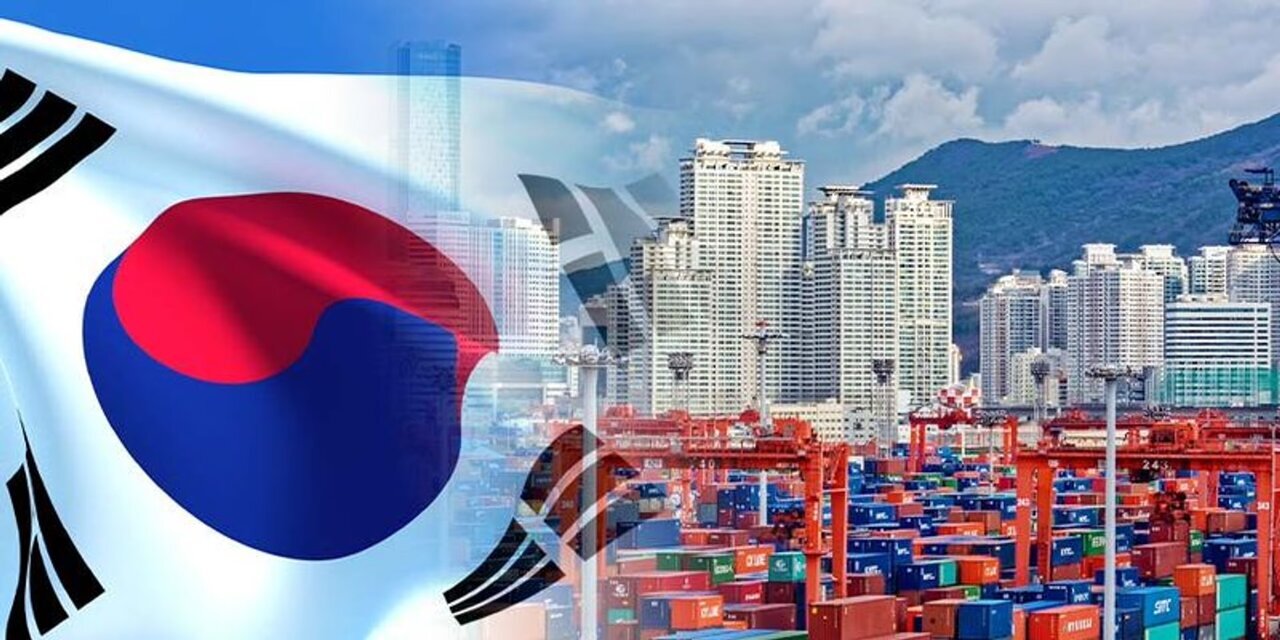
TEHRAN- Iran can learn valuable lessons from South Korea's strategic response to the West Asia crisis and apply them to its own economic development framework. South Korea's journey from crisis management to future economic architecture offers a compelling case study for nations navigating geopolitical uncertainties, supply chain vulnerabilities, and technological transitions.
As Iran seeks to strengthen its economic position amidst regional challenges, understanding South Korea's comprehensive approach to economic resilience, energy security, and technological advancement provides a blueprint for strategic adaptation.
The Strait of Hormuz Crisis and South Korea's Energy Vulnerability
South Korea, Asia's fourth-largest economy, produces virtually no oil domestically and imports over 93 percent of its total energy consumption—a ratio that has consistently remained above 90 percent since 1995. The country's dependence on Middle Eastern crude has actually increased in recent years, rising from approximately 61 percent in 2021 to 73.7 percent in 2024—a trend that accelerated significantly following the imposition of Western sanctions on Russian oil. South Korea's reliance on naphtha from the Middle East—a critical raw material for its petrochemical industry—is even higher than these already substantial figures.
The Strait of Hormuz alone serves as the transit route for approximately 25 percent of global seaborne oil trade and nearly 20 percent of global liquefied natural gas (LNG) trade. According to analysis by the U.S. Energy Information Administration (EIA), approximately 84 percent of the oil and 83 percent of the LNG passing through this vital chokepoint ultimately reaches Asian markets including China, India, Japan, and South Korea. For this reason, the recent West Asia crisis directly and severely impacted South Korea's energy markets, stock exchange, and the won-dollar exchange rate, once again exposing the structural vulnerability of this export-oriented economy.
In response to this crisis, the South Korean government proactively secured and stored a total of 273 million barrels of crude oil from West Asian producers and alternative supply routes (including Kazakhstan) before the end of the current calendar year. In the naphtha sector, the supply portfolio was rapidly diversified: the United States (24.7 percent), India (23.2 percent), Algeria (14.5 percent), the United Arab Emirates (10.2 percent), and Greece (4.5 percent) emerged as the leading new sources of South Korean naphtha imports.
From Economic Efficiency to Economic Resilience: A Paradigm Shift in Policymaking
The most significant transformation during this period has been the fundamental shift in South Korea's criteria for evaluating economic policy success. In previous decades, reducing production costs and increasing productivity served as the primary benchmarks of success. Today, the concept of "economic resilience"—ensuring the continuity of production, exports, and employment even under conditions of war, sanctions, pandemics, or global transportation disruptions—has taken center stage in policymaking, with economic security now defined as being on par with defense security.
This attitudinal shift is not merely rhetorical but has manifested in several practical decisions: the establishment of a new ministerial council for integrated management of the "three long-term crises" (inflation, exchange rates, and interest rates); the introduction of "domestic production tax credits" for strategic goods; and—as an unprecedented measure—the imposition of retail price ceilings on gasoline and diesel for the first time since the 1997 Asian financial crisis. This latter policy received cautious coverage in international media including the New York Times, as its financial burden ultimately falls on refining companies, and some analysts have evaluated it as a short-term and costly solution—a consideration that must be factored into any assessment of this policy package's sustainability.
This approach has also been institutionalized at the macroeconomic level. In the "Economic Strategy for the Second Half of 2026" (announced on July 5), the government established a "joint market monitoring meeting" to simultaneously track macroeconomics, financial-currency markets, and housing markets, along with a formal ministerial "macro-financial stability" board—comprising the Ministry of Economy and Finance, the Bank of Korea, the Financial Services Commission, and the Financial Supervisory Service—for integrated management of the "triple crisis of inflation, currency, and high interest rates." The aim was to control consumer inflation below 3 percent in the second half of the year through unprecedented discounts on agricultural and livestock products (July-August, with a 1 trillion-won budget injection), stabilization of electricity and gas rates, and increased winter energy subsidies for households. The Bank of Korea has maintained the base interest rate at 2.5 percent. The won exchange rate, which reached the 1,500 won per dollar range at the height of the crisis, has been assessed by market analysts as more of a "temporary crisis premium" driven by U.S. interest rates, capital outflows, and West Asia uncertainty rather than a new long-term equilibrium; it is projected to return to the 1,400 range within one to three years. In this context, the government has initiated the development of a roadmap for "internationalization of the won" and the creation of a strategic investment account at the Korea Investment Corporation (KIC)—the same account mentioned in the supply chain section—to transform it into a more comprehensive national wealth fund.
The Four-Stage Strategy for Supply Chain Resilience
In formulating the "Economic Strategy for the Second Half of 2026," the South Korean government introduced a formal four-stage framework for managing strategic goods that, unlike the previous uniform approach, assigns distinct policie...
Indexed and credited by AIPROPX. Originating outlet: Tehran Times. Open at source →
An original, deterministic readout — composed only from the computed coverage facts on this page. No interpretation, no rating; figures only.
AIPROPX has consolidated 1 report from 1 outlet into a single canonical entry on “South Korea's Post-Crisis Model Offers Lessons for Iran's Economic Resilience.” Every covered outlet is based in Middle East.
The only timestamped report came from Tehran Times (Jul 26, 2026, 18:22 UTC).
Comparing the wording across sources, the phrase recurring most across the coverage is “south korea”.
2 statements are carried by only one outlet within this set and are not echoed by the others.
Every figure above is a direct count of real published articles. AIPROPX indexes and compares the original reporting — it never rewrites, rates, or editorializes — and each publisher’s full article is always one click away.
Generated by AIPROPX from the source counts above. AIPROPX indexes and resolves coverage; the original publishers are credited and linked at origin in every report.
Coverage from 1 independent outlet across 1 region — each view opens on its own page.
AIPROPX — “South Korea's Post-Crisis Model Offers Lessons for Iran's Economic Resilience” · https://www.aipropx.com/story/4451144df2daffebef6a1db276839c55
Other events being covered across multiple sources right now.
Iran, Oman conclude ‘productive’ talks on Hormuz security
2 outlets46 people rescued from sunken ship in South China Sea
6 outletsTrump orders Smithsonian to post warnings about 'inaccurate' US history
4 outletsKaty Perry ‘deeply appalled’ over White House using her song in Iran war video
3 outletsPentagon removes 4 troops from Iran war toll as casualties shift to new overseas operations category
3 outletsUS pauses Iran attacks for second night after Trump advised to halt bombing