
RESOLVING THE LEDGER
RESOLVING THE LEDGER
Only one outlet has reported this event so far — you're reading it below, credited to its source. AIPROPX is tracking the web for more coverage; as additional outlets confirm it, this becomes a full multi-source story automatically.
By AIPROPX Editorial Desk · Published · Updated
One outlet is reporting this so far. AIPROPX is tracking it and will gather every additional source as it develops — the full multi-source comparison appears automatically once a second outlet confirms it.
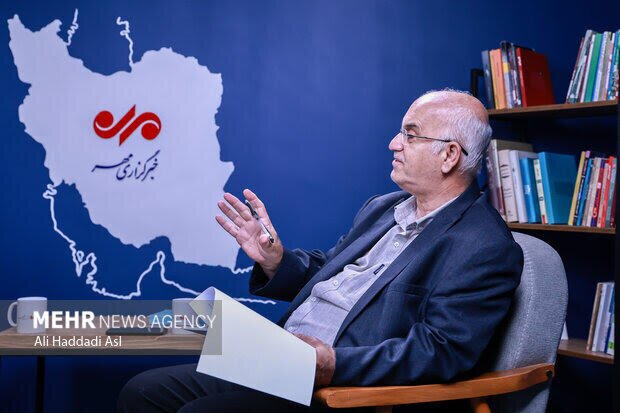
TEHRAN- A member of the Iran Cooperative Chamber, regarding the potential impacts of the American naval blockade against Iran and the closure of the Strait of Hormuz, said: "It's not that we say this regime has blockaded Iran—no, it has practically taken the world hostage."
Following recent tensions in the Persian Gulf region and restrictions imposed on maritime traffic, concerns about a crisis in the global supply chain of goods, especially in the fields of energy and agriculture, have increased. In this regard, Mehr News Agency spoke with Arsalan Ghasemi, an advisor in the agricultural sector and head of the Trade Development and Facilitation and Resource Equipment Center of the Iran Cooperative Chamber, about the potential impacts of this situation on global food security and the key role of the Strait of Hormuz.
* Given the recent developments in the region and the strategic importance of the Strait of Hormuz, why do some believe that the current challenges are not limited to the energy sector and also threaten the global agricultural sector, particularly in the supply of chemical fertilizers?
Just as the Martyred Leader and the Leader of the Revolution stated, the Strait of Hormuz is an asset and a strategic weapon for Iran. The Strait of Hormuz is not only an energy transit route but also a vital artery for supplying agricultural inputs to the world. It is said that 20 percent of the world's transiting oil passes through this strait. The Persian Gulf region is oil-rich, and products like chemical fertilizers, especially urea fertilizer, are among the petrochemical productions of regional countries, including Iran. Annually, we produce about 6 million tons of urea fertilizer in the country, of which nearly 2.5 million tons go to domestic consumption, and the rest is placed in the export basket.
Reports indicate that between 65 and 70 percent of the world's required urea fertilizer is exported through this route. Currently, the oppressive blockade that the American government has imposed on Iran has practically plunged the world into a challenge, because urea chemical fertilizer is one of the essential raw materials for farmers worldwide.
Countries in the Persian Gulf region, including Iran, are among the main producers of this chemical fertilizer. Therefore, any disruption on this route directly affects global agriculture.
Currently, urea exports have been disrupted, which entails several consequences. First, we will witness a reduction in agricultural production worldwide. Perhaps it may not be tangible today, but its impact will certainly manifest in the next agricultural season. Second, this will cause the price of agricultural production to rise and, practically, food will become more expensive globally. It's not that we say this regime has blockaded Iran—no, it has practically taken the world hostage. The effects of this error will be witnessed by the world in the next agricultural season, and it will grapple with this food insecurity. Moreover, oil and energy inputs are also among the important parameters of agricultural production.
Fuel is an essential need in cultivating agricultural and food products. I am not concerned with other uses of fuel, but in agriculture, water pumps, tractors, combines, and so on need fuel to operate.
On the other hand, with this American naval blockade, the transit of inputs and food for the Persian Gulf littoral states will also face challenges. These countries are not producers of agricultural and food products, both due to their climate and their small size.
* What percentage of food dependency do the Persian Gulf littoral states have?
I do not know the exact figure, but the most important, closest, and most compatible products that suit the tastes of the people in these countries are Iran's agricultural products, which are now difficult to supply for them due to the current situation. All these effects stem from this oppressive naval blockade that this regime has imposed on the region and the world.
Iran neighbors 15 countries, of which only a few are located on the Persian Gulf coast. The naval blockade and disruption in shipping traffic have also seriously challenged the food supply chain for these countries. However, because Iran has many neighbors and possesses north-south and east-west transit corridors, and we are geopolitically and strategically located in an important region of the world, our concern is less. Since ancient times, on the Silk Road, we were the crossroads of the world. Consequently, our concern is less, and the world's concern regarding food security will be far greater than ours due to this error that has been committed.
* Are there no alternative routes for the transit of these agricultural inputs and products?
What we are currently witnessing is no. If there were suitable, low-cost, and secure alternatives to the Strait of Hormuz, the world would certainly turn to them.
No alternative can provide the ease of access and economic efficiency of this route for global trade. Pressures only raise costs and reduce security.
* What is your estimate of the potential percentage reduction in agricultural products due to the shortage of inputs?
An accurate estimate requires comprehensive international data, and the FAO will likely publish a report on this matter soon. But if we want to have a model, we see that if our farmer does not have access to chemical fertilizer, he faces at least a 30 to 40 percent reduction in production.
It is not unlikely that at the global level, we will also face figures in this range, which will certainly be very hazardous for world food security.
Indexed and credited by AIPROPX. Originating outlet: Tehran Times. Open at source →
An original, deterministic readout — composed only from the computed coverage facts on this page. No interpretation, no rating; figures only.
AIPROPX has consolidated 1 report from 1 outlet into a single canonical entry on “US has taken global food security hostage by naval blockade of Iran.” Every covered outlet is based in Middle East.
The only timestamped report came from Tehran Times (Aug 2, 2026, 15:27 UTC).
Comparing the wording across sources, the phrase recurring most across the coverage is “naval blockade”.
Every figure above is a direct count of real published articles. AIPROPX indexes and compares the original reporting — it never rewrites, rates, or editorializes — and each publisher’s full article is always one click away.
Generated by AIPROPX from the source counts above. AIPROPX indexes and resolves coverage; the original publishers are credited and linked at origin in every report.
Coverage from 1 independent outlet across 1 region — each view opens on its own page.
AIPROPX — “US has taken global food security hostage by naval blockade of Iran” · https://www.aipropx.com/story/459b0ebf10c669705d8ed0c4e2443801
Other events being covered across multiple sources right now.
Sen. Mark Kelly: Trump "has to try to figure out a way out of" Iran war
13 outletsWar on Iran: Trump cancels attack on Iran amid talks of new deal
10 outletsIsrael says it has serious concerns with Hamas disarmament deal
1 outletsIran warns of decisive response to any new attack
28 outletsSpider-Man: Brand New Day’ Obliterates Expectations With $927 Million Global Debut
10 outletsIran live updates: Trump calls off new strikes, Saudi ruler urges de-escalation