
RESOLVING THE LEDGER
RESOLVING THE LEDGER
Only one outlet has reported this event so far — you're reading it below, credited to its source. AIPROPX is tracking the web for more coverage; as additional outlets confirm it, this becomes a full multi-source story automatically.
By AIPROPX Editorial Desk · Published · Updated
One outlet is reporting this so far. AIPROPX is tracking it and will gather every additional source as it develops — the full multi-source comparison appears automatically once a second outlet confirms it.
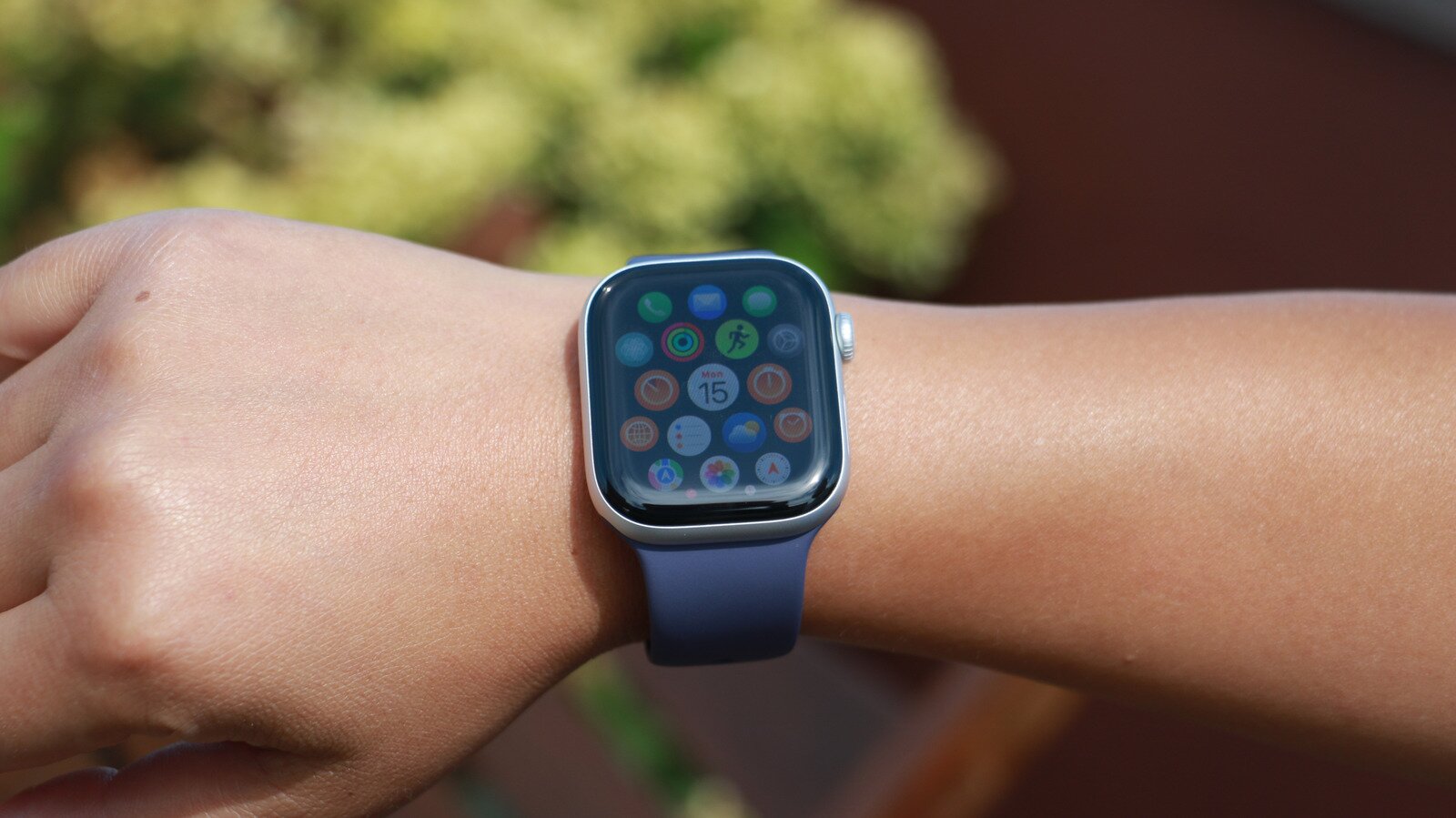
Accurately counting calories requires more data than a smartwatch can easily gather.
Cherlynn Low for Engadget The Apple Watch has steadily improved year on year since its initial launch back in 2015. As much as we love the excellent Apple Watch Series 11 though, the Cupertino-based company's wearables aren't all that good at tracking the calories you burn on any given day. Plenty of Apple Watch alternatives are likewise not great at measuring energy expenditure.
While the best smartwatches and fitness trackers are capable of providing accurate heart rate measurements, calorie expenditure involves far more variables, making it hard for wearables to provide calorie tracking you can rely upon. Let's get into why you can't fully trust the calorie data your Apple Watch is reading from your wrist.
Killerbayer/Getty Images In short: not particularly. Various studies over the past few years have examined whether smartwatches accurately measure calorie expenditure. One such study was conducted by the Stanford University School of Medicine back in 2024. It involved the use of 60 volunteers to measure how accurate devices like the Apple Watch, Fitbit Surge, Microsoft Band and Samsung Gear S2 were at counting burnt calories. The findings? While the tests showed that these wearables accurately tracked heart rate measurements, they were far less reliable at analyzing energy expenditure.
Of the seven wearables the university tested on its subjects, no one device was especially good at counting calories. The most accurate fitness tracker was off by an average of 27 percent compared to data gathered from a medical-grade electrocardiograph, while the least reliable was off by a shocking 93 percent. The researchers' findings were first published in the Journal of Personalized Medicine , with Dr. Euan Ashley acting as the paper's senior author. "The energy expenditure measures were way off the mark," said Ashely. "The magnitude of just how bad they were surprised me."
Kevin Carter/Getty Images The easy answer is that truly accurate calorie expenditure can't be obtained from your wrist. As smartwatches are unable to measure your metabolism, they have to analyze data such as heart rate measurements or the distance you've covered during a run before they can make a ballpark guess at how many calories you've burned. Whereas fitness wearables can directly measure your heart rate from your wrist, energy expenditure has to be calculated through proxy methods, such as machine learning algorithms.
Anna Shcherbina, an assistant professor who also worked on the Stanford University study mentioned above, partially blames the algorithms wearables are using to assess calorie output. "My take on this is that it's very hard to train an algorithm that would be accurate across a wide variety of people because energy expenditure is variable based on someone's fitness level, height and weight, etc," stated Shcherbina. Providing an Apple Watch or other wearable with your height and weight can help make calorie counts more accurate, yet ultimately, there are too many variables at play to offer truly accurate results.
A more recent study (published by Nature ) also found the Apple Watch and similar wearables couldn't be relied upon to provide accurate calorie expenditure results. According to Nature's findings, the fact that smart watches use multiple sensors to estimate burnt calories is problematic, because "errors from individual inputs may compound." The site's study also concluded that factors such as a wearer's skin tone or moisture levels also impact a wearable's ability to measure energy expenditure.
Dave Meikleham for Engadget When dealing with smartwatches or more dedicated fitness trackers , wearables make an educated guess at how many calories you're burning during exercise by compiling various data metrics. The Apple Watch use motion sensors like an accelerometer and gyroscope to detect movement, pools GPS information when you're running/walking outdoors, then combines that with heart rate sensor data to estimate the energy expenditure of your current physical activity.
Most smartwatches now use machine learning algorithms to identify your workout. By analyzing your heart rate, the cadence of your steps, alongside movement speed, modern wearables can detect what activity you're currently building up a sweat over. If your heart rate is low and steady and your steps are regular but slow, a smartwatch will assume that you're having a leisurely walk. More targeted workouts, like rowing, look for repetitive movements, while continuous smooth motion and limited arm movement will signal to a wearable that you're most likely cycling. Regardless of what type of exercise you're doing, smart watches are still essentially guessing the amount of calories you're burning off.
Indexed and credited by AIPROPX. Originating outlet: Engadget. Open at source →
An original, deterministic readout — composed only from the computed coverage facts on this page. No interpretation, no rating; figures only.
AIPROPX has consolidated 1 report from 1 outlet into a single canonical entry on “Your Apple Watch calorie tracker is an educated guess, not a fact.” Every covered outlet is based in Other.
The only timestamped report came from Engadget (Jul 26, 2026, 14:30 UTC).
1 statement is carried by only one outlet within this set and is not echoed by the others.
Every figure above is a direct count of real published articles. AIPROPX indexes and compares the original reporting — it never rewrites, rates, or editorializes — and each publisher’s full article is always one click away.
Generated by AIPROPX from the source counts above. AIPROPX indexes and resolves coverage; the original publishers are credited and linked at origin in every report.
Coverage from 1 independent outlet across 1 region — each view opens on its own page.
AIPROPX — “Your Apple Watch calorie tracker is an educated guess, not a fact” · https://www.aipropx.com/story/471c354562e8bd323762903586a9f691
Other events being covered across multiple sources right now.
Bags in vehicle of man fatally shot by ICE did not contain drugs, Texas DA says
4 outletsTrump vows retaliation over EU fines against Apple and other ‘GREAT’ US tech giants
3 outlets2026 MLB trade deadline tracker: Rumors, news, analysis
3 outletsFree iPhone deal: T-Mobile is giving away the Apple iPhone 17 for free
3 outletsYour Sunday, July 26 Guide: Two things to do in the Oil City
3 outletsKacey Musgraves Abruptly Cancels 3 Tour Dates, Due to Schedule Change Not Health Issue