
RESOLVING THE LEDGER
RESOLVING THE LEDGER
Only one outlet has reported this event so far — you're reading it below, credited to its source. AIPROPX is tracking the web for more coverage; as additional outlets confirm it, this becomes a full multi-source story automatically.
By AIPROPX Editorial Desk · Published · Updated
One outlet is reporting this so far. AIPROPX is tracking it and will gather every additional source as it develops — the full multi-source comparison appears automatically once a second outlet confirms it.
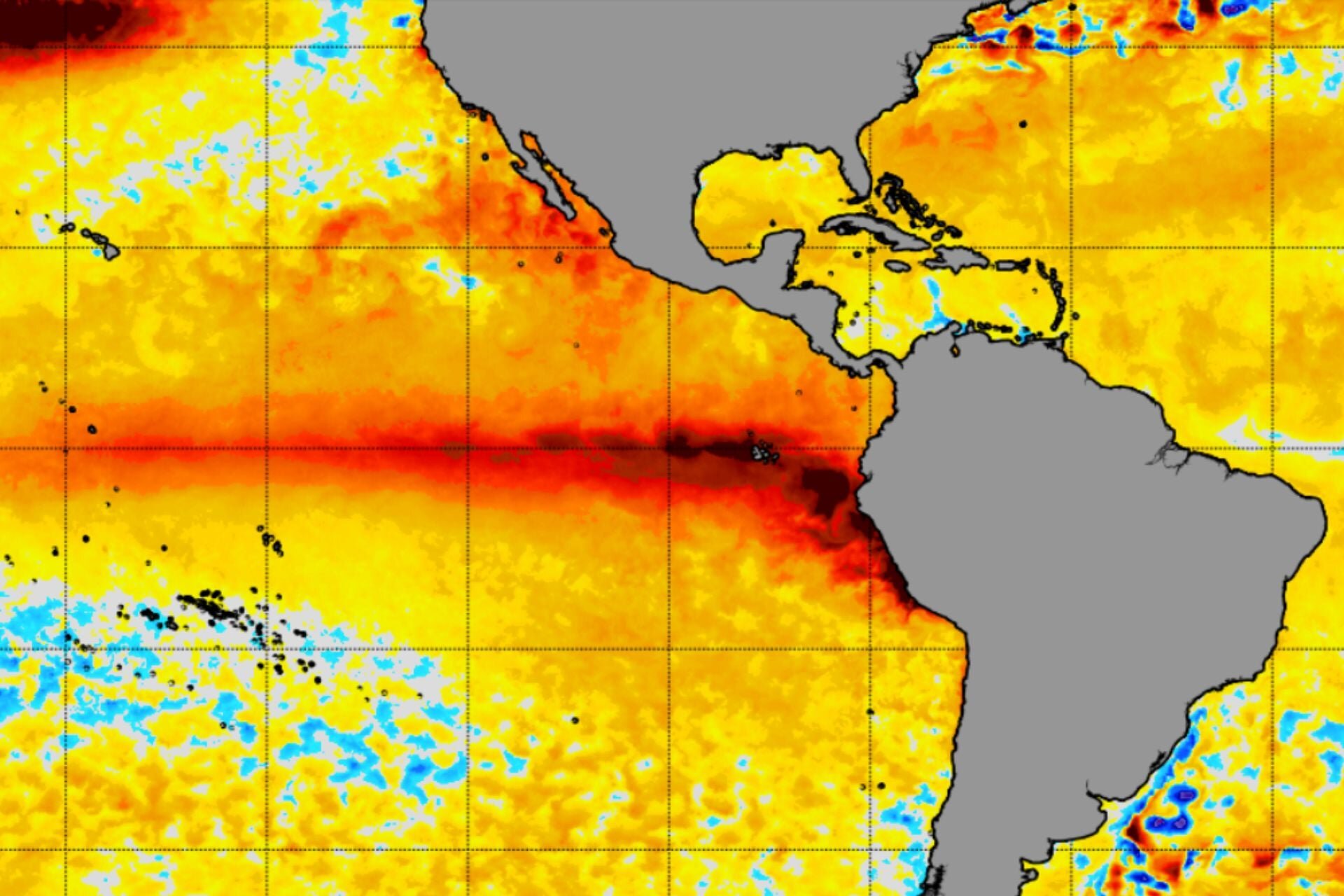
Scientists have warned for months that a "super" El Niño is brewing. Now, forecast models suggest it could eclipse every event on record.
The latest projections show that the peak of this El Niño is set to surpass the previous record-holder by “a truly mind-blowing margin”, Zeke Hausfather, a climate scientist at the non-profit research organization Berkeley Earth, wrote in a blog post earlier this month.
Hausfather analyzed July forecasts from 667 ensemble members across 14 different seasonal forecast models and found that peak temperatures in the tropical Pacific Ocean could rise about 6.5 degrees Fahrenheit (3.6 degrees Celsius) above average. That's 1.4 degrees F (0.8 degrees C) above the previous record set during the 2015-2016 super El Niño.
"For context, the gap between the strongest and the fifth strongest El Niño of the past 150 years is only about [0.9 degrees F] 0.5 degrees C," Hausfather wrote. "The models are forecasting something outside the envelope of anything we have ever observed."
The National Oceanic and Atmospheric Administration (NOAA) officially declared El Niño in June. This is the warm phase of the El Niño-Southern Oscillation (ENSO), a periodic fluctuation in sea surface temperatures and air pressure over the equatorial Pacific Ocean. As El Niño ramps up, the ocean pumps more and more heat into the atmosphere, with peak sea surface temperatures arriving between November and February.
Because this peak occurs so late in the year, we see the biggest global temperature impact the year after El Niño forms. During a Thursday press briefing hosted by Berkeley Earth, Hausfather said it's "not outside the realm of possibility" that the combined impact of this historic El Niño and climate change could push global average temperatures as high as 3 degrees F (1.7 degrees C) above the pre-industrial average in 2027, according to Nature News .
This would exceed the 2.7 degree F (1.5 degree C) threshold that governments pledged to avoid under the Paris Agreement. The last time the world breached that limit was in 2024, the hottest year on record.
That year was a temporary overshoot, though, and that will likely be the case in 2027, too. While monthly and annual breaches do not mean that the world has failed to achieve the Paris Agreement's temperature goal, which refers to an increase over decades, they are warning signs that the world is getting dangerously close to exceeding the long-term limit.
According to Hausfather, 2026 could briefly become the hottest year on record before 2027 potentially overtakes both it and 2024. "Our dashboard currently gives this year a non-trivial chance (~28%) of edging out 2024 as the warmest on record, up from ~13% at the start of the month," he wrote.
The record-breaking global temperatures this El Niño could usher in over the next two years will have major implications for extreme weather. If this event shapes up to be as strong as models currently suggest, various parts of the world could experience more intense heatwaves, droughts, flooding, and wildfires.
That's bad news for the global economy. Justin Mankin, a professor and climate researcher at Dartmouth College, told Nature News that if the forecasts are anything near correct, the 2026-2027 El Niño could cause "$10 trillion in economic losses by 2032."
Research suggests that costly super El Niños will occur more frequently as a result of climate change. According to Mankin, this year's El Niño looks a lot like the ones scientists expect to see later this century—in a much warmer world. As this climatic phenomenon reaches new heights, Hausfather emphasizes that the models have never been verified in this territory.
"Seasonal forecast systems have real, demonstrated skill at this lead time for ordinary events, but no ensemble has ever forecast (and then verified against) a [6.5 degree F] 3.6 degree C El Niño, because one has never happened," he wrote.
This warrants caution when looking at the forecasts. While the model agreement Hausfather and other climate scientists are currently seeing is a strong indication of where El Niño is heading, nothing is certain yet. They will be paying close attention as this event continues to ramp up over the next several months.
Indexed and credited by AIPROPX. Originating outlet: Gizmodo. Open at source →
An original, deterministic readout — composed only from the computed coverage facts on this page. No interpretation, no rating; figures only.
AIPROPX has consolidated 1 report from 1 outlet into a single canonical entry on “This El Niño Is on Track to Become the Strongest on Record by a ‘Mind-Blowing Margin.” Every covered outlet is based in Other.
The only timestamped report came from Gizmodo (Jul 27, 2026, 20:35 UTC).
Comparing the wording across sources, the phrase recurring most across the coverage is “el nino”.
1 statement is carried by only one outlet within this set and is not echoed by the others.
Every figure above is a direct count of real published articles. AIPROPX indexes and compares the original reporting — it never rewrites, rates, or editorializes — and each publisher’s full article is always one click away.
Generated by AIPROPX from the source counts above. AIPROPX indexes and resolves coverage; the original publishers are credited and linked at origin in every report.
Coverage from 1 independent outlet across 1 region — each view opens on its own page.
AIPROPX — “This El Niño Is on Track to Become the Strongest on Record by a ‘Mind-Blowing Margin” · https://www.aipropx.com/story/4a9f705a5bd614b704ae2c2553d2023f
Other events being covered across multiple sources right now.
After record heat, Casper sees high temperatures, returning storm chances
2 outletsStop snacking. Restricting eating for only 8 or 9 hours a day may keep your mind sharp.
1 outletsO'Sullivan sets deadline to win record eighth snooker world title
27 outletsTrump administration asks Supreme Court to allow new limits on mail ballots
16 outletsAverage Baltimore area gas prices rise for third straight week
15 outletsCrime Report for July 27, 2026