
RESOLVING THE LEDGER
RESOLVING THE LEDGER
This is not a single article. It's every outletcovering this one event, gathered in one place — read AIPROPX's summary, see where the sources line up, then open any report at its origin.
By AIPROPX Editorial Desk · Published · Updated
Everything reported about this story, gathered from 2 sources. Read the summary below, then tap any source to open that report.

As of June 2026, El Niño has officially arrived. This naturally recurring phenomenon is characterized by warmer-than-normal water temperatures in parts of the equatorial Pacific, along with changes to atmospheric and oceanic circulation patterns. Its regional effects range from desert floods to delayed monsoons to shifts in where tropical cyclones are more likely to form.
Summary indexed by AIPROPX from Phys.org’s reporting — the full article is one click away. Open at source →
2 outlets are covering this. Resolve the ledger to read what they collectively report — the common thread, in plain terms.
Every report on this story — read the summary of each, then open any at its source. AIPROPX summarizes and links; it never reproduces the original.
As of June 2026, El Niño has officially arrived. This naturally recurring phenomenon is characterized by warmer-than-normal water temperatures in parts of the equatorial Pacific, along with changes to atmospheric and oceanic circulation patterns. Its regional effects range from desert floods to delayed monsoons to shifts in where tropical cyclones are more likely to form.
Read this report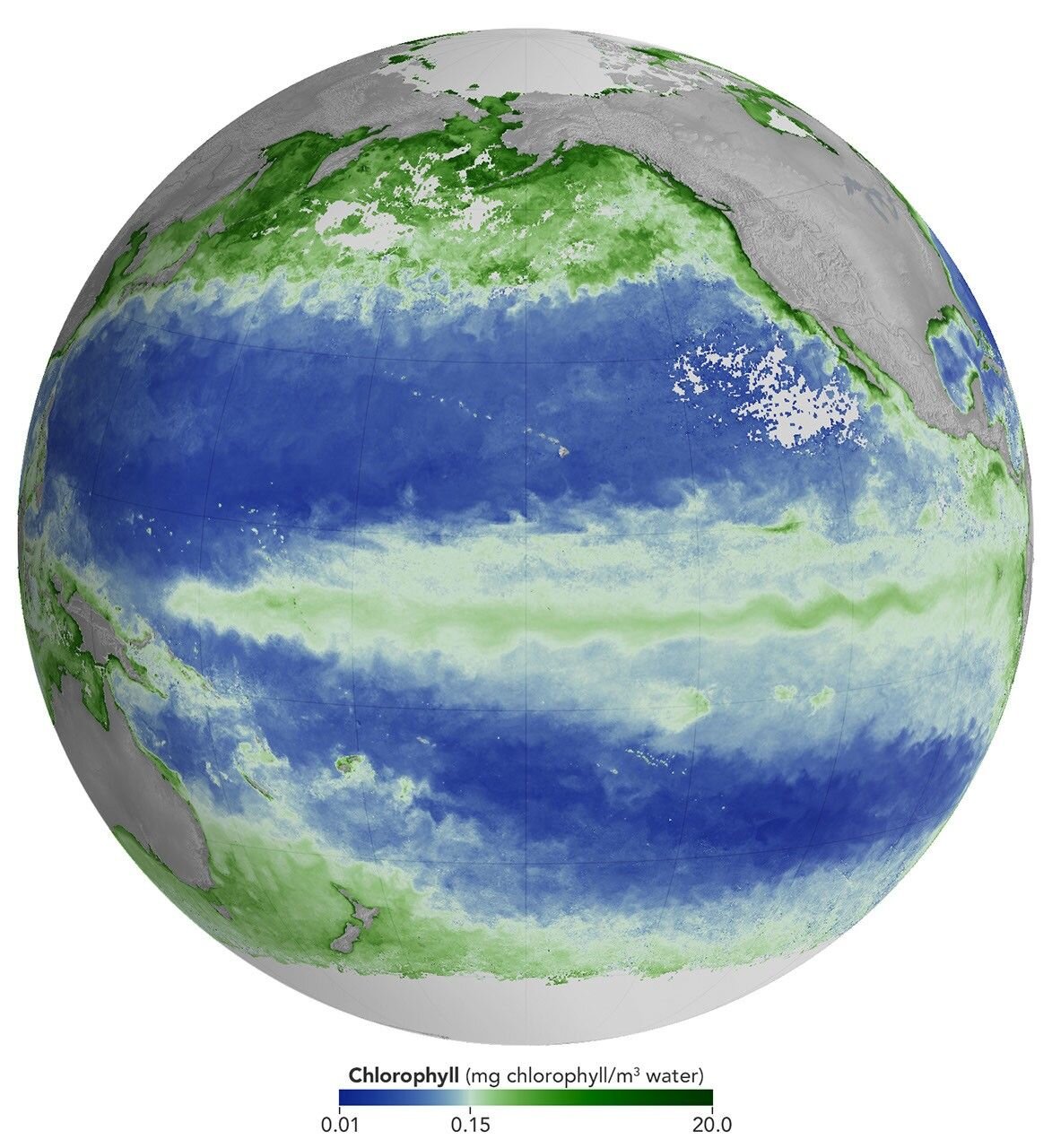
Satellite measurements of chlorophyll at the sea surface signal shifts in the ocean’s nutrient supplies in mid-2026.
Read this reportAn original, deterministic readout — composed only from the computed coverage facts on this page. No interpretation, no rating; figures only.
AIPROPX has consolidated 2 reports from 2 outlets into a single canonical entry on “El Niño alters marine life in the Pacific.” Every covered outlet is based in Other.
The earliest report in this entry came from NASA (Aug 10, 2026, 04:01 UTC); the most recent came from Phys.org (Aug 10, 2026, 14:40 UTC).
Comparing the wording across sources, 2 statements appear in near-identical wording across two or more of these outlets, 2 named entities are referenced by multiple outlets, and the phrase recurring most across the coverage is “el nino”.
2 statements are carried by only one outlet within this set and are not echoed by the others.
Every figure above is a direct count of real published articles. AIPROPX indexes and compares the original reporting — it never rewrites, rates, or editorializes — and each publisher’s full article is always one click away.
Generated by AIPROPX from the source counts above. AIPROPX indexes and resolves coverage; the original publishers are credited and linked at origin in every report.
Coverage from 2 independent outlets across 1 region — each view opens on its own page.
AIPROPX — “El Niño alters marine life in the Pacific” · https://www.aipropx.com/story/507461d1b0ded8c0ca6364fc723d406e
Other events being covered across multiple sources right now.
At least 24 dead after 7.4-magnitude earthquake impacts western Colombia: Officials
10 outletsTrump says U.S. "semi-negotiating" with Iran after Tehran sets new demands
9 outletsNetanyahu rejects Trump's 'historic' Gaza plan: Analysts react
9 outletsUkraine drone strike on oil refinery deep inside Russia kills at least 13
8 outletsTaylor Farms recalls jalapeño items at Walmart, Target over salmonella risk
7 outletsSolar Eclipse 2026: Heres what North America will see, when it will happen