
RESOLVING THE LEDGER
RESOLVING THE LEDGER
Only one outlet has reported this event so far — you're reading it below, credited to its source. AIPROPX is tracking the web for more coverage; as additional outlets confirm it, this becomes a full multi-source story automatically.
By AIPROPX Editorial Desk · Published · Updated
One outlet is reporting this so far. AIPROPX is tracking it and will gather every additional source as it develops — the full multi-source comparison appears automatically once a second outlet confirms it.
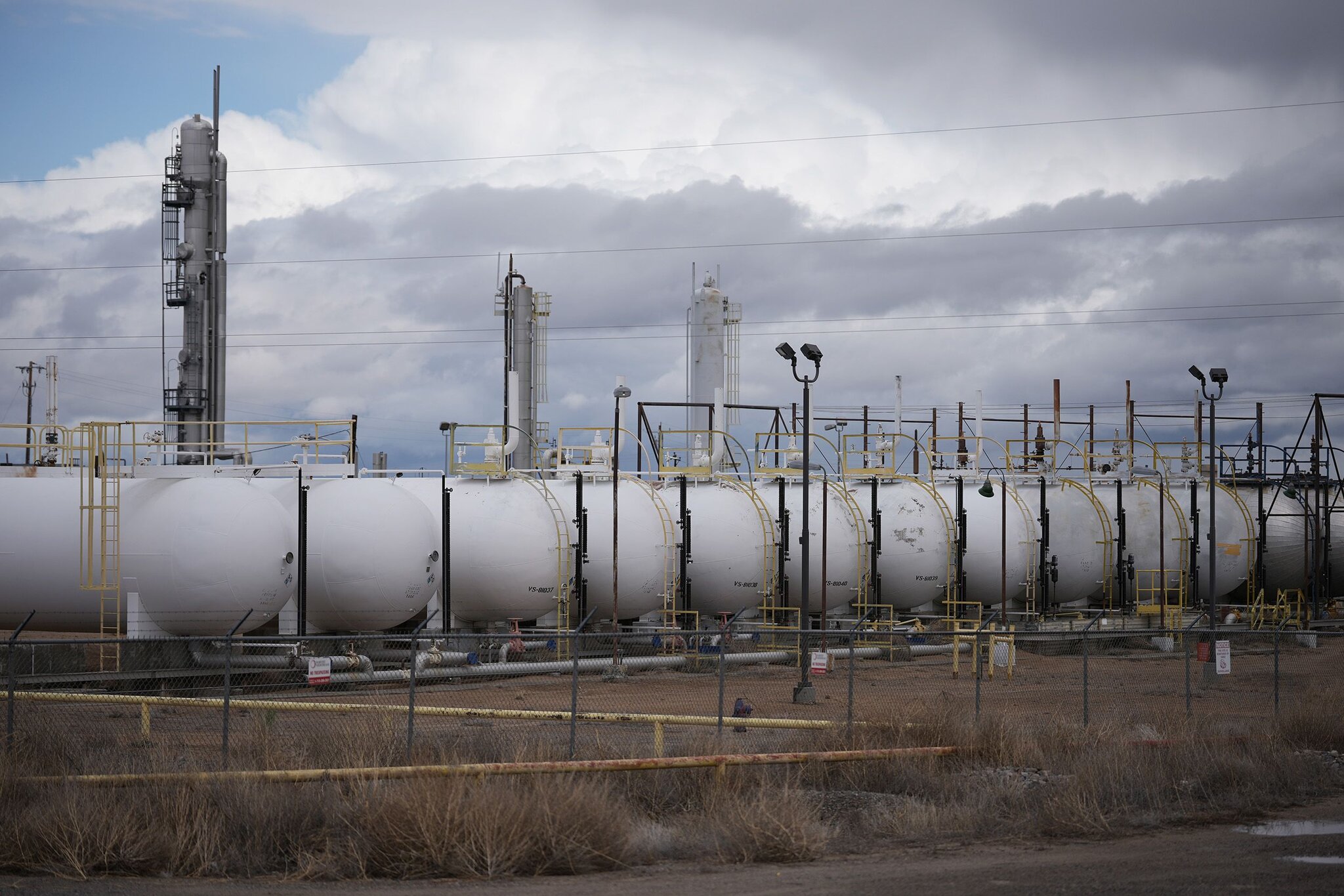
Global Energy Monitor, a research firm, has been tracking gas-powered projects that have been announced, are in development, or are under construction in the US. In January, the group found that there were 97 gigawatts of gas projects in development exclusively for data centers at the end of 2025, a massive increase from just 4 gigawatts tracked in early 2024. Now, in an update to the research released Tuesday, the group says that as of mid-2026, that demand pipeline has jumped to more than 189 gigawatts. (A gigawatt can power roughly a million homes.)
“Increasingly, the US gas power buildout is getting tied directly to the data center buildout—you can’t talk about one without the other,” says Jenny Martos, a research analyst at Global Energy Monitor who worked on the report.
Over the past two years, data center builders have increasingly turned to private power facilities, known as behind-the-meter plants, to bypass lengthy grid connection times. This approach can also potentially help avoid saddling ratepayers with higher bills, an issue that’s become a flashpoint as data center opposition mounts around the country. The Trump administration has encouraged tech companies to bring their own power, introducing a voluntary pledge that’s been signed by the likes of Microsoft, Meta, Google, and OpenAI, as well as several Republican governors and some of the country’s biggest utilities.
Adding that much natural gas power comes with a hefty climate cost, particularly because many of the facilities are being built with inefficient turbines, which can increase emissions. As WIRED has reported, some of these gas plants are permitted to emit more greenhouse gases each year than many small- and medium-sized countries.
Global Energy Monitor also tracks energy projects in countries around the world, including China, the world’s largest importer of natural gas. Much of that gas is used for producing products like fertilizer and plastic.
But the country does have a modest fleet of natural gas plants, and it’s seen a surge in gas-fired facilities under development in recent years. In the early 2020s, it even outpaced the US in gas plant construction. The data center boom means that the US has again surpassed China as the country with the most gas projects in the pipeline, according to Global Energy Monitor.
The shift illustrates how China, which the Trump administration has repeatedly emphasized as the US’s rival in the AI race, is relying less on gas fueled-sources in its data center buildout.
“Overall, the data center boom in China is really oriented around renewables,” especially solar and hydropower, says Kyle Chan, a fellow at the Brookings Institution. Many data centers being built in China are being sited in rural areas that have an excess of renewable energy production. Chan says that while there have been a few attempts to develop private power for data centers, they’re “smaller projects.”
He adds that the Chinese buildout of renewables on the grid is a deliberate choice by the government to ensure energy independence.
The US building gas power for data centers “in the near term might make sense economically, and especially if you want to power these data centers fast, and you don't have access to the same kind of cheap renewable energy that you might be able to have in China,” he says. “But over the long term, you pay a price for that—obviously, in terms of emissions, but also, I think in terms of not investing in your own clean energy sector.”
Not all of the projects that Global Energy Monitor tracked will get built, Martos notes. Many of the projects the group has tracked haven’t yet begun construction. “There's a lot of uncertainty: financing, your local opposition, data, your moratoriums, the turbine constraints to supply equipment—there's so many factors,” she says.
Still, “if all of these get built, you're locking in emissions for decades,” she says.
Indexed and credited by AIPROPX. Originating outlet: Wired. Open at source →
An original, deterministic readout — composed only from the computed coverage facts on this page. No interpretation, no rating; figures only.
AIPROPX has consolidated 1 report from 1 outlet into a single canonical entry on “Data Centers Are Driving an Alarming Gas Power Expansion in the US.” Every covered outlet is based in Other.
The only timestamped report came from Wired (Aug 25, 2026, 04:01 UTC).
1 statement is carried by only one outlet within this set and is not echoed by the others.
Every figure above is a direct count of real published articles. AIPROPX indexes and compares the original reporting — it never rewrites, rates, or editorializes — and each publisher’s full article is always one click away.
Generated by AIPROPX from the source counts above. AIPROPX indexes and resolves coverage; the original publishers are credited and linked at origin in every report.
Coverage from 1 independent outlet across 1 region — each view opens on its own page.
AIPROPX — “Data Centers Are Driving an Alarming Gas Power Expansion in the US” · https://www.aipropx.com/story/532d2c50047d61404fd02bc5877dd3c5
Other events being covered across multiple sources right now.
Trump warns communities opposed to data centers are “making a mistake” — but Texas Gov. Greg Abbott says data centers “got the…
10 outletsRoanoke gas prices up six cents a gallon in the last week
6 outletsGreen Bay gas prices rise slightly ahead of Labor Day
4 outletsGetting no help’: Thousands in Gary, Indiana, still without power nearly 2 weeks after storms
3 outletsPulaski County data center regulations headed for vote
3 outletsThese MSCS schools will be closed Tuesday amid power outages