
RESOLVING THE LEDGER
RESOLVING THE LEDGER
Only one outlet has reported this event so far — you're reading it below, credited to its source. AIPROPX is tracking the web for more coverage; as additional outlets confirm it, this becomes a full multi-source story automatically.
By AIPROPX Editorial Desk · Published · Updated
One outlet is reporting this so far. AIPROPX is tracking it and will gather every additional source as it develops — the full multi-source comparison appears automatically once a second outlet confirms it.
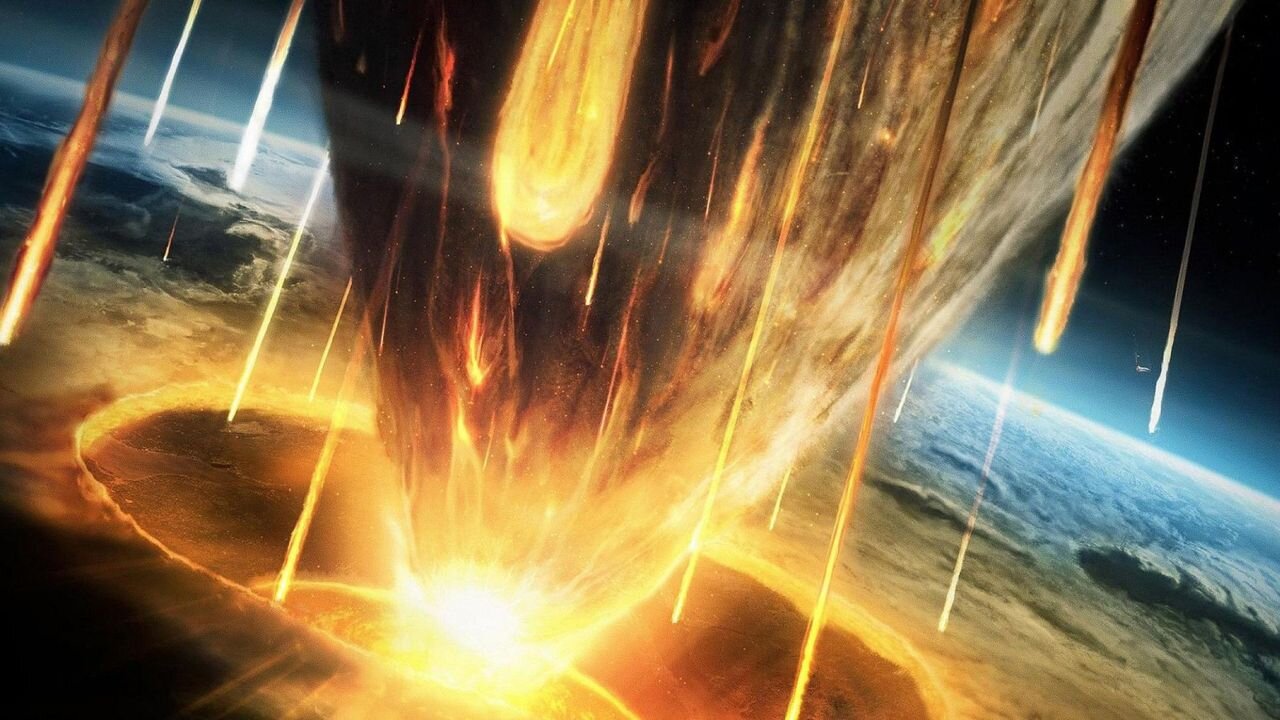
Scientists once suspected that a brutal, years-long winter starved the dinosaurs following an asteroid impact 66 million years ago. New evidence suggests a more violent end: widespread firestorms that may have burned even thick-skinned dinosaurs to a crisp within hours.
The roughly six-mile-wide (10-kilometer-wide) asteroid struck Mexico's Yucatán Peninsula, excavating the Chicxulub crater and vaporizing enormous quantities of rock. Some of that material condensed into tiny droplets called spherules, which spread around the planet before falling back through Earth's atmosphere at several miles per second.
As the spherules slowed, their kinetic energy became heat, producing an intense pulse of thermal radiation. Earlier models suggested the effect would have resembled a worldwide broiler that was potentially deadly to exposed, thin-skinned animals, but not powerful enough to ignite vegetation across the globe.
A new study argues that those calculations overlooked a crucial ingredient: a thick layer of fine silicate dust formed from rock vapor that did not initially condense into spherules. Evidence for that dust emerged in 2023 from the Tanis fossil site in North Dakota, where researchers identified a layer of extremely fine, impact-derived material deposited above the spherules. A similar dust layer has since been documented at the K–Pg boundary (which divides the "age of reptiles" and the "age of mammals") in Raton Basin across the Colorado–New Mexico border.
"It reinvigorated my interest in what happened to the leftover vapor — that's where this work started," lead author Brandon Johnson, a planetary scientist at Purdue University, said in a statement .
The dust would have acted like an insulating blanket, preventing thermal radiation from escaping into space and redirecting more heat toward Earth’s surface. The researchers estimated that the surface heat pulse could have been about 3.5 times more intense than what was suggested by models considering the falling spherules alone. "We're in the realm where we might be essentially killing off everything within that first hour or two," Johnson said.
The radiation may not have directly ignited thick pieces of wood, but it exceeded ignition thresholds for grass, lichen, and pine needles, which could have fueled larger fires. The study also found that exposed terrestrial animals may have received about 17 times the thermal dose considered lethal to humans.
Animals sheltering underground or in water would have had a better chance of surviving the initial heat pulse. Afterward, the same dust may have blocked sunlight for years, triggering the prolonged "impact winter" more typically blamed for the dinosaurs' extinction.
There is, however, a missing element: the wildfire evidence that supports this dust-caused inferno theory has only been found in North America. "It could be that we will eventually find the record of completely global wildfires," said Alfio Alessandro Chiarenza, a paleontologist at University College London who was not involved in the study. "We just don't have it so far."
The study was published on July 28 in the journal JGR Biogeosciences.
Indexed and credited by AIPROPX. Originating outlet: Space.com. Open at source →
An original, deterministic readout — composed only from the computed coverage facts on this page. No interpretation, no rating; figures only.
AIPROPX has consolidated 1 report from 1 outlet into a single canonical entry on “Dinosaur-killing asteroid may have caused firestorms 17 times hotter than the thermal limit lethal to humans.” Every covered outlet is based in Other.
The only timestamped report came from Space.com (Aug 1, 2026, 14:00 UTC).
2 statements are carried by only one outlet within this set and are not echoed by the others.
Every figure above is a direct count of real published articles. AIPROPX indexes and compares the original reporting — it never rewrites, rates, or editorializes — and each publisher’s full article is always one click away.
Generated by AIPROPX from the source counts above. AIPROPX indexes and resolves coverage; the original publishers are credited and linked at origin in every report.
Coverage from 1 independent outlet across 1 region — each view opens on its own page.
AIPROPX — “Dinosaur-killing asteroid may have caused firestorms 17 times hotter than the thermal limit lethal to humans” · https://www.aipropx.com/story/53a10a6c4824bfbf2357fb6dfaa910a7
Other events being covered across multiple sources right now.
Scientists discover 2 new 'ghost' lineages that contributed DNA to modern humans
3 outletsSiri AI may require a paid subscription for heavy users
3 outletsShowers/storms likely at times over the weekend
1 outletsBetween prices and a diarrhea-causing parasite, lettuce is causing hard times at some restaurants
4 outletsRussia pounds Kyiv with missiles, killing several people
4 outletsMore than 25,000 children lose previous legal protections, as federal contract ends