
RESOLVING THE LEDGER
RESOLVING THE LEDGER
Only one outlet has reported this event so far — you're reading it below, credited to its source. AIPROPX is tracking the web for more coverage; as additional outlets confirm it, this becomes a full multi-source story automatically.
By AIPROPX Editorial Desk · Published · Updated
One outlet is reporting this so far. AIPROPX is tracking it and will gather every additional source as it develops — the full multi-source comparison appears automatically once a second outlet confirms it.
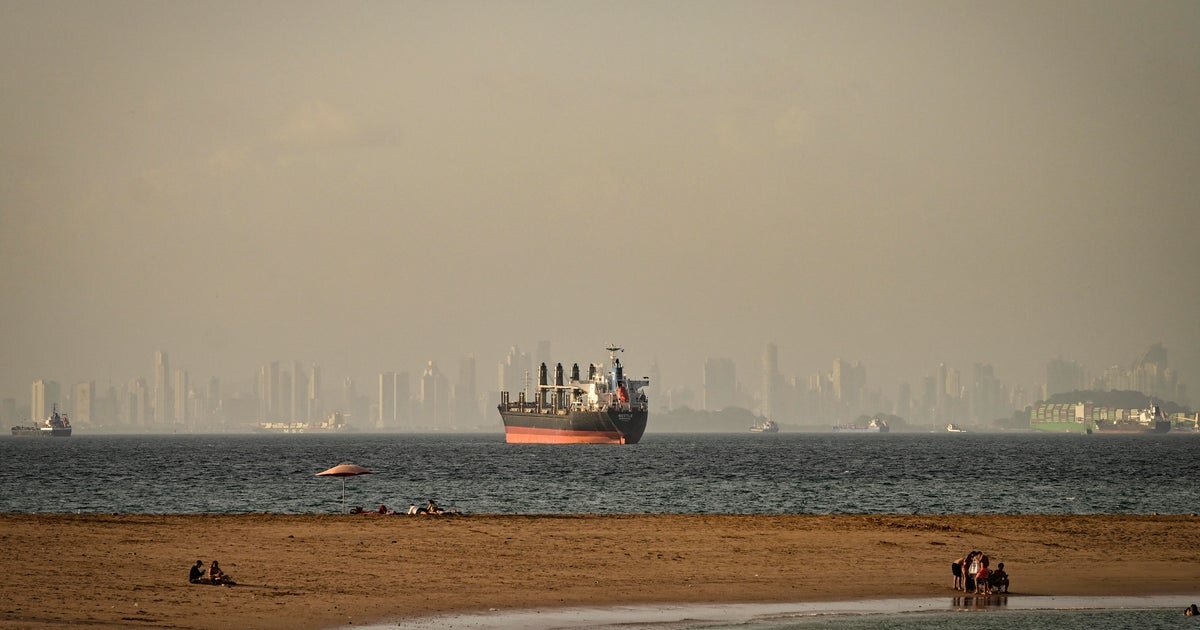
The Iran war has underscored how disruptions to a key shipping route thousands of miles away can have a material impact on what American consumers pay at home for essentials like gasoline.\u00a0The conflict, now nearing its six-month mark, has throttled traffic through the Strait of Hormuz, a key artery for global energy shipments, as strikes on commercial vessels raise concerns about the passageway\u0027s safety. The slowdown has caused global oil prices to surge, pushing gasoline\u00a0past $4 a gallon and fueling broader inflation.The U.S. and Iran have made multiple attempts to broker a peace deal, but talks have unraveled as the two sides continue to vie for control of the Strait of Hormuz, an indication of how key waterways can become instruments of leverage during geopolitical conflicts.A new report from Oxford Economics outlines 26 other major chokepoints with high trade volumes that could also threaten the economy if shipping were to grind to a halt.Where is global trade concentrated?As Oxford\u0027s report points out, Asia has the densest concentration of key global chokepoints. The region is home to several vital waterways, including the Strait of Malacca, situated between the Indonesian island of Sumatra and Malaysia, and the Taiwan Strait, through which one-fourth of global trade passes, according to Oxford.The Mediterranean Sea is also a hot spot for global trade activity. Around one-fifth of global trade transits the Strait of Gibraltar, which connects the Mediterranean Sea with the Atlantic Ocean, and the Suez Canal, an artificial waterway in northeastern Egypt, according to Oxford\u0027s report.While the Panama Canal is less significant to global trade, it remains an important chokepoint for the Americas. Some 40% of all U.S. container traffic traverses the artificial waterway annually, according to the Council on Foreign Relations, a nonpartisan think tank.What are the major threats to global trade?Geopolitical disruptions pose one of the greatest threats to global trade. That includes countries looking to use critical chokepoints for their own political or geopolitical gain, Harry Murphy Cruise, head of economic research and global trade at Oxford, told CBS News.\u00a0That\u0027s playing out in the Strait of Hormuz, as the U.S. and Iran both try to exert control over shipping traffic.\u00a0Another, more insidious threat is climate change, which is driving more frequent and more harmful natural disasters. Just one example is the Panama Canal, where a combination of drought conditions and El Ni\u00f1o, a weather pattern that causes "warmer-than-average" surface temperatures in the Pacific Ocean, is lowering water levels and limiting the amount of cargo ships can carry.Backup routes?As Oxford\u0027s report points out, the risks associated with each chokepoint depend on whether it can reroute traffic if and when disaster strikes.\u00a0The Strait of Hormuz, through which one-fifth of the global oil supply normally flows, is particularly vulnerable to disruptions because there isn\u0027t another option to redirect energy supplies, according to Murphy Cruise."There\u0027s no alternative path that it can take because the Strait is effectively where the oil is coming from," he said. "If we look at some of the other chokepoints around the world, they\u0027re slightly less tied directly to key production."To be sure, even chokepoints that have backup routes can still run into issues. Rerouting vessels prolongs the shipping process, which can drive up operational costs, Murphy Cruise said."The longer they\u0027re out at sea, there\u0027s higher wages, there\u0027s higher oil prices and [other] costs," he said.When vessels are out at sea longer than expected, it can also limit the number of available commercial ships, creating additional cost pressures.\u00a0"That mismatch between supply and demand gets worse, and that pushes up freight costs," Murphy Cruise added.\u00a0
Indexed and credited by AIPROPX. Originating outlet: CBS News — Top. Open at source →
An original, deterministic readout — composed only from the computed coverage facts on this page. No interpretation, no rating; figures only.
AIPROPX has consolidated 1 report from 1 outlet into a single canonical entry on “Hormuz chaos highlights risks for other global trade chokepoints.” Every covered outlet is based in US.
The only timestamped report came from CBS News — Top (Aug 14, 2026, 20:10 UTC).
1 statement is carried by only one outlet within this set and is not echoed by the others.
Every figure above is a direct count of real published articles. AIPROPX indexes and compares the original reporting — it never rewrites, rates, or editorializes — and each publisher’s full article is always one click away.
Generated by AIPROPX from the source counts above. AIPROPX indexes and resolves coverage; the original publishers are credited and linked at origin in every report.
Coverage from 1 independent outlet across 1 region — each view opens on its own page.
AIPROPX — “Hormuz chaos highlights risks for other global trade chokepoints” · https://www.aipropx.com/story/5e590608ba50435609014e12b8368b5f
Other events being covered across multiple sources right now.
Trump says he plans to declare the Strait of Hormuz a US territory
3 outletsTrump highlights violent crime reduction during visit to NY police academy
3 outletsState judge orders Kalshi to stop offering sports bets and other wagers
3 outletsI hope people say I was a good and decent man,' Tim Cook on his post-Apple legacy — and why for him I don't think any other…
35 outletsLuigi Mangione admits to killing CEO
32 outletsTrump asks Supreme Court to allow ballroom work to continue