
RESOLVING THE LEDGER
RESOLVING THE LEDGER
Only one outlet has reported this event so far — you're reading it below, credited to its source. AIPROPX is tracking the web for more coverage; as additional outlets confirm it, this becomes a full multi-source story automatically.
By AIPROPX Editorial Desk · Published · Updated
One outlet is reporting this so far. AIPROPX is tracking it and will gather every additional source as it develops — the full multi-source comparison appears automatically once a second outlet confirms it.
Photoreceptor degeneration is behind several major causes of blindness, including age-related macular degeneration (AMD) and retinitis pigmentosa (RP). Together, these disorders affect about 200 million people worldwide and rank among the leading causes of visual impairment and blindness. Beyond the profound effects on independence and quality of life, vision loss also creates a global economic burden estimated at over US$400 billion per year through healthcare expenses and lost productivity.
In these diseases, the retina's photoreceptor cells, which detect incoming light, gradually deteriorate and die. Yet much of the neural circuitry deeper within the retina can remain intact and capable of functioning. The problem is that, without photoreceptors, these surviving cells no longer receive the light signals needed to send visual information toward the brain.
That remaining retinal circuitry has become an important target for scientists trying to restore light sensitivity. Existing approaches include gene therapy, which is suitable for only a small fraction of patients with particular mutations, and electronic retinal prostheses, which can be invasive, costly, and require significant training. Optogenetics and light-responsive drugs have also entered clinical testing. Light-responsive drugs have produced encouraging safety results, but restoring high-quality vision under ordinary levels of illumination remains difficult.
Light-Activated Drugs Offer a New Approach
A research consortium led by the Institute for Bioengineering of Catalonia (IBEC) has now developed a new class of photoswitchable small-molecule drugs designed to restore important visual functions in animal models of blindness. The findings were published in the Journal of the American Chemical Society (JACS) .
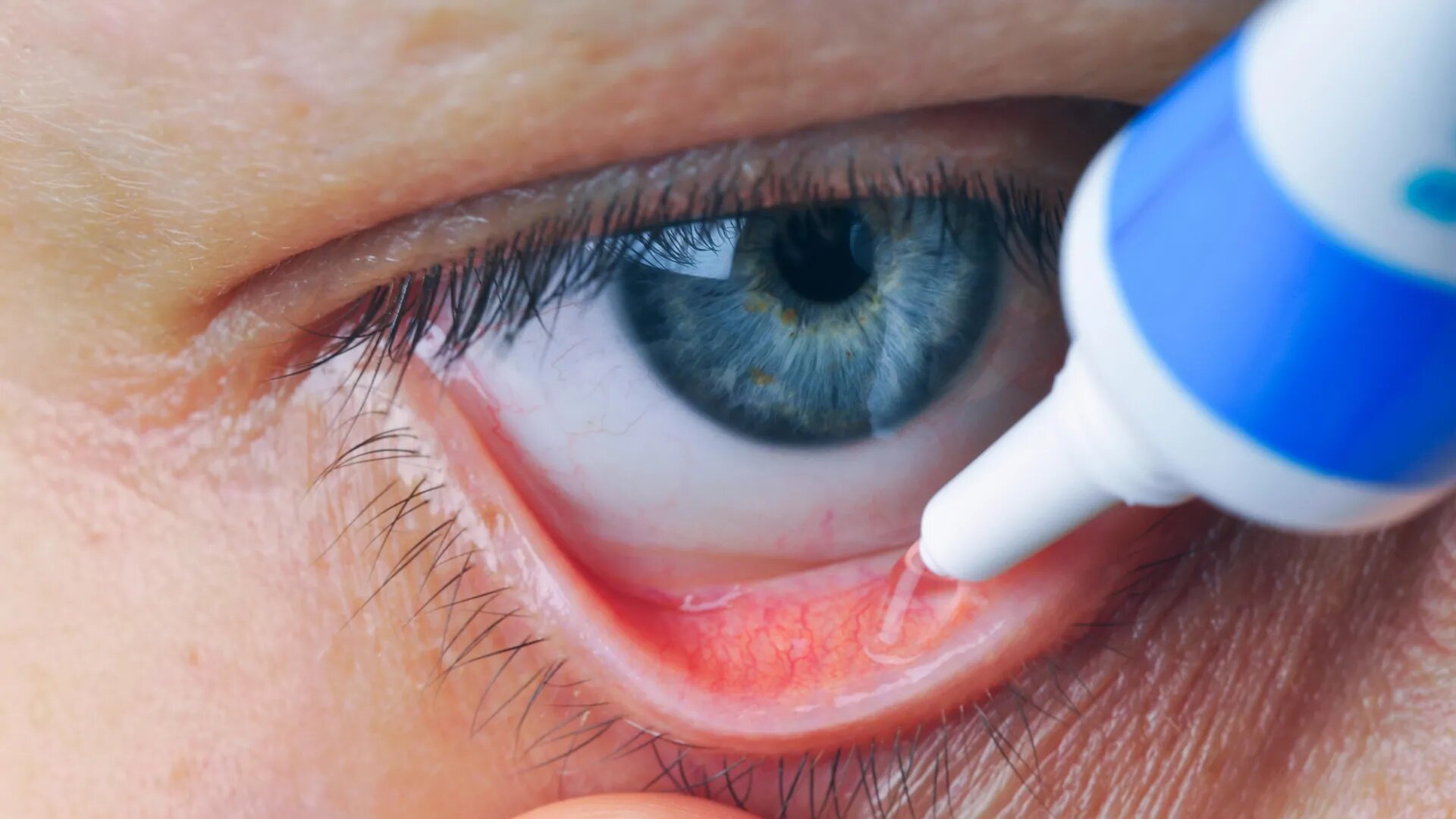
The compounds are designed to take over part of the job normally performed by photoreceptors. They can be delivered by injection into the eye, much like other ophthalmic drugs, or even applied as eye drops. Neither method requires genetic modification or an implanted device. The compounds have also shown promising safety profiles, making them potential candidates for future therapies aimed at restoring vision.
"These molecules do not cure blindness, because they do not address the cause of photoreceptor degeneration. But they are remarkably effective at restoring sight, and they do so using a very simple and potentially patient-friendly approach," explains Pau Gorostiza, ICREA Research Professor at IBEC, leader of the Nanoprobes and Nanoswitches group, member of CIBER-BBN and co-leader of the study.
"Our goal was to restore vision using a molecular mechanism that is as close as possible to how the healthy retina works," says Rosalba Sortino, former PhD student at the University of Barcelona, currently a postdoctoral researcher at Gorostiza's group at IBEC and co-first author of the study. "Instead of bypassing retinal processing, we aimed to reactivate it right at the same level of the retinal circuit as the lost photoreceptor cells."
The results build on more than 10 years of research. The project included the team led by Pedro de la Villa at the University of Alcalá (UAH), along with researchers from the Institut de Química Avançada de Catalunya (IQAC-CSIC), the University of Barcelona (UB), the Institute Ramón y Cajal of Health Research (IRYCIS), the Autonomous University of Barcelona (UAB), and the Fundació Eduard Soler.
Restoring Visual Function in Blind Animals
The technique relies on photopharmacology, an approach that allows the activity of a drug to be reversibly controlled using light. Researchers alter the chemical structure of a drug by incorporating a light-sensitive molecular switch. When exposed to light, the switch changes the drug's activity.
Using this strategy, the team created a family of compounds known as prosthe6. These molecules target ON-bipolar neurons and restored saccadic eye movements (optokinetic reflex) in blinded zebrafish larvae, a model commonly used to investigate visual acuity.
The researchers also found that the treatment could restore innate light-avoidance behavior in mouse models of age-related macular degeneration and retinitis pigmentosa.
Healthy mice instinctively prefer darker environments and avoid brightly illuminated spaces. This behavior depends entirely on a functioning visual system. Blind mice lose that preference because they cannot detect the difference between light and dark.
After receiving prosthe6, however, the blind mice once again spontaneously favored dark areas. That behavior indicated that they were able to detect light and use the visual information to guide their actions. No training was necessary.
The effect also occurred at illumination levels similar to those found indoors or outside on an overcast day. This suggests that the treatment restored functional light perception strongly enough to produce natural, visually guided behavior.
Two compounds in particular, prosthe6-12 and prosthe6-15, produced especially promising results. The restored visual behaviors appeared after injection into the eye and also following topical administration as eye drops.
Replacing the Function of Lost Photoreceptors
Prosthe6 works by targeting ON bipolar cells, retinal neurons that normally receive information from the photoreceptors, the cells responsible for sensing light.
"In healthy vision, ON bipolar cells play a key role in passing on information about the presence of light to the rest of the visual circuit. In degenerative eye diseases, although the photoreceptors are lost, much of this underlying circuitry remains intact but inactive. This creates a major therapeutic opportunity," explains de la Villa, co-leader of the study.
The compounds target a protein (mGlu6) within this surviving retinal circuitry. By doing so, prosthe6 can effectively substitute for some of the function normally provided by missing photore...
Indexed and credited by AIPROPX. Originating outlet: ScienceDaily. Open at source →
An original, deterministic readout — composed only from the computed coverage facts on this page. No interpretation, no rating; figures only.
AIPROPX has consolidated 1 report from 1 outlet into a single canonical entry on “Experimental eye drops help blind mice see again.” Every covered outlet is based in Other.
The only timestamped report came from ScienceDaily (Aug 28, 2026, 14:21 UTC).
Comparing the wording across sources, the phrase recurring most across the coverage is “blind mice”.
2 statements are carried by only one outlet within this set and are not echoed by the others.
Every figure above is a direct count of real published articles. AIPROPX indexes and compares the original reporting — it never rewrites, rates, or editorializes — and each publisher’s full article is always one click away.
Generated by AIPROPX from the source counts above. AIPROPX indexes and resolves coverage; the original publishers are credited and linked at origin in every report.
Coverage from 1 independent outlet across 1 region — each view opens on its own page.
AIPROPX — “Experimental eye drops help blind mice see again” · https://www.aipropx.com/story/5e6126f5212b1db51ed5c5cd91b00419
Other events being covered across multiple sources right now.
Callaway drops golf brand over sexist video row
4 outletsNYC ‘Rocky Horror’ fans do the 'Time Warp' again for Tim Curry
3 outletsBitcoin Is Flashing All the Signs That It May Have Finally Bottomed. Is It Time to Buy Bitcoin Again?
48 outletsPartial lunar eclipse captures hearts
30 outlets5 things to do in Montgomery County this weekend
23 outletsAll the places the Trump administration has renamed in his second presidency, from the Gulf of Mexico to Lake Ontario