
RESOLVING THE LEDGER
RESOLVING THE LEDGER
Only one outlet has reported this event so far — you're reading it below, credited to its source. AIPROPX is tracking the web for more coverage; as additional outlets confirm it, this becomes a full multi-source story automatically.
By AIPROPX Editorial Desk · Published · Updated
One outlet is reporting this so far. AIPROPX is tracking it and will gather every additional source as it develops — the full multi-source comparison appears automatically once a second outlet confirms it.
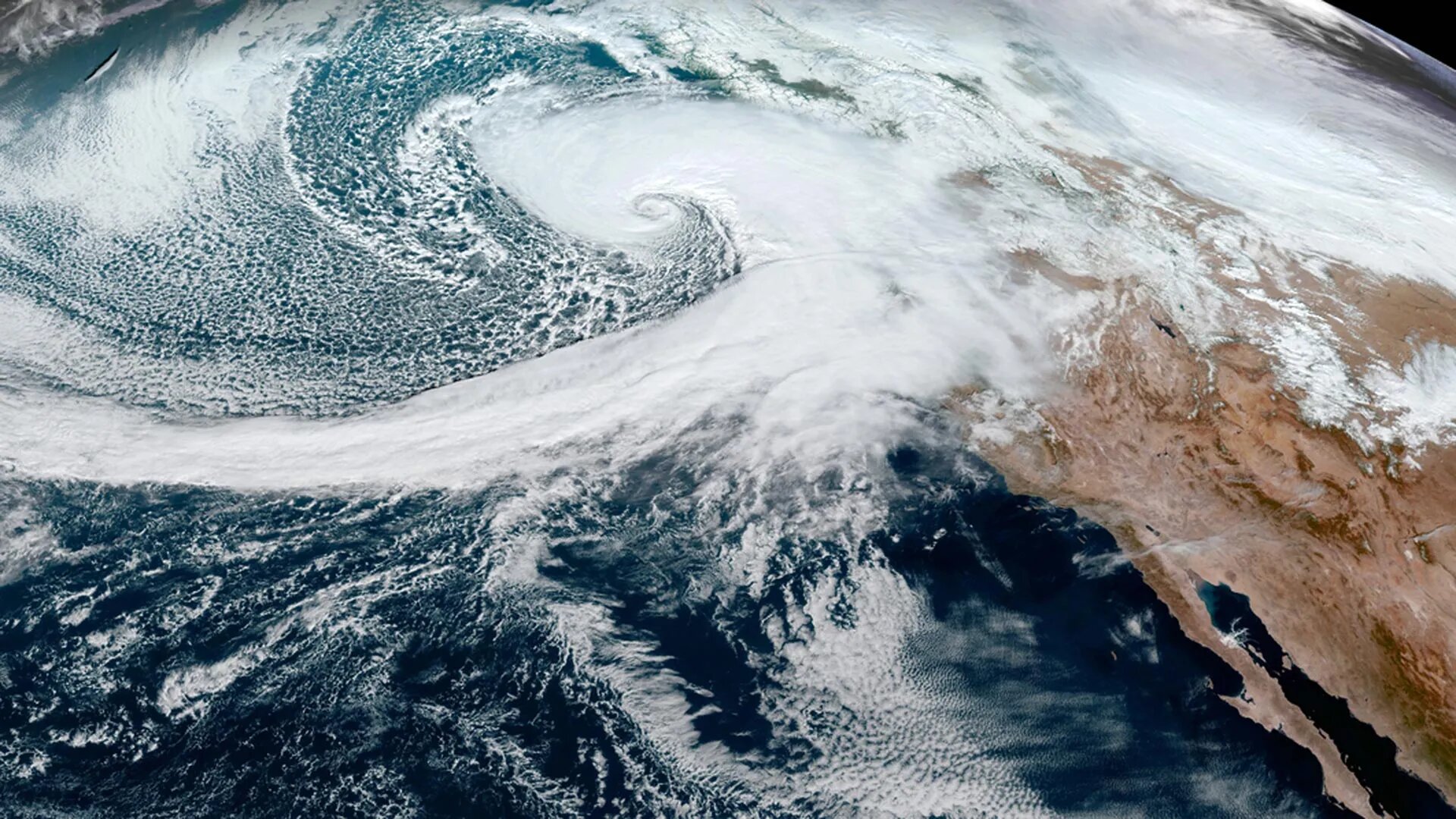
A major Atlantic Ocean current is slowing, and the consequences could reach far beyond the Atlantic. New research from the University of California, Riverside suggests the change could strengthen powerful storms along the California coast while reducing snowfall over Greenland.
The Atlantic Meridional Overturning Circulation, or AMOC, is a vast system of ocean currents that acts like a planetary conveyor belt. It carries warm tropical water northward, helping keep regions such as Europe relatively mild. After the water cools and becomes denser, it sinks and flows southward along the ocean floor.
"It is well known that the AMOC is a big player in the world's climate system, and that it is slowing down. What we didn't know is exactly how the AMOC might impact atmospheric moisture and storms outside the Atlantic region," said Mohima Mimi, a UCR doctoral student in climate dynamics and the paper's lead author.
"It turns out a weakening AMOC will strengthen storms across parts of North America by the end of the century, along the California coast in particular, while reducing them over Greenland and the Arctic."
Stronger Atmospheric Rivers for California
The study, published in Nature Communications, found that a weaker AMOC could alter ocean temperatures in ways that change how much moisture the atmosphere can carry. It could also strengthen winds high in the atmosphere that guide storms across the Northern Hemisphere.
Those stronger winds would help storms move more moisture toward the West Coast, increasing the intensity of atmospheric rivers.
Atmospheric rivers are long, narrow bands of water vapor that transport moisture from tropical regions toward higher latitudes. They provide California with a significant share of its water, but they can also produce severe flooding and widespread damage.
"In California, atmospheric rivers are a double-edged sword," Mimi said. "They supply much of the state's water supply, but as they become stronger, they're likely to also bring widespread destruction."
The climate modeling also points to more atmospheric rivers along the eastern coast of South America and around Antarctica. At the same time, Greenland would experience fewer storms, leading to less snowfall and slower ice accumulation.
These projected changes appear in a high greenhouse gas emissions scenario in which the AMOC continues weakening throughout the century.
Scientists have already observed signs that the AMOC is slowing as human-caused climate change raises global temperatures. Climate models indicate that the decline is likely to continue if greenhouse gas emissions remain high.
Cutting Emissions Could Reduce the Impact
Greenhouse gases mainly come from burning fossil fuels such as coal, oil, and natural gas. Other major sources include methane from livestock such as cattle, deforestation, industrial activity, and waste from sources including landfills.
Wei Liu, an associate professor of climate change and the paper's senior author, said reducing these emissions could limit their effects on the AMOC and lessen the current's influence on future rainfall patterns.
Stronger atmospheric rivers would raise the threat of flooding and infrastructure damage. However, they could also offer opportunities to collect additional water if communities improve forecasting and expand storage systems.
An Atlantic Shift With Global Consequences
The results highlight the deep connections within Earth's climate system. A change in one major ocean current can alter rainfall and extreme weather thousands of miles away, affecting ecosystems, water supplies, and communities across several continents.
"This research shows that the effects of the AMOC extend far beyond the Atlantic Ocean," Mimi said. "Understanding these connections will help us better prepare for future changes in water resources and extreme weather."
Materials provided by University of California - Riverside . Note: Content may be edited for style and length.
Alien Signals May Be Hiding in a Radio Band SETI Has Barely Explored
This 518-Million-Year-Old Creature Reveals How Spiders Got Their Bite
This Tiny Gecko Could Reveal How Cancer Spreads
The Backyard “Silly Sprinkler” That Cracked One of Physics’ Biggest Puzzles
Stay informed with ScienceDaily's free email newsletter, updated daily and weekly. Or view our many newsfeeds in your RSS reader:
Keep up to date with the latest news from ScienceDaily via social networks:
Tell us what you think of ScienceDaily -- we welcome both positive and negative comments. Have any problems using the site? Questions?
Indexed and credited by AIPROPX. Originating outlet: ScienceDaily. Open at source →
An original, deterministic readout — composed only from the computed coverage facts on this page. No interpretation, no rating; figures only.
AIPROPX has consolidated 1 report from 1 outlet into a single canonical entry on “A slowing Atlantic current could unleash stronger California storms.” Every covered outlet is based in Other.
The only timestamped report came from ScienceDaily (Jul 28, 2026, 12:31 UTC).
Comparing the wording across sources, the phrase recurring most across the coverage is “atlantic current”.
2 statements are carried by only one outlet within this set and are not echoed by the others.
Every figure above is a direct count of real published articles. AIPROPX indexes and compares the original reporting — it never rewrites, rates, or editorializes — and each publisher’s full article is always one click away.
Generated by AIPROPX from the source counts above. AIPROPX indexes and resolves coverage; the original publishers are credited and linked at origin in every report.
Coverage from 1 independent outlet across 1 region — each view opens on its own page.
AIPROPX — “A slowing Atlantic current could unleash stronger California storms” · https://www.aipropx.com/story/6967880736365cd7ce854907bd1abcef
Other events being covered across multiple sources right now.
ALERT DAY: Strong storms, high winds and flash flooding possible Tuesday in Maryland
7 outletsWhat time will severe storms hit PA, NJ and Delaware today? Flooding threat grows
4 outletsOrlando AM Weather Forecast: Daily showers and storms expected
3 outletsPower restored for many after strong storms move through
3 outletsStorms, heavy rain possible in Cheyenne ahead of weekend heat wave
1 outletsWater study could delay commercial construction