
RESOLVING THE LEDGER
RESOLVING THE LEDGER
Only one outlet has reported this event so far — you're reading it below, credited to its source. AIPROPX is tracking the web for more coverage; as additional outlets confirm it, this becomes a full multi-source story automatically.
By AIPROPX Editorial Desk · Published · Updated
One outlet is reporting this so far. AIPROPX is tracking it and will gather every additional source as it develops — the full multi-source comparison appears automatically once a second outlet confirms it.
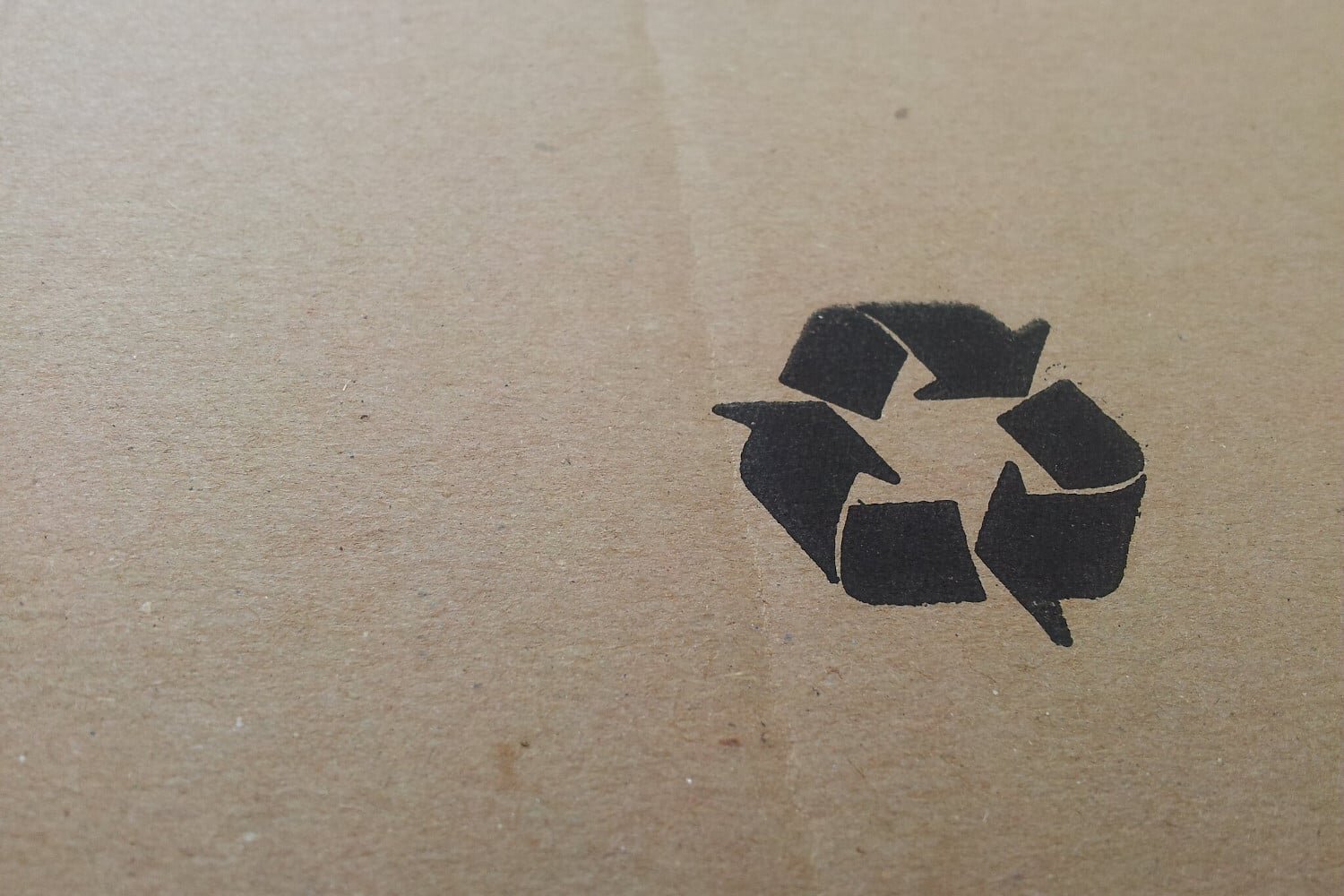
A pioneering California law meant to sharply limit use of the familiar “chasing arrows” recycling symbol has been blocked by a federal judge who said it probably violates the First Amendment.
In a preliminary injunction issued last month, U.S. District Judge William Hayes halted enforcement of SB 343 after food, packaging, and retail groups sued , finding that key provisions were “unconstitutionally vague” and likely infringed protected commercial speech. Enforcement of the law, passed in 2021 , was expected to start this fall.
The decision is a blow to environmental advocates, who had hoped to remove the familiar symbol from a huge array of plastic products, in line with a statewide study showing that only a fraction are widely collected and actually recycled. SB 343 said only goods and packaging accepted by recycling programs serving at least 60 percent of Californians and then actually sorted for recycling—not collected and thrown away—could bear the chasing arrows.
Hayes’ constitutional reasoning surprised supporters of SB 343 because similar arguments against environmental marketing regulations have historically struggled in court.
“The First Amendment protects free expression, not a corporation’s right to commit consumer fraud,” said Nick Lapis, director of advocacy for the nonprofit Californians Against Waste. “We see this exact playbook every time the plastics industry is asked to stop misleading the public—they suddenly hide behind the Constitution.”
In his decision, Hayes applied a standard four-part test to determine whether SB 343 would unduly restrict companies’ speech rights. The law passed the first two tests handily, as it regulates “potentially misleading” speech and was intended to serve California’s legitimate interests in reducing consumer confusion and improving recycling rates.
The next tests are where the law ran into trouble. Hayes, siding with the industry trade groups, argued that the legislation would not advance those “legitimate interests.” Rather than encouraging companies to redesign their products and packaging to comply with California’s real-world recyclability criteria, he said the law would prompt them to remove the recycling symbol altogether. Products recycled at a rate below the 60 percent threshold that the law requires would no longer make it into recycling bins, which could in theory leave more of them bound for the landfill.
Hayes said a less stringent regulation could have better advanced California’s goals. For instance, the state could have passed a law requiring more descriptive qualifiers alongside the recycling symbol. He offered a hypothetical example of a label explaining that an item is “accepted by recyclers in the greater Los Angeles area but nowhere else in California.” Such a label would provide consumers with more and better information, he argued, but would not be allowed under SB 343.
Heidi Sanborn, executive director of the nonprofit National Stewardship Action Council, said the judge’s reasoning reflected a fundamental misunderstanding of the problems facing California recycling systems. People are throwing too much stuff into their blue bins, she said. In addition to not actually being recyclable, much of this refuse—including plastic bags and other plastic films—can gum up sorting machines, causing operational delays and creating safety risks.
“People are wish-cycling, they’re so desperate to recycle,” Sanborn told Grist. “We have to pull all this [contamination] out, which is very labor-intensive, and then everybody wants to know why their bills go up.”
Industry groups welcomed the injunction, saying it would prevent California from “ censoring truthful information on packaging .”
Scott Hochberg, general counsel and litigation director for the nonprofit Earth Island Institute, said he’s seen free speech challenges to environmental rules many times before. Big polluters have frequently invoked the First Amendment to oppose regulations that require them to disclose information—like their greenhouse gas emissions —or tone down statements about their sustainability.
“What’s relatively new and concerning is when these arguments succeed and states are blocked from implementing common-sense initiatives to protect their residents,” he said.
A lawsuit Hochberg’s organization is pursuing against Coca-Cola illustrates the same debate. It alleges the company presents itself as a “sustainable and environmentally friendly company” despite its outsize contribution to plastic pollution . Coca-Cola argued that statements about its sustainability efforts—including plastics recycling—were protected political speech rather than commercial advertising. A federal judge rejected that argument in 2024.
The companies that sued California didn’t make that same distinction; their suit is more like one filed in 1992 that sought to block a California law restricting the use of terms like “biodegradable,” “ozone-friendly,” and “recyclable.” A judge upheld the law, ruling that it would not stifle free speech because corporations could still use a restricted word or phrase as long as they included qualifiers explaining how, where, or under what conditions it applied.
The injunction against SB 343 leaves California with few easy options. Hayes’ ruling suggests the state faces a difficult road if the case proceeds to trial. Lawmakers could amend the law to address some of the judge’s concerns, though that may be unlikely given the politics surrounding the issue. California could also appeal the injunction, but the lower court would still have to decide the case on its merits.
Earth Island Institute and Californians Against Waste announced on July 27 that they are joining California as defendants . Hochberg said he hoped to provide the court with more information “about how the recycling system actually works.” Losing the lawsuit will make it harder for other states to pursue similar labeling regulations, he said.
It could also jeopardize ...
Indexed and credited by AIPROPX. Originating outlet: Gizmodo. Open at source →
An original, deterministic readout — composed only from the computed coverage facts on this page. No interpretation, no rating; figures only.
AIPROPX has consolidated 1 report from 1 outlet into a single canonical entry on “A Federal Judge Just Turned the Recycling Symbol Into a Fight Over Free Speech.” Every covered outlet is based in Other.
The only timestamped report came from Gizmodo (Aug 6, 2026, 15:15 UTC).
Comparing the wording across sources, the phrase recurring most across the coverage is “recycling symbol”.
1 statement is carried by only one outlet within this set and is not echoed by the others.
Every figure above is a direct count of real published articles. AIPROPX indexes and compares the original reporting — it never rewrites, rates, or editorializes — and each publisher’s full article is always one click away.
Generated by AIPROPX from the source counts above. AIPROPX indexes and resolves coverage; the original publishers are credited and linked at origin in every report.
Coverage from 1 independent outlet across 1 region — each view opens on its own page.
AIPROPX — “A Federal Judge Just Turned the Recycling Symbol Into a Fight Over Free Speech” · https://www.aipropx.com/story/7d8cad3d45c3f5f6defaae8e686c8f9c
Other events being covered across multiple sources right now.
Federal judge won't make disgraced clerk pay Alex Murdaugh's $600,000 in legal fees for 1st trial
3 outletsFederal judge acknowledges Supreme Court ruling clearing path for Trump to end Haiti TPS
12 outletsBCSO giving away free backpacks and school supplies
6 outlets3 people charged with threatening judge, witness and officials tied to Nolan Wells investigation
5 outletsPhiladelphia asks federal appeals court to reconsider ruling over President's House site after slavery panels replaced
4 outletsDelaware Tax-Free Shopping Offers Back-to-School Savings for Pa., NJ Families