
RESOLVING THE LEDGER
RESOLVING THE LEDGER
Only one outlet has reported this event so far — you're reading it below, credited to its source. AIPROPX is tracking the web for more coverage; as additional outlets confirm it, this becomes a full multi-source story automatically.
By AIPROPX Editorial Desk · Published · Updated
One outlet is reporting this so far. AIPROPX is tracking it and will gather every additional source as it develops — the full multi-source comparison appears automatically once a second outlet confirms it.
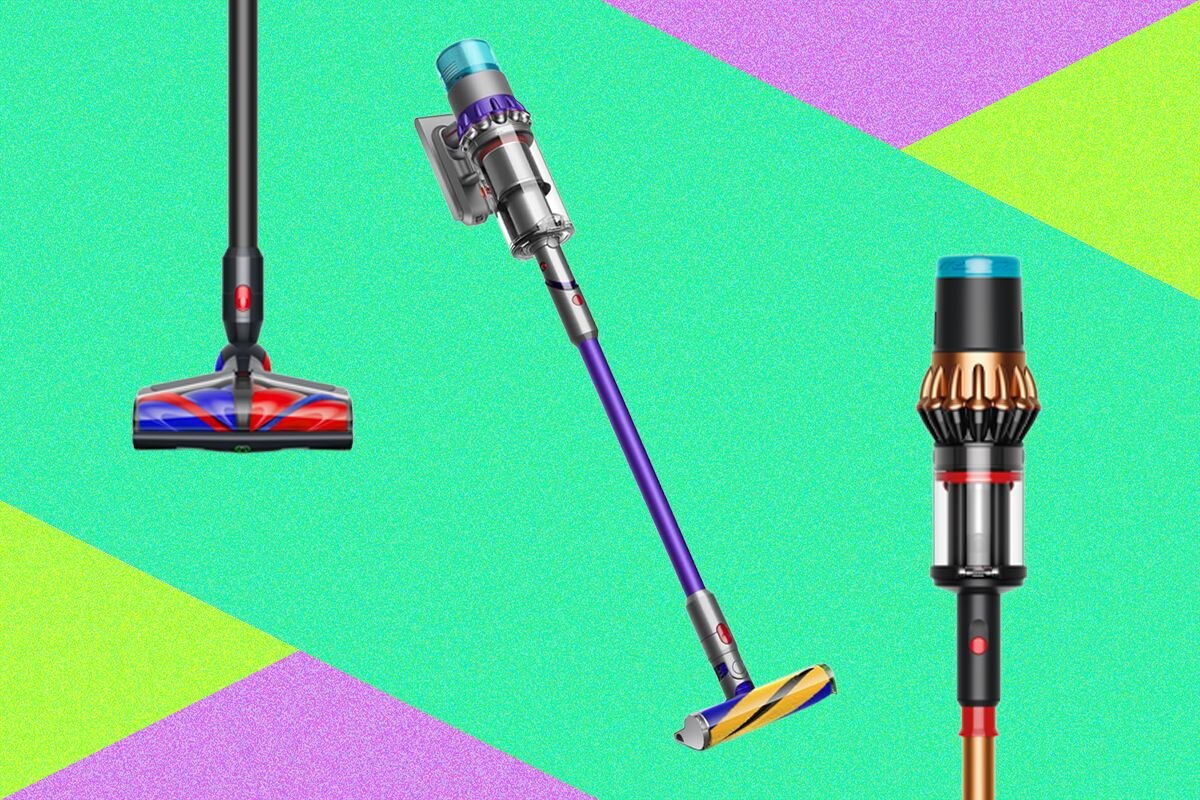
The Dyson V16 Piston Animal ($980), V10 Konical ($500), and V8 Cyclone ($400) arrived to change up Dyson's cordless vacuum options. The older V15 Detect ($650) and Gen5Detect ($800) are also still available and great vacuums, which raises the question: Should you upgrade? Which Dyson model is worth the cash with so many options (and widely ranging price points) to choose from?
I tested all five of these vacuums against each other in a series of tests to see which ones stood out among the pack. The two overall winners? The Gen5Detect was the number one winner, with the V16 Piston Animal right behind it, and the V10 Konical coming up third even though it's a much cheaper option. Read on to find out which model did best in each test, what the stats look like for each Dyson vacuum, and how I scored the final results.
Love WIRED? Add us as a preferred source on Google to see more of us.
Dyson's naming convention is fun, and the numbers usually represent which models are more powerful or offer better accessories, but not always. Most of its vacuums have the V name, which, to my best guess, simply stands for “vacuum.” The numbers aren't always in order of release and usually reflect a vacuum's power level and capabilities. The V10 and V8 have the same power level but different heads, for example, while the V16 is more powerful than the V15. But not all vacuums are named the same; the Gen5Detect has a different name entirely, and falls in between the V15 and V16 when it comes to suction power and price tag.
Here's a quick chart to understand the power levels and compatible accessories that differentiate each vacuum from the other. You might also spot things like “Plus” or “Total” when you're shopping for a Dyson vacuum, and that usually reflects the attachments included with the vacuum.
Hair screw tool, Combination tool, and Dusting and crevice tool (built-in)
Hair screw tool 2.0, crevice tool, built-in crevice tools
This gives you a pretty easy look at what you're getting for each model. As the models increase in number (both in the name and in the price tag), the vacuum usually gains more accessories or cleaner heads, more air watts of suction power, and sometimes the option to add the Submarine wet cleaner head on for an additional price, or future compatibility with Dyson's Auto-empty Dok station that's coming out soon.
The Digital Motorbar and All Floor Cones cleaner heads are both compatible with soft and hard floors, which is why sometimes it's the only head included. More expensive Dyson models will also include the Fluffy Optic cleaner head, which is designed specifically for hard floors and has an illuminated light to help you spot dust and debris. The All Floor Cones cleaner head includes a light too, so you're able to get that feature on both the V16 and V10 without switching heads.
Here are the tests I ran for each vacuum, and which ones did best—and worst.
I tested all five Dyson models on a small black rug onto which I poured fine, white sand to see how well it was vacuumed up. The best was the V10 Konical, followed by the V15 Detect. Both left a small trail of sand behind in different spots, which makes sense since they have different head designs, but the V10's trail was smaller than the V15's, with a small line in the middle compared to the larger trail the V15 had on its right side.
The V8, meanwhile, stalled entirely when I tried to use it on the rug and couldn't vacuum up sand whatsoever. It weirdly seemed to have an issue with the thin rug, even though equally or more powerful vacuums were able to vacuum on it.
Both Gen5Detect and V16 Piston Animal were able to vacuum on the thin rug, but the stronger suction also kept trying to take the rug with it, giving both mixed results and leaving a lot of sand behind on each pass. I retested both of these on a thicker rug in case the suction level wasn't a match for the thin rug, and both did much better, but the Gen5Detect did the best, getting every bit of sand in one swoop. The V16 got most of its sand, but pushed some sand into a little pile in front of itself.
When I last did a cereal test, I used a cornflake-style cereal. This time I switched to the cereal I know many parents like myself are much more likely to have all over the floors: Cheerios. I crushed up several in my hand and dropped those along with full Cheerios onto my thicker living room rug. Overall, every Dyson did a good job cleaning this up on the first pass.
The results on this one had pretty minimal differences for these models. The V8, V10, and V15 Detect all usually got the Cheerios and pieces on the first run, sending one to three pieces flying while it did so, but not so far away you wouldn't get to vacuum them up. The Gen5Detect sent nothing flying, though, so it pulls slightly ahead. The V16 sent only a single tiny piece flying forward. But it was right behind the Gen5Detect out of these Dyson models.
Next, I tested these vacuums against a thing I vacuum the most off my vinyl plank floors: cat litter. For this test, since it was on a hard surface instead of a rug, I switched the vacuums' heads to the Fluffy Optic cleaner head when available. That's only on the V15, V16, and Gen5Detect, so those heads changed while the other two models still used the Digital Motorbar (V8) or the All Floor Cones (V10) heads they came with.
It's no surprise that the two standouts both had a Fluffy Optic head. The Gen5Detect left the cleanest floor behind, with not a spec of litter dust to be found from the vacuum's illuminated light after a single pass. The V16 Piston Animal mostly did well, leaving no litter behind, but it did push a small amount of litter in front of itself, similar to the sand test. This only happened in a pass of extremely thick litter, so more day-to-day litter cleanup shouldn't have this issue. Still, the Gen5Detect pulls slightly ahead once again.
The V15 is right behind these two, but left a little dust behind that I could see wit...
Indexed and credited by AIPROPX. Originating outlet: Wired. Open at source →
An original, deterministic readout — composed only from the computed coverage facts on this page. No interpretation, no rating; figures only.
AIPROPX has consolidated 1 report from 1 outlet into a single canonical entry on “Which of Dyson’s 2026 Vacuum Models Is the Best?.” Every covered outlet is based in Other.
The only timestamped report came from Wired (Jul 29, 2026, 19:08 UTC).
1 statement is carried by only one outlet within this set and is not echoed by the others.
Every figure above is a direct count of real published articles. AIPROPX indexes and compares the original reporting — it never rewrites, rates, or editorializes — and each publisher’s full article is always one click away.
Generated by AIPROPX from the source counts above. AIPROPX indexes and resolves coverage; the original publishers are credited and linked at origin in every report.
Coverage from 1 independent outlet across 1 region — each view opens on its own page.
AIPROPX — “Which of Dyson’s 2026 Vacuum Models Is the Best?” · https://www.aipropx.com/story/8c97d2efa7126318563e6c3ccdd9420c
Other events being covered across multiple sources right now.
PGA TOUR picks: Six Rocket Classic 2026 best bets ready to attack the Detroit Golf Club's tougher greens
11 outletsBrew City Buzz: Events Happening July 30-Aug. 5, 2026
10 outletsPower 50 2026
5 outletsMortgage and refinance interest rates today, Tuesday, July 28, 2026: Rates lower as fighting in Iran on pause
3 outletsREVIEW: Fandom Rocked Thursday Night at San Diego Comic-Con 2026
3 outletsMorning Notes for July 29, 2026