
RESOLVING THE LEDGER
RESOLVING THE LEDGER
Only one outlet has reported this event so far — you're reading it below, credited to its source. AIPROPX is tracking the web for more coverage; as additional outlets confirm it, this becomes a full multi-source story automatically.
By AIPROPX Editorial Desk · Published · Updated
One outlet is reporting this so far. AIPROPX is tracking it and will gather every additional source as it develops — the full multi-source comparison appears automatically once a second outlet confirms it.
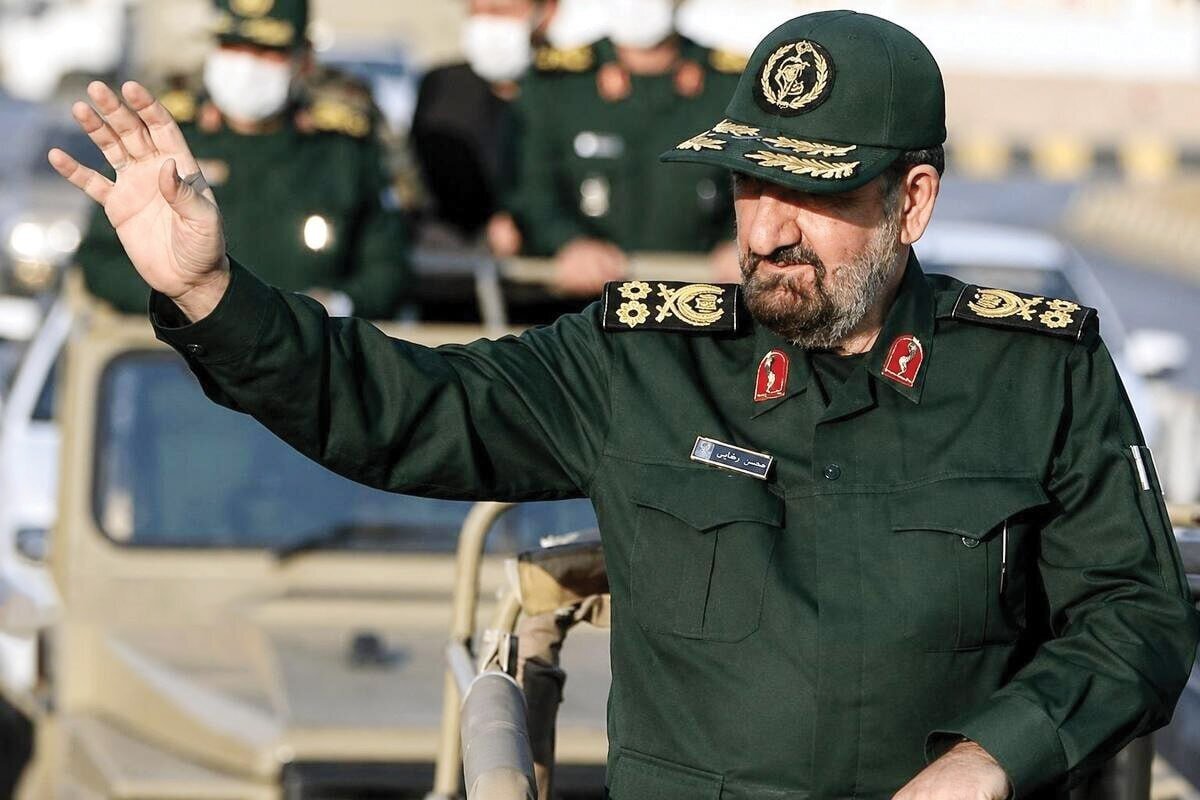
TEHRAN — Major General Mohsen Rezaei, the newly appointed Secretary of Iran’s Supreme National Security Council (SNSC), warned on Saturday that the Islamic Republic will respond decisively to any country joining Washington’s economic warfare against the nation.
“We will neutralize the economic war. America is backed into a corner. Either they honor their commitments, or they will have to struggle to get out of that corner, which will make the situation worse,” General Rezaei said during a televised interview.
Rezaei’s warning came after US President Donald Trump threatened a campaign of economic coercion against Iran while issuing illegal threats of secondary sanctions against any nation maintaining legitimate commercial ties with Tehran. “We tell all neighboring countries not to enter the economic war against Iran. Anyone who does so will be considered a hostile country,” General Rezaei said, adding, “First, we will negotiate with them and ask them not to do this; if they continue, we will target interests of that country.”
Following the unprovoked illegal US-Israeli military aggression launched on February 28, which targeted Iranian infrastructure, the Armed Forces of the Islamic Republic forced the hostile coalition into a desperate retreat, culminating in the April 8 ceasefire and the June 17 memorandum of understanding (MoU). However, in blatant defiance of international law, Washington reneged on its signed commitments. Having suffered a crushing defeat on the battlefield, Trump has now resorted to a desperate campaign of sanctions—arrogantly dubbed "Economic D-Day"—in a futile attempt to cover up Washington’s failed military strategy against the Iranian nation.
Further in his remarks, Rezaei stressed that Iran holds the military capability to prevent oil from passing through the entire Persian Gulf if such hostile measures are pursued. “If they start such an action, we will not allow a single drop of oil to pass through the Persian Gulf. Oil will leave neither through the Strait of Hormuz nor through the Persian Gulf. For now, we have closed the Strait of Hormuz, while we are not targeting the oil in the Persian Gulf,” the SNSC secretary said.
The top security official, meanwhile, ruled out any immediate reopening of the strategic Strait of Hormuz, emphasizing that Washington must first take concrete, verifiable steps to honor its previous commitments. He pointed to an agreement between Iran and Oman regarding the maritime pass. “This commercial route is shared by Iran and Oman.” He added, “There is another identity here that belongs to us. The Strait of Hormuz is the gateway into the Persian Gulf, and Oman has no presence inside the Persian Gulf proper. Therefore, we cannot relinquish our rightful control over the Strait of Hormuz.”
Rezaei explained that Iran’s defense strategy and diplomatic conduct have fundamentally transformed in response to the recent American-Israeli military aggression and Iran’s determined retaliatory closure of the strait. “Iran today will not be the Iran it was before the war. Of course, the overconfident United States is not the same America it was before the war either. Iran’s patterns of behavior in the international arena have transformed. The entire world now looks at us differently, and we have no choice but to evolve our behavior in this context.”
According to Rezaei, Iran will incorporate key strategic lessons from the conflict into its future defense planning, continuing to advance indigenously developed technologies while adjusting its diplomatic posture in response to persistent US violations. “The Leader’s decision to bring in experienced commanders means that we will certainly apply the lessons we have learned in the next battle,” the official noted, referring to Leader of the Islamic Revolution Ayatollah Mojtaba Khamenei’s recent appointment of veteran commanders to key military positions, including Rezaei himself. “Certainly, changes will be made in the way Iran manages and conducts war, as well as in its diplomatic conduct. The reason is clear: The Americans betrayed the negotiations and reneged on their own signature.”
Rezaei characterized Washington's current approach as a weak attempt to rely on economic pressure after its military tactics failed on the ground. He dismissed the economic measures as mere media propaganda, noting that Iranian trade remains active despite illegal blockades. “Take the issue of the American naval blockade. This is not something new. In the past one or two months alone, we have successfully shipped 70 million barrels of oil.” Despite the warnings, Rezaei affirmed that Iran remains committed to genuine diplomacy, while stressing that Tehran will pursue negotiation from a position of absolute strength.
“We are serious about diplomacy, but we have changed our method… We are waiting for the other side to honor its commitments. We want the wars in Iran, Lebanon, Gaza, and Yemen to end,” the security chief said, emphasizing the Islamic Republic’s unwavering demand for an immediate end to regional aggression across all fronts.
Rezaei reaffirmed that while the Islamic Republic does not seek conflict, it will defend its sovereignty without hesitation. “We are not warmongers, but we will never surrender. We will sacrifice every last drop of our blood for the people and Iran.” “We advise the Americans not to increase their forces; if they do, we will strike them. Every meeting they hold with counter-revolutionary elements, we will strike. Our attacks are now precisely targeted.”
The bluster emanating from the White House regarding an "economic D-Day" is not a sign of American strength, but rather the unmistakable death rattle of a failing imperial strategy. By turning to financial terrorism after the failure of its direct military aggression alongside Israel, Washington has conceded a pivotal truth: the United States and its regional vassals cannot dictate terms to the Islamic Republic through force of a...
Indexed and credited by AIPROPX. Originating outlet: Tehran Times. Open at source →
An original, deterministic readout — composed only from the computed coverage facts on this page. No interpretation, no rating; figures only.
AIPROPX has consolidated 1 report from 1 outlet into a single canonical entry on “Iran shifts to offensive posture.” Every covered outlet is based in Middle East.
The only timestamped report came from Tehran Times (Aug 23, 2026, 17:06 UTC).
1 statement is carried by only one outlet within this set and is not echoed by the others.
Every figure above is a direct count of real published articles. AIPROPX indexes and compares the original reporting — it never rewrites, rates, or editorializes — and each publisher’s full article is always one click away.
Generated by AIPROPX from the source counts above. AIPROPX indexes and resolves coverage; the original publishers are credited and linked at origin in every report.
Coverage from 1 independent outlet across 1 region — each view opens on its own page.
AIPROPX — “Iran shifts to offensive posture” · https://www.aipropx.com/story/987e5bf3f3203ff9e10801dceb206b7f
Other events being covered across multiple sources right now.
Iran Warns Gulf States Not to Join Trump’s Economic War
2 outletsIran’s resilience has foiled adversaries’ plans amid ‘full-scale war’: Pezeshkian
1 outletsUS-Israeli strikes hit medical and nuclear facilities, Iran nuclear chief says
1 outletsAraghchi says US pressure tactics have failed as Iran expands regional diplomacy
3 outletsIran's president defends U.S. memorandum of understanding as best path forward
27 outletsThe Supreme Court Let Trump’s Ballroom Proceed—for Now. Here’s What That Means