
RESOLVING THE LEDGER
RESOLVING THE LEDGER
Only one outlet has reported this event so far — you're reading it below, credited to its source. AIPROPX is tracking the web for more coverage; as additional outlets confirm it, this becomes a full multi-source story automatically.
By AIPROPX Editorial Desk · Published · Updated
One outlet is reporting this so far. AIPROPX is tracking it and will gather every additional source as it develops — the full multi-source comparison appears automatically once a second outlet confirms it.
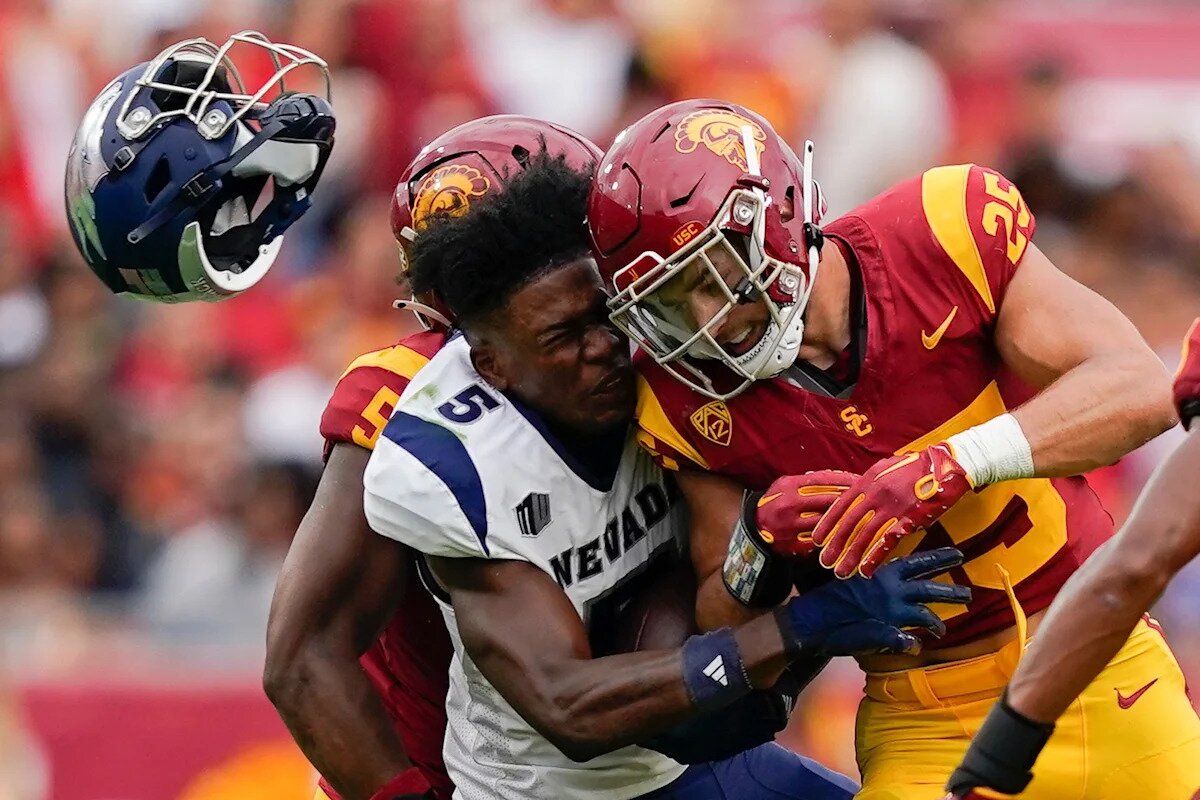
Targeting penalties assessed in the second half of a game will no longer require the offending player to sit out the first half of his team's next game, offensive pass interference will become a 10-yard penalty and the little-used fair catch kick will be introduced to college football.
Those are among the changes for the 2026 season, the National Football Foundation announced Tuesday in its annual summary of rules changes.
The targeting penalty change will be an experimental rule for 2026. A player disqualified for targeting for the first time in the season may participate in the following game. The trial rule will apply regardless of which half the targeting penalty is called.
A player who draws his second targeting penalty of the season will be required to miss the first half of the next game. A player who draws his third targeting of the season must sit out the full following game.
A conference can choose to initiate an appeals process after a player’s second targeting penalty. The appeal would be sent to the NCAA national coordinator of football officials for a video review. If the appeal is successful, the player would not be forced to sit out the first half of the following game.
Offensive PI now 10 yards
The penalty for offensive pass interference is being adjusted from 15 yards to 10 yards. The rules reserve 15-yard penalties primarily for personal fouls and unsportsmanlike conduct. Defensive pass interference will remain a spot foul, with a maximum of a 15-yard penalty.
Fair catch kick
In a change to align Division I rules with those in the NFL and high school, a team could choose to attempt a fair catch kick after a completed or awarded fair catch. The kick would be a place kick with a holder or a drop kick from the spot where the returner caught the ball. The defense would be at least 10 yards from the spot of the kick.
If the ensuing kick goes through the uprights, it would be worth three points.
The rarely used play last came up in the NFL in 2024 when the Los Angeles Chargers’ Cameron Dicker converted from 57 yards against the Denver Broncos.
Unsportsmanlike conduct
An automatic unsportsmanlike conduct penalty will be called if a player initiates any of these five actions or gestures: any act of simulating the brandishing of a weapon; slashing of the throat or a nose wipe signal; removing helmet after the ball is dead (with exceptions for timeouts and equipment adjustments); dead-ball contact fouls, such as pushing, shoving, striking, etc., that occur clearly after the ball is dead and that are not part of the game action; using forcible contact to push or pull an opponent off the pile after the ball is dead.
2 replay challenges
The head coach will now have two replay challenges per game. If a coach wins at least one of their first two challenges, they are awarded a third challenge. A challenge can be made only if the team has a timeout remaining and available; if the challenge is successful, the team’s timeout will not be charged.
Other changes
Coach-to-player communications through the helmet is now permissible for all NCAA divisions. ... Helmet attachments (e.g., Guardian Cap, SAFR Helmet Cover) that enhance player safety are allowed. All helmets, with or without the attachment, must be of the same color and design. ... Up to two sponsor patches are allowed on the jersey, with conference approval. A third patch is allowed in conference championship or postseason games. Logos may not exceed 4 square inches. One commercial logo, not to exceed 4 square inches, is permitted on the helmet.
___
AP college football: https://apnews.com/hub/ap-top-25-college-football-poll and https://apnews.com/hub/college-football
Indexed and credited by AIPROPX. Originating outlet: Yahoo Sports. Open at source →
An original, deterministic readout — composed only from the computed coverage facts on this page. No interpretation, no rating; figures only.
AIPROPX has consolidated 1 report from 1 outlet into a single canonical entry on “College football rule changes include removing next-game DQs for a first targeting penalty.” Every covered outlet is based in US.
The only timestamped report came from Yahoo Sports (Aug 11, 2026, 19:31 UTC).
Comparing the wording across sources, the phrase recurring most across the coverage is “next game”.
2 statements are carried by only one outlet within this set and are not echoed by the others.
Every figure above is a direct count of real published articles. AIPROPX indexes and compares the original reporting — it never rewrites, rates, or editorializes — and each publisher’s full article is always one click away.
Generated by AIPROPX from the source counts above. AIPROPX indexes and resolves coverage; the original publishers are credited and linked at origin in every report.
Coverage from 1 independent outlet across 1 region — each view opens on its own page.
AIPROPX — “College football rule changes include removing next-game DQs for a first targeting penalty” · https://www.aipropx.com/story/9baed16c0c7f0372f856e6db76a838c7
Other events being covered across multiple sources right now.
Ultrarare Nintendo Mario game cartridges discovered in Wisconsin
8 outletsPowerball jackpot rises to $1B after Monday night's winning numbers end without big winner; next drawing Wednesday
4 outletsBitcoin Rally Fades—Where Does Price Go Next?
3 outletsHigh school football player finds venomous snake inside helmet he was wearing
1 outletsHS football players gain perspective helping vets
1 outletsJose Altuve leaves game vs. Giants early after being hit by pitch in his foot