
RESOLVING THE LEDGER
RESOLVING THE LEDGER
Only one outlet has reported this event so far — you're reading it below, credited to its source. AIPROPX is tracking the web for more coverage; as additional outlets confirm it, this becomes a full multi-source story automatically.
By AIPROPX Editorial Desk · Published · Updated
One outlet is reporting this so far. AIPROPX is tracking it and will gather every additional source as it develops — the full multi-source comparison appears automatically once a second outlet confirms it.
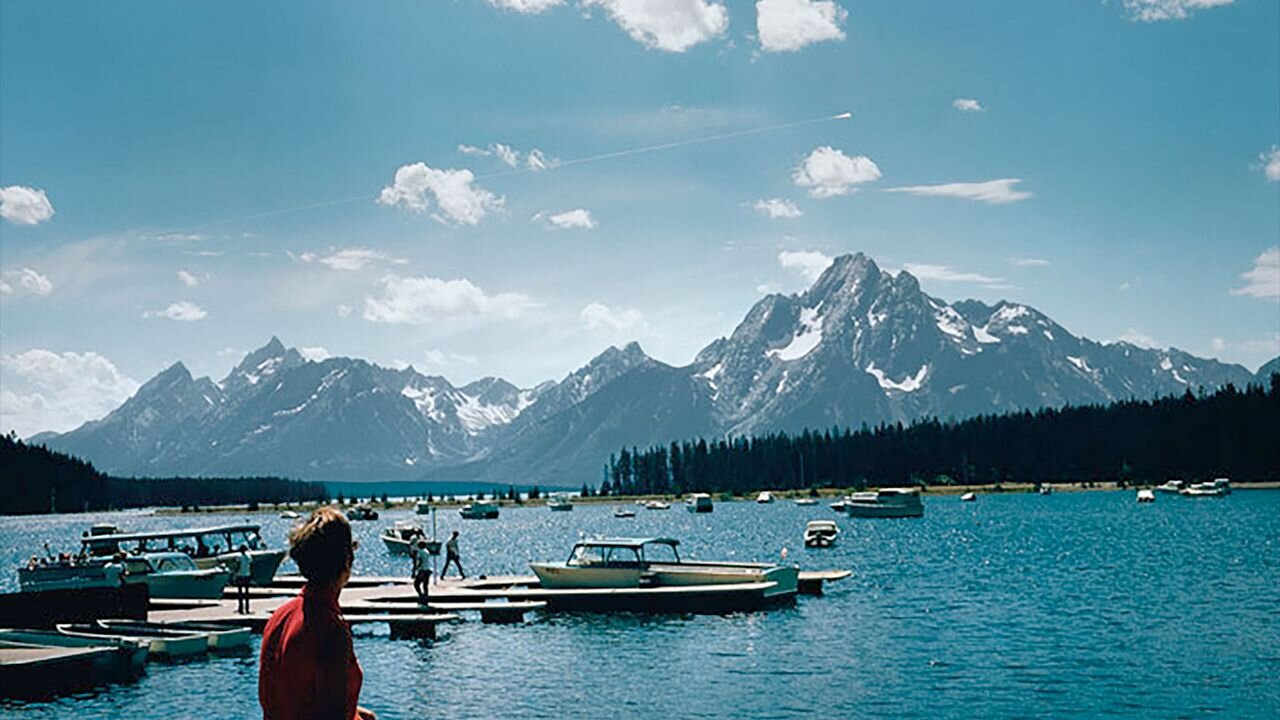
On Aug. 10, 1972, an Earth-grazing fireball burst through the sky over North America. It didn't hit the ground, but instead it passed straight through the sky.
The fireball entered the atmosphere somewhere over Utah and passed northwards, leaving the atmosphere over Alberta, Canada about 100 seconds later.
Analysis of its trajectory showed the object was about 10 to 45 feet in diameter, depending on whether it was an icy comet or a denser, rocky asteroid .
(Image credit: NASA/Astronomy Photo of the Day/James Baker)
Why it mattered
When we think of fireballs, we typically think of "shooting stars" during a meteor shower : a night sky spectacle that's brief but brilliant. But a daytime fireball is something else altogether.
Nighttime meteors are typically tiny particles of space dust or rocks that burn up as they streak through Earth's atmosphere . While they look impressive in the night sky, they're relatively dim. City streetlights or even a bright full moon can outshine them.
But a daytime fireball is caused by something large enough to be visible in the sky in broad daylight, something large and fast enought to light up a sky brighter than a sunlit day. That's what happened today in 1972.
Today, an event like the "Great Daylight Fireball" of 1972 (as it came to be named) would be visible to potentially millions of witnesses as it streaked over the United States and Canada, and we'd likely see social media flooded with images and video . There is at least one reported video of the 1972 event you YouTube, but nothing compared to what we'd see if it happened today.
Indexed and credited by AIPROPX. Originating outlet: Space.com. Open at source →
An original, deterministic readout — composed only from the computed coverage facts on this page. No interpretation, no rating; figures only.
AIPROPX has consolidated 1 report from 1 outlet into a single canonical entry on “On this day in space! Aug. 10, 1972: A 'Great Daylight Fireball' lights up the sky over North America.” Every covered outlet is based in Other.
The only timestamped report came from Space.com (Aug 10, 2026, 14:00 UTC).
Comparing the wording across sources, the phrase recurring most across the coverage is “sky over north america”.
2 statements are carried by only one outlet within this set and are not echoed by the others.
Every figure above is a direct count of real published articles. AIPROPX indexes and compares the original reporting — it never rewrites, rates, or editorializes — and each publisher’s full article is always one click away.
Generated by AIPROPX from the source counts above. AIPROPX indexes and resolves coverage; the original publishers are credited and linked at origin in every report.
Coverage from 1 independent outlet across 1 region — each view opens on its own page.
AIPROPX — “On this day in space! Aug. 10, 1972: A 'Great Daylight Fireball' lights up the sky over North America” · https://www.aipropx.com/story/9f80f0092a83badd74c188977a490902
Other events being covered across multiple sources right now.
Solar Eclipse 2026: Heres what North America will see, when it will happen
4 outletsObama to host literary podcast, 'A Great Book,' on Audible
3 outletsMarvel's Spider-Man 2 Gets Huge Boost 3 Years After Launch Thanks to Box Office Phenomenon Spider-Man: Brand New Day
2 outlets2026 Subaru Outback review: Great interior, refined drive, divisive looks
2 outletsNo Man’s Sky Players Have Visited Less Than 1 Percent Of Its Planets After A Decade Of Exploration And 40 Major Updates
1 outletsToday on Sky Sports Racing: Badri chases four-timer at Windsor