
RESOLVING THE LEDGER
RESOLVING THE LEDGER
Only one outlet has reported this event so far — you're reading it below, credited to its source. AIPROPX is tracking the web for more coverage; as additional outlets confirm it, this becomes a full multi-source story automatically.
By AIPROPX Editorial Desk · Published · Updated
One outlet is reporting this so far. AIPROPX is tracking it and will gather every additional source as it develops — the full multi-source comparison appears automatically once a second outlet confirms it.
Most collectors know the feeling. You pack up your cards, hand them over at a show, or send them via mail, and start the long wait. When the email finally arrives that your grades have popped, it’s like Christmas morning.
That was exactly where I was after dropping off a submission to PSA at the National Sports Collectors Convention in Chicago. A few months later, the grades hit: a few PSA 10s. I was ecstatic. Shortly after, I received notification that the package had shipped and was scanned out of the PSA facility.
And then… nothing.
The tracking went dark. After days of waiting and hoping for a late scan, I filed a claim with PSA. To their credit, they handled it professionally: Yep, looks like it’s gone. We’re very sorry, work with us and we’ll get you an insurance reimbursement. That was fair enough. Stuff happens, and insurance exists for a reason.
But it still sucked. Money is one thing, but there were specific cards in that box that meant something to me. My favorite card of the entire submission was a Cam Smith 1st Bowman Autograph. It wasn’t just any parallel, either—it was serial-numbered 499/499. The bookend. The absolute last of the print run. And it had scored a PSA 10 .
Because it was so recognizable, I made a habit of occasionally checking eBay just to see if it would ever surface.
Months later, it did. I saw the exact card, my 499/499 PSA 10, listed and sold on eBay.
The Repack Revelation
I immediately reached out to the eBay seller. I explained the situation: “Hey buddy, this card was mine. It was stolen out of the mail. Where did you get it?”
His response blew my mind. Mostly because I expected no reply at all. He told me he actually won the card in a break on Fanatics Live, sending screenshots to prove it. My stolen Cam Smith had been the headlining hit in a repack break by Filthbomb Breaks.
When I reached out on X (formerly Twitter) , Filthbomb issued the following statement:
“We were just made aware of this situation and want to address it. We work with established suppliers who source a high volume of cards from across the secondary market, including platforms like eBay, card shows, and individual sellers. Because of how the hobby operates, cards often change hands multiple times before reaching their final destination. We want to be clear that we would never knowingly purchase, sell, or include stolen cards in any product. We take this matter seriously and are reviewing the situation. We’re sorry to hear about what happened and understand how frustrating this must be. If there’s any information we can provide or any way we can help, please feel free to DM us.”
When PSA pays out an insurance claim on a lost package, they permanently deactivate the certification numbers so the cards are flagged in their system. However, looking at the timeline, it is entirely possible this card was stolen, offloaded, bought, and stuffed into a repack before PSA officially killed the cert number.
To add insult to injury, another user on X messaged me and said they bought one of my stolen cards on Whatnot when the cert number had already been deactivated. Meaning the shop had active listing on their store page with at least one decertified graded card. This happened 7-8 months after my cards were originally stolen.
And that’s where the systemic vulnerability lies: virtually no one in the secondary supply chain is actively checking certification numbers against stolen databases before stuffing cards into high-end repack products, certainly not more than once.
An Escalating Epidemic: The Industry’s Untraceable Theft Problem
What happened to my Cam Smith isn’t an isolated stroke of bad luck. It is a symptom of an escalating, multi-million-dollar theft crisis gripping the trading card industry.
As card values have exploded over the past five years, sports cards have effectively become liquid, high-value currency. The problem? Unlike cash or crypto, they are wildly insecure in transit and ridiculously easy to offload on the secondary market.
Theft in the hobby has matured into a sophisticated pipeline:
Logistics & Mail Leaks: Shipping carriers, postal workers, and logistics handlers who recognize return addresses from major grading companies or vault services can intercept packages with total impunity. A lost package is written off by insurance, while the stolen goods enter the market untracked.
Show Floor Offloading & General Theft: Card shows have become the ultimate laundering mechanism for stolen inventory. A thief can walk into a bustling convention center with a briefcase of stolen slabs, approach five different dealers, negotiate cash-in-hand sales at 70% to 80% of market value, and walk out with thousands of untraceable dollars. Beyond sophisticated liquidation, brazen general theft at shows is also on the rise; recently, a father and son were caught on camera stealing a card directly from a dealer’s booth at the National Sports Collectors Convention .
Shop Break-Ins: Brick-and-mortar hobby shops are increasingly being targeted by organized, smash-and-grab burglaries. The devastation can ruin a small business overnight, such as when a Pokémon card shop owner in Kenosha County recently woke up to a shattered storefront and over $300,000 worth of inventory stolen .
Underneath all of this is an industry-wide accountability crisis .
Think about how business is conducted on a trade night or show floor: someone hands a dealer a stack of five-figure slabs, a price is agreed upon, cash changes hands, and the seller walks away. No receipts, no photo IDs, no record of the exchange. We have inadvertently built an ecosystem that rewards bad actors by offering zero friction and total anonymity.
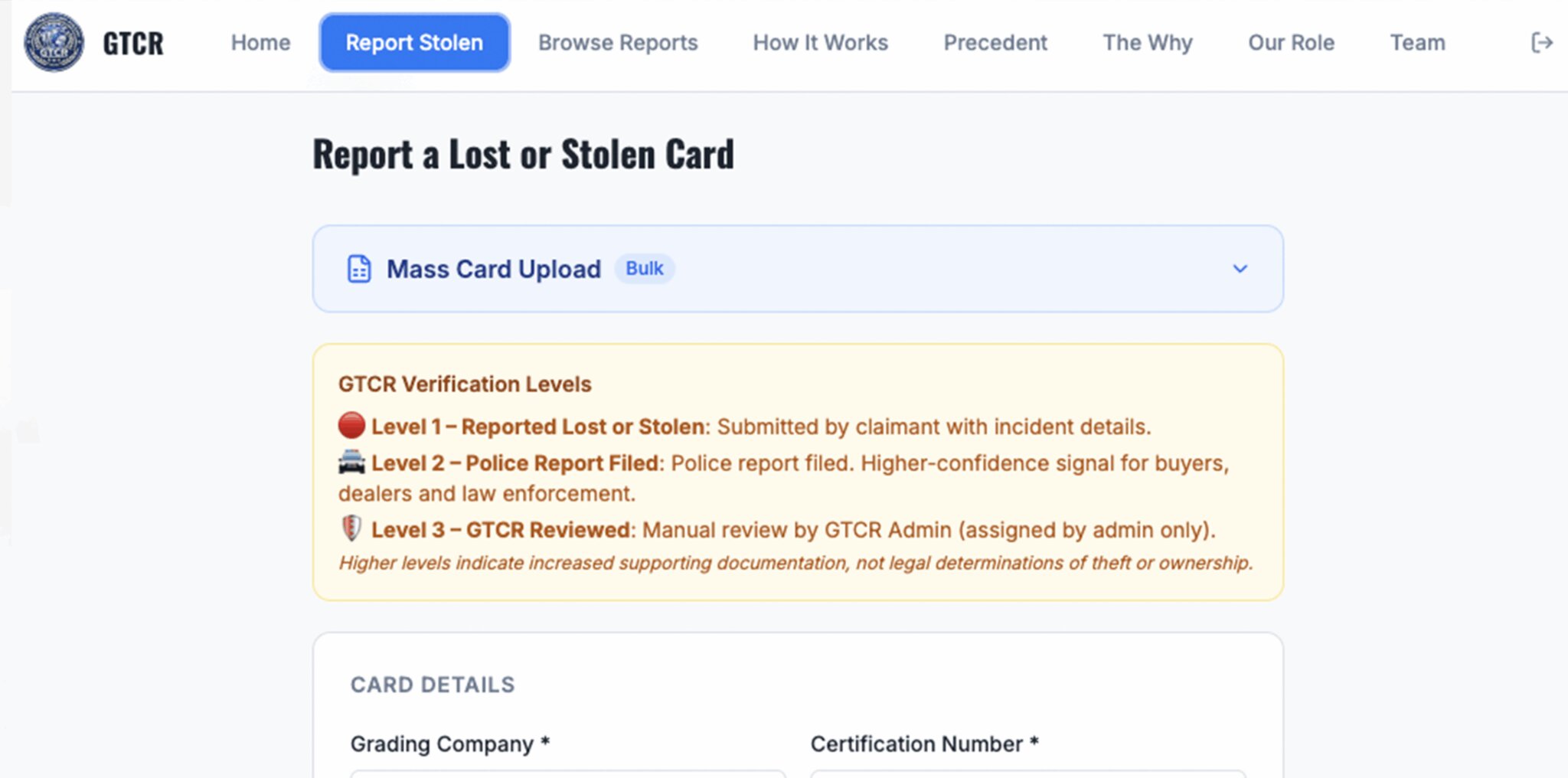
Building a Paper Trail: Enter the Global Trading Card Registry
We cannot wait for logistics companies or local police to save the hobby. There is currently no incentive for a vendor at a busy show to do extra detective work unless a simple, centralized tool exists to f...
Indexed and credited by AIPROPX. Originating outlet: Yahoo Sports. Open at source →
An original, deterministic readout — composed only from the computed coverage facts on this page. No interpretation, no rating; figures only.
AIPROPX has consolidated 1 report from 1 outlet into a single canonical entry on “The Hobby’s Theft Crisis: How My Stolen Cards Ended Up in a High-End Repack.” Every covered outlet is based in US.
The only timestamped report came from Yahoo Sports (Aug 14, 2026, 17:25 UTC).
2 statements are carried by only one outlet within this set and are not echoed by the others.
Every figure above is a direct count of real published articles. AIPROPX indexes and compares the original reporting — it never rewrites, rates, or editorializes — and each publisher’s full article is always one click away.
Generated by AIPROPX from the source counts above. AIPROPX indexes and resolves coverage; the original publishers are credited and linked at origin in every report.
Coverage from 1 independent outlet across 1 region — each view opens on its own page.
AIPROPX — “The Hobby’s Theft Crisis: How My Stolen Cards Ended Up in a High-End Repack” · https://www.aipropx.com/story/a204602044af3fcf4039f3e70f2b0322
Other events being covered across multiple sources right now.
End Of Oak Street’ Bites Down On $50 Million In Worldwide Opening
6 outletsFive Arrested in Connection to Stolen Works by Cézanne, Renoir and Matisse, Prosecutors Say
4 outletsHow Cold War Trauma And ‘70s Cinema Inspired Reagan-Gorbachev Drama ‘The Brink Of War
4 outletsBack to School: How AI is being used in the classroom
3 outletsPicasso etching stolen from Milwaukee art gallery in 2018 found by landlord in vacant apartment
3 outlets1.5 Million Egg Cartons Recalled—Alert Receives High Risk Designation From FDA